Emmelina monodactyla
Morning-glory Plume Moth
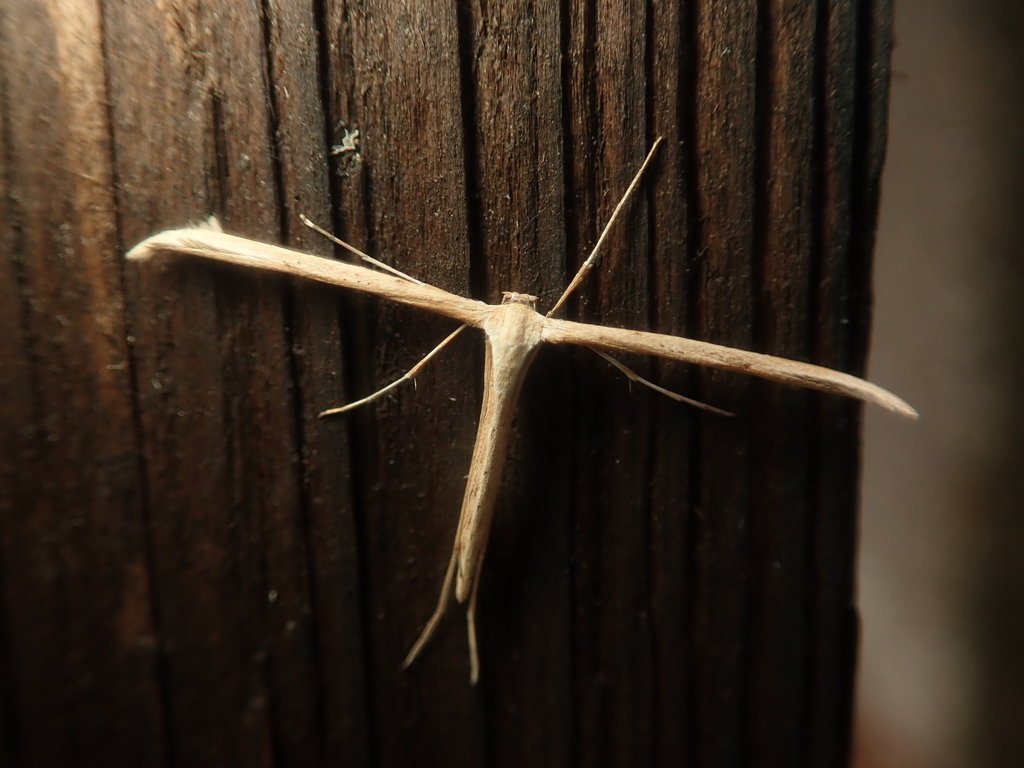
(c) Alexis Tinker-Tsavalas, some rights reserved (CC BY) · licence
Family: Pterophoridae · Class: Insecta · Order: Lepidoptera
Emmelina monodactyla (Morning-glory Plume Moth) is a California animal in the Pterophoridae family.
The Morning-glory Plume Moth (Emmelina monodactyla) is a small moth in the family Pterophoridae, characterized by its distinctive feathered wing structure. Adults measure 20-25 mm (0.8-1.0 inches) in wingspan, with forewings that are deeply divided into two distinct plumes and hindwings split into three feathery segments. The wings appear pale brown to grayish-brown with darker markings along the wing margins and central portions. When at rest, the moth holds its narrow wings perpendicular to its body, creating a T-shaped silhouette that distinguishes it from other small moths. This species has a cosmopolitan distribution and occurs throughout much of North America, including California. In California, the Morning-glory Plume Moth is found in both coastal and inland regions, from sea level to moderate elevations. The species has been documented in urban areas, agricultural zones, and natural habitats where its host plants are present. Its widespread distribution reflects its association with commonly occurring morning glory species. The Morning-glory Plume Moth inhabits diverse environments where Convolvulaceae family plants grow, including disturbed soils, field margins, gardens, and waste areas. The species adapts to various elevations and moisture conditions, thriving in both cultivated landscapes and wild spaces. Adults are attracted to areas with abundant flowering plants that provide nectar sources, while larvae require specific host plants for development. Larvae feed exclusively on plants in the morning glory family (Convolvulaceae), particularly field bindweed (Convolvulus arvensis) and other Convolvulus species. The caterpillars bore into stems, roots, and flower buds of their host plants, causing characteristic wilting and damage. Adults are nocturnal and are attracted to artificial lights. The species produces multiple generations per year in favorable climates, with continuous breeding possible in warmer regions. Mating occurs during evening and nighttime hours, with females laying eggs directly on host plant tissues. The Morning-glory Plume Moth is not federally or state-listed as threatened or endangered. As of December 2025, the species appears to maintain stable populations throughout its range and faces no immediate conservation concerns. Its association with widespread and often weedy host plants, particularly field bindweed, provides abundant breeding habitat. The moth's ability to exploit disturbed habitats and its tolerance of human-modified environments contribute to its population stability. In some agricultural contexts, the species may actually provide biological control benefits by feeding on invasive bindweed species. Climate change and habitat modification represent potential long-term concerns, but current population trends suggest the species is adapting well to environmental changes. No specific conservation measures are currently implemented for this species.
Classification
Class: Insecta · Order: Lepidoptera · Family: Pterophoridae
Frequently asked questions
How is Emmelina monodactyla classified?
Emmelina monodactyla belongs to class Insecta, order Lepidoptera, family Pterophoridae.
What family does Emmelina monodactyla belong to?
Emmelina monodactyla is in the Pterophoridae family.
What is Emmelina monodactyla?
The Morning-glory Plume Moth (Emmelina monodactyla) is a small moth in the family Pterophoridae, characterized by its distinctive feathered wing structure.
Is Emmelina monodactyla found in California?
Yes. Emmelina monodactyla is recorded in California in The California Species Project's catalogue.
Related species
Other California species in the same genus, family, or bioregion.
Data from The California Species Project — 14,000+ California species with verified data from CNPS, CDFW, USFWS, and more.