Empetrichthys latos
Pahrump poolfish
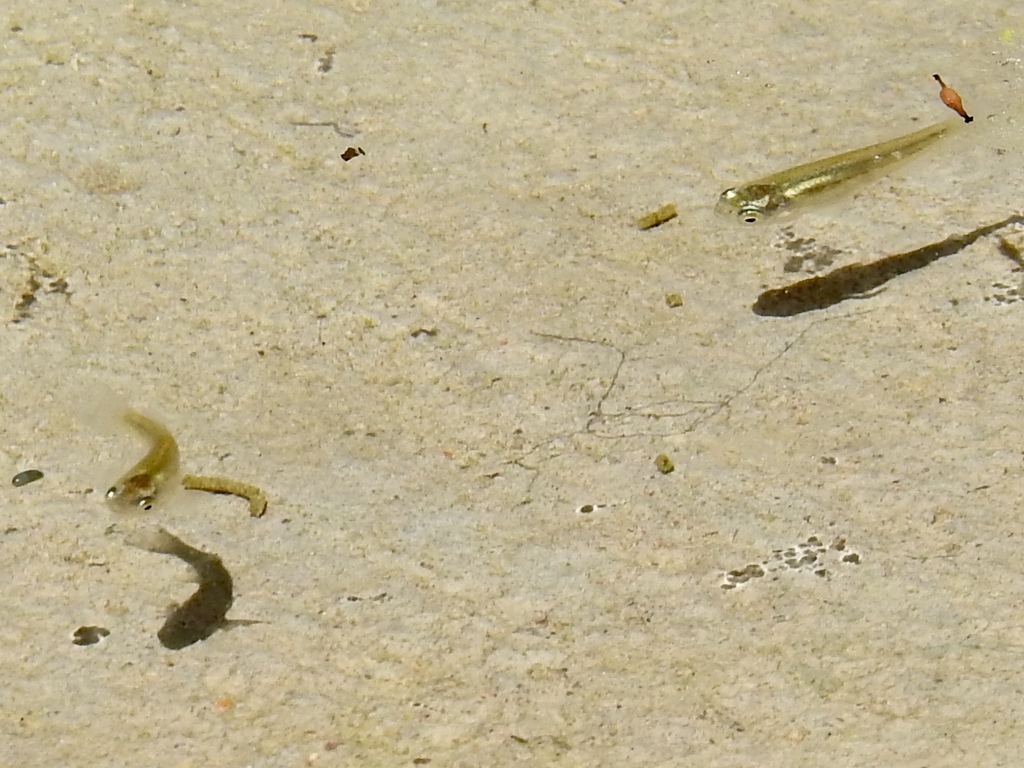
(c) CK2AZ, some rights reserved (CC BY) · licence
Family: Goodeidae · Class: Actinopterygii · Order: Cyprinodontiformes
Conservation status: Endangered
Empetrichthys latos (Pahrump poolfish) is a California animal in the Goodeidae family.
The Pahrump poolfish is a small, endemic freshwater fish measuring approximately 25 to 40 millimeters (1.0 to 1.6 inches) in total length. Adults display olive-green to brownish coloration on the dorsal surface with lighter sides and belly. The species exhibits a relatively deep body compared to other members of the Empetrichthys genus, with a terminal mouth and small scales. Breeding males develop more intense coloration during the reproductive season. Historically, the Pahrump poolfish was restricted to Manse Spring and its outflow in the Pahrump Valley of Nye County, Nevada. The species' extremely limited natural range made it one of the most geographically restricted fish species in North America. Currently, the species exists only in managed refugia, having been extirpated from its original habitat in the wild. The original habitat consisted of warm spring pools and their associated outflows, characterized by stable water temperatures ranging from 30 to 34 degrees Celsius (86 to 93 degrees Fahrenheit). These desert spring systems featured clear, alkaline water with abundant vegetation including watercress and other aquatic plants. The pools typically maintained depths of 0.5 to 2 meters (1.6 to 6.6 feet) with slow to moderate water flow. Pahrump poolfish are omnivorous, feeding on algae, small invertebrates, detritus, and aquatic insects. The species exhibits continuous breeding behavior in the warm spring environment, with females capable of spawning multiple times throughout the year. Eggs are deposited among aquatic vegetation and substrate materials. The species demonstrates schooling behavior, particularly in larger pool areas, and shows adaptation to the stable, warm-water conditions of desert spring ecosystems. The U.S. Fish and Wildlife Service listed the Pahrump poolfish as endangered on March 11, 1967, making it one of the earliest species protected under federal endangered species legislation. The primary cause of decline was habitat modification and the introduction of non-native goldfish (Carassius auratus) to Manse Spring during the early 1960s, which competed with adult poolfish and preyed upon juveniles (USFWS). By the late 1960s, the species was considered extinct in the wild. However, biologists had previously collected individuals and established captive populations at refugia sites. Current recovery efforts focus on maintaining these captive populations and developing protocols for potential reintroduction. The species' extremely limited original range and specialized habitat requirements continue to present significant challenges for recovery planning. As of December 2025, the Pahrump poolfish remains listed as endangered with no wild populations known to exist.
Classification
Class: Actinopterygii · Order: Cyprinodontiformes · Family: Goodeidae
Conservation status
Endangered
Frequently asked questions
How is Empetrichthys latos classified?
Empetrichthys latos belongs to class Actinopterygii, order Cyprinodontiformes, family Goodeidae.
What family does Empetrichthys latos belong to?
Empetrichthys latos is in the Goodeidae family.
Is Empetrichthys latos protected or of conservation concern?
Empetrichthys latos carries the following status: Endangered.
What is Empetrichthys latos?
The Pahrump poolfish is a small, endemic freshwater fish measuring approximately 25 to 40 millimeters (1.0 to 1.6 inches) in total length.
Is Empetrichthys latos found in California?
Yes. Empetrichthys latos is recorded in California in The California Species Project's catalogue.
Related species
Other California species in the same genus, family, or bioregion.
Data from The California Species Project — 14,000+ California species with verified data from CNPS, CDFW, USFWS, and more.