Empidonax traillii extimus
Southwestern willow flycatcher
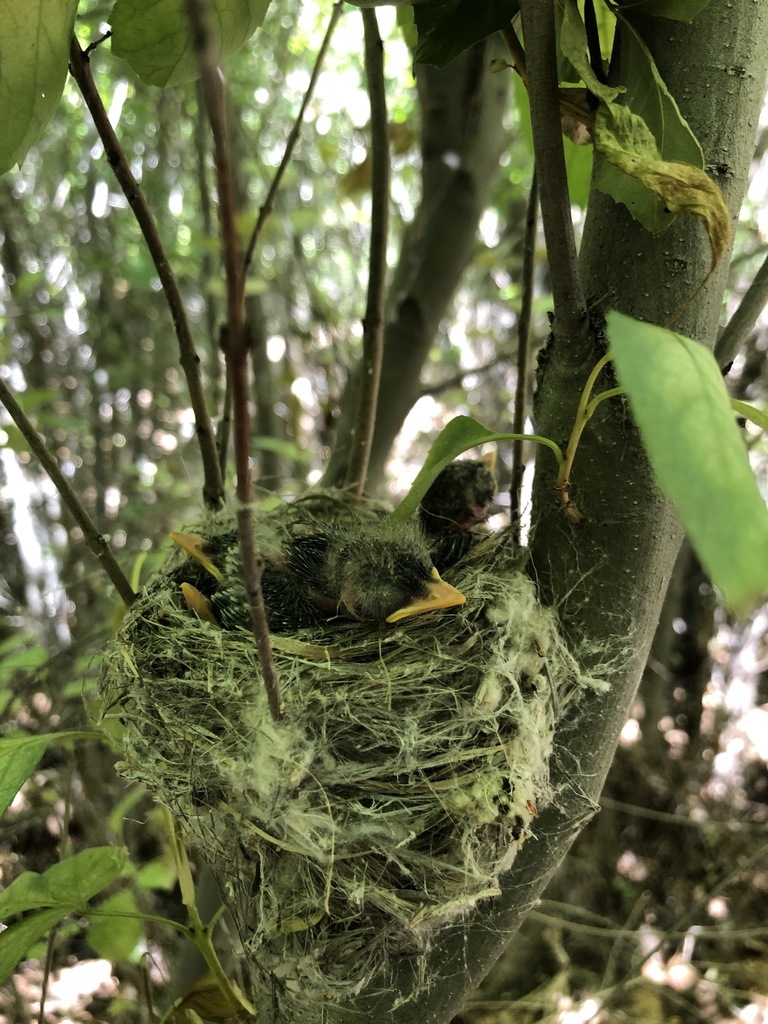
(c) Jason Eckberg, some rights reserved (CC BY) · licence
Family: Tyrannidae · Class: Aves · Order: Passeriformes
Conservation status: SE · Endangered · G5T2 S3
Empidonax traillii extimus (Southwestern willow flycatcher) is a California animal in the Tyrannidae family.
The southwestern willow flycatcher is a small Neotropical migratory songbird measuring approximately 5.7 inches (14.5 cm) in length. This subspecies is distinguished from other willow flycatcher subspecies by subtle differences in coloration and morphology that require specialized equipment or experienced taxonomists to reliably identify. The bird exhibits typical flycatcher characteristics with an olive-brown back, pale underparts, and a relatively large bill adapted for catching insects. The southwestern willow flycatcher breeds in the southwestern United States, including Arizona, New Mexico, southern California, southern Nevada, southern Utah, far western Texas, and southwestern Colorado. The subspecies may also breed in extreme northwestern Mexico, specifically northern Baja California and Sonora, though recent breeding records from Mexico are limited (USFWS 2002). During winter, the species migrates to southern Mexico, Central America, and northern South America. This subspecies is restricted to dense riparian habitats associated with rivers, swamps, wetlands, lakes, and reservoirs. Breeding habitat consists of relatively dense growths of trees and shrubs in riparian ecosystems, typically requiring canopy cover and multiple vegetation layers. Critical habitat designated by the U.S. Fish and Wildlife Service encompasses approximately 208,973 acres across 1,227 stream miles within the 100-year floodplain of waters in California, Arizona, Nevada, Utah, Colorado, and New Mexico. Southwestern willow flycatchers are aerial insectivores that capture prey by hawking insects above dense riparian vegetation or gleaning them from foliage. They also forage in more open areas adjacent to nest sites. The species constructs cup-shaped nests in dense shrubs or trees, typically 2-4 meters above ground in fork branches. Breeding occurs from May through August, with peak nesting activity in June and July. Females lay 3-4 eggs per clutch, and the species may attempt multiple broods per season if habitat conditions are favorable. The U.S. Fish and Wildlife Service listed the southwestern willow flycatcher as endangered on February 27, 1995, and designated critical habitat in 1997. The primary threats include loss and degradation of riparian habitats due to water developments that alter natural flow regimes, making habitat regrowth difficult. Fire has become an increasing threat to the limited remaining riparian areas. Other threats include livestock grazing, invasive plant species, parasitism by brown-headed cowbirds, and habitat fragmentation. Current population estimates indicate the subspecies numbers fewer than 1,000 breeding pairs across its entire range, representing a severe decline from historical levels. Recovery efforts focus on habitat restoration, water management modifications, and protection of remaining breeding sites. The species serves as an indicator of riparian ecosystem health in the arid Southwest, where less than 10% of historical riparian habitat remains intact.
Classification
Class: Aves · Order: Passeriformes · Family: Tyrannidae
Conservation status
SE · Endangered · G5T2 S3
Frequently asked questions
How is Empidonax traillii extimus classified?
Empidonax traillii extimus belongs to class Aves, order Passeriformes, family Tyrannidae.
What family does Empidonax traillii extimus belong to?
Empidonax traillii extimus is in the Tyrannidae family.
Is Empidonax traillii extimus protected or of conservation concern?
Empidonax traillii extimus carries the following status: SE · Endangered · G5T2 S3.
What is Empidonax traillii extimus?
The southwestern willow flycatcher is a small Neotropical migratory songbird measuring approximately 5.7 inches (14.5 cm) in length.
Is Empidonax traillii extimus found in California?
Yes. Empidonax traillii extimus is recorded in California in The California Species Project's catalogue.
Related species
Other California species in the same genus, family, or bioregion.
Data from The California Species Project — 14,000+ California species with verified data from CNPS, CDFW, USFWS, and more.