Enaemia subfervens
Speckled Lactura
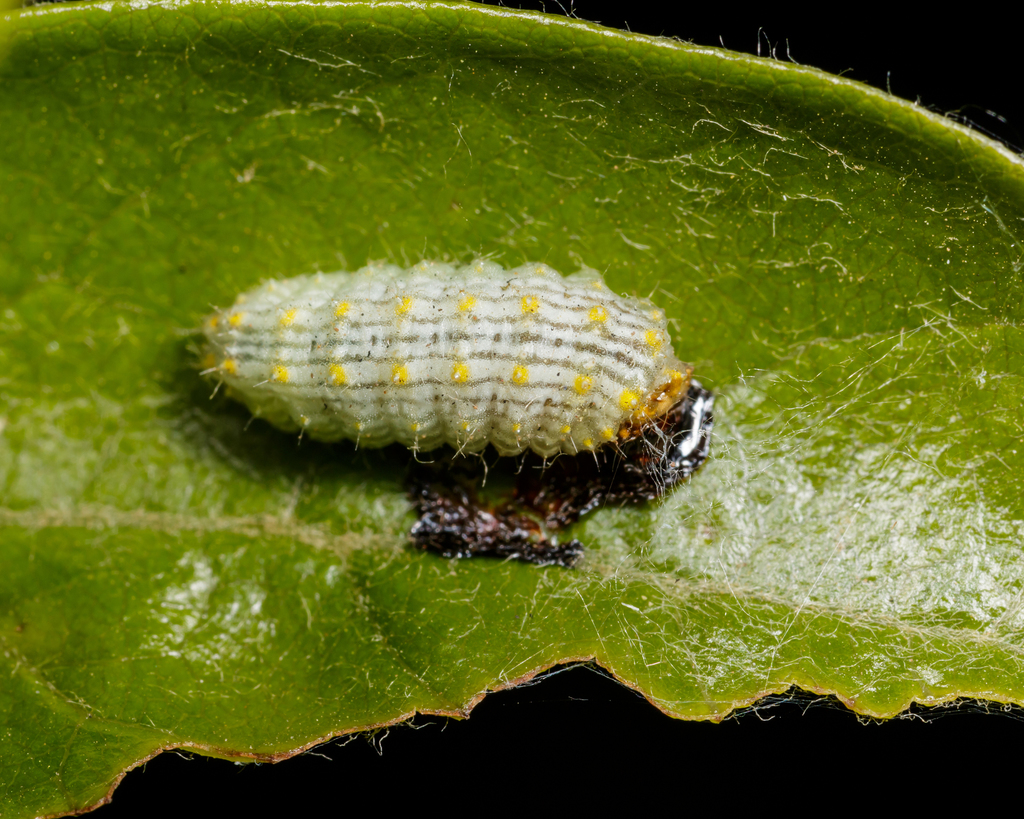
(c) Meghan Cassidy, some rights reserved (CC BY-SA) · licence
Family: Lacturidae · Class: Insecta · Order: Lepidoptera
Enaemia subfervens (Speckled Lactura) is a California animal in the Lacturidae family.
Enaemia subfervens is a small moth in the family Lacturidae, commonly known as the Speckled Lactura or Speckled Enaemia. This species was originally described by Walker in 1854 and has undergone recent taxonomic revisions, being transferred from the genus Lactura to Enaemia (Heppner 2019). The species includes several synonyms and a subspecies, Enaemia subfervens sapeloensis, described from Georgia (Matson & Wagner 2019). Adults are characterized by speckled wing patterns, though detailed morphological descriptions require examination of pinned specimens and genitalia for reliable identification (Matson et al. 2019). Enaemia subfervens occurs across the southeastern and south-central United States, with confirmed records from Texas, Oklahoma, Kansas, Missouri, Illinois, Louisiana, Mississippi, Alabama, Florida, and Georgia (Moth Photographers Group). The species' type locality is Texas, and it represents the western extent of the genus Enaemia in North America. California records for this species have not been documented in available literature, suggesting it may be absent from the state or represent misidentifications of related taxa. The species inhabits diverse environments across its range, from wooded floodplains to areas near ponds and wetlands. Adults have been collected at ultraviolet lights, indicating nocturnal activity patterns typical of the family Lacturidae. Flight periods vary geographically but generally span from February through August, with peak activity occurring in spring and early summer months. In Texas and Louisiana, adults fly from February through June, while northern populations in Kansas show later emergence in June and July. Larval host plants belong to the family Sapotaceae, specifically species within the genus Sideroxylon (Shropshire & Douglas 2025). This host plant relationship is significant for understanding the species' distribution, as Sideroxylon species occur primarily in warmer regions of the southern United States. The larval biology and development remain poorly documented, reflecting the limited ecological studies conducted on this group of moths. Enaemia subfervens lacks formal conservation status designations and appears to maintain stable populations across its documented range. However, like many Lepidoptera species, it may face threats from habitat modification, urbanization, and changes in host plant availability. The recent taxonomic work by Matson and Wagner (2019) has clarified the species' identity and relationships within the genus, resolving previous confusion with related taxa. DNA barcoding studies have confirmed species boundaries and aided in accurate identification of museum specimens previously misidentified as other Lacturidae species. The species belongs to a tropical moth family with limited representation in temperate North America. Recent systematic studies have revealed the complexity of relationships within this group and highlighted the need for continued taxonomic research. Field identification requires careful examination of wing patterns and, for definitive determination, analysis of genitalic structures. The species contributes to the biodiversity of southeastern ecosystems, though its ecological role and population dynamics remain understudied components of regional moth communities.
Classification
Class: Insecta · Order: Lepidoptera · Family: Lacturidae
Frequently asked questions
How is Enaemia subfervens classified?
Enaemia subfervens belongs to class Insecta, order Lepidoptera, family Lacturidae.
What family does Enaemia subfervens belong to?
Enaemia subfervens is in the Lacturidae family.
What is Enaemia subfervens?
Enaemia subfervens is a small moth in the family Lacturidae, commonly known as the Speckled Lactura or Speckled Enaemia.
Is Enaemia subfervens found in California?
Yes. Enaemia subfervens is recorded in California in The California Species Project's catalogue.
More California species
This species has no close relatives in our California data — here are other species to explore.
Data from The California Species Project — 14,000+ California species with verified data from CNPS, CDFW, USFWS, and more.