Enallagma annexum
Northern Bluet
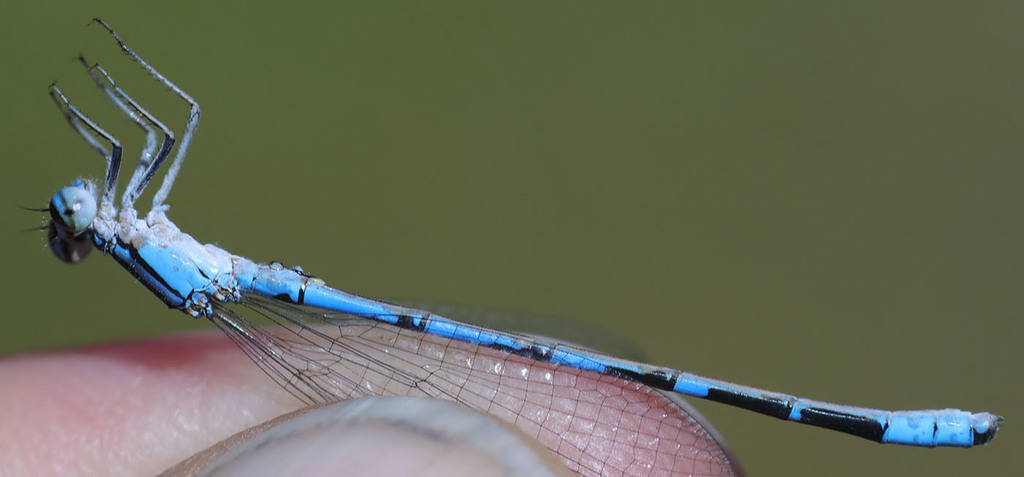
(c) Pinnacles National Park, some rights reserved (CC BY) · licence
Family: Coenagrionidae · Class: Insecta · Order: Odonata
Enallagma annexum (Northern Bluet) is a California animal in the Coenagrionidae family.
The Northern Bluet is a small damselfly in the family Coenagrionidae, measuring approximately 25 to 35 mm (1.0 to 1.4 inches) in total length. Males display bright blue coloration with distinctive black markings on the thorax and abdomen, while females typically exhibit duller blue-green to brown coloration. The species can be distinguished from other Enallagma species by specific patterns of abdominal markings and appendage structure, though field identification often requires close examination of terminal abdominal segments and cerci. Enallagma annexum occurs across much of northern North America, with populations documented from Alaska and western Canada south through the northern United States. The species' range extends from the Pacific Northwest eastward across the boreal regions to the Atlantic provinces. In western North America, populations are found in suitable habitats throughout the mountainous regions and northern latitudes. The taxonomic status of this species has undergone revision, with New World populations formerly considered part of Enallagma cyathigerum now recognized as distinct (NatureServe). Northern Bluets inhabit a variety of freshwater environments, showing particular preference for shallow, vegetated waters including ponds, lakes, marshes, and slow-moving streams. The species typically occurs in areas with emergent and submerged aquatic vegetation, which provides both oviposition sites and habitat for developing larvae. Adults are commonly observed near shorelines with cattails, sedges, and other wetland plants. Elevation tolerance ranges from sea level to moderate mountain elevations, with populations documented up to approximately 2,000 meters in suitable habitat. Adult Northern Bluets are active fliers during warm, sunny conditions, typically from late spring through early fall depending on latitude and local climate. Males establish territories along water margins and engage in courtship displays to attract females. Mating occurs in tandem, with pairs often remaining coupled during oviposition. Females insert eggs into plant tissue below the water surface using their well-developed ovipositor. Larval development occurs in aquatic environments, where nymphs feed on small invertebrates and undergo multiple molts over one to two years before emerging as adults. The species exhibits voltinism patterns that vary with latitude, with northern populations typically completing one generation per year. The Northern Bluet is not currently listed under federal or state endangered species legislation. However, like many freshwater-dependent species, populations may face localized threats from habitat loss, water quality degradation, and climate change impacts on wetland ecosystems. Draining and development of wetland habitats poses the primary conservation concern, particularly in areas experiencing rapid human population growth. The species' wide distribution and habitat flexibility provide some resilience against regional disturbances, though continued monitoring of population trends remains important for long-term conservation planning. As of December 2025, the species maintains stable populations across most of its range, though specific population assessments are limited for many areas.
Classification
Class: Insecta · Order: Odonata · Family: Coenagrionidae
Frequently asked questions
How is Enallagma annexum classified?
Enallagma annexum belongs to class Insecta, order Odonata, family Coenagrionidae.
What family does Enallagma annexum belong to?
Enallagma annexum is in the Coenagrionidae family.
What is Enallagma annexum?
The Northern Bluet is a small damselfly in the family Coenagrionidae, measuring approximately 25 to 35 mm (1.0 to 1.4 inches) in total length.
Is Enallagma annexum found in California?
Yes. Enallagma annexum is recorded in California in The California Species Project's catalogue.
Related species
Other California species in the same genus, family, or bioregion.
Data from The California Species Project — 14,000+ California species with verified data from CNPS, CDFW, USFWS, and more.