Enallagma boreale
Boreal Bluet
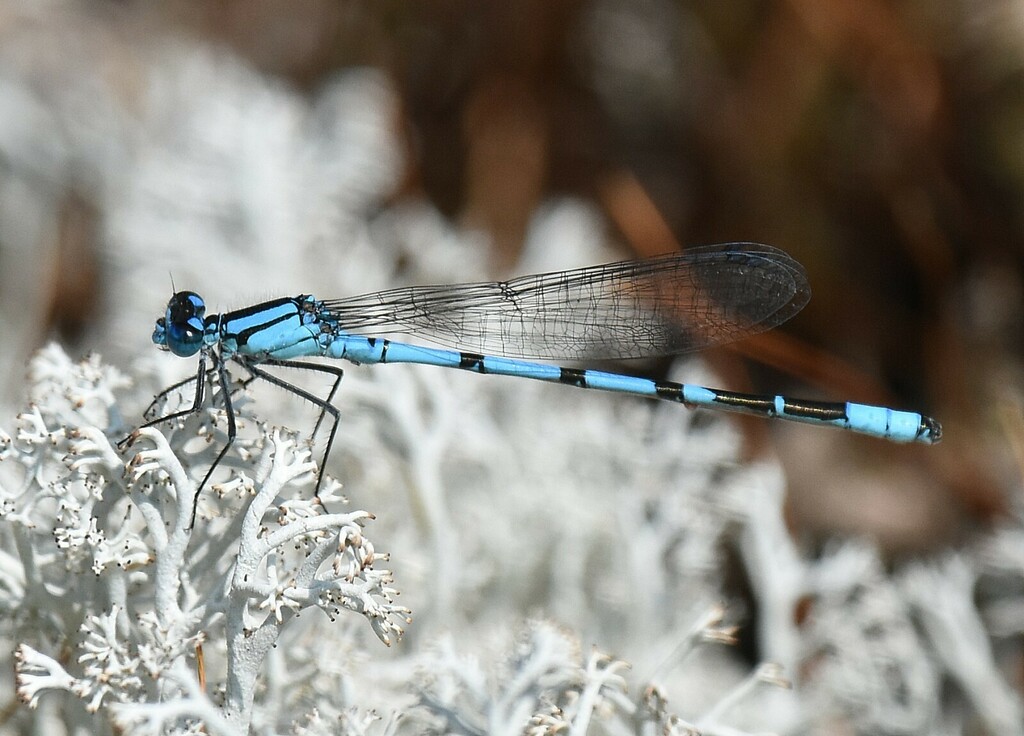
(c) Jimmy Dee, some rights reserved (CC BY-SA) · licence
Family: Coenagrionidae · Class: Insecta · Order: Odonata
Enallagma boreale (Boreal Bluet) is a California animal in the Coenagrionidae family.
The boreal bluet is a small damselfly in the narrow-winged damselfly family Coenagrionidae. Adults typically measure 30-35 mm (1.2-1.4 inches) in total length with a wingspan of approximately 40-45 mm. Males display the characteristic blue and black coloration typical of bluet damselflies, with a predominantly blue thorax marked by black shoulder stripes and a blue abdomen with black rings on segments. Females are generally more subdued in coloration, often appearing brownish or olive-green with similar black markings. The species can be distinguished from other Enallagma species by specific details of the male's terminal appendages and the pattern of black markings on the abdomen. The boreal bluet has a broad Nearctic distribution across northern North America, ranging from Alaska and northern Canada south to the northern United States. In California, this species represents the southernmost extent of its range and is likely restricted to high-elevation montane areas in the northern counties. Current taxonomic understanding places only Nearctic populations in E. boreale, with Palearctic populations now classified as E. circulatum (NatureServe 2024). The species appears on wildlife inventories from federal refuges, including the Sheldon-Hart Mountain National Wildlife Refuge Complex, indicating its presence in the broader Pacific Northwest region. Boreal bluets inhabit cool, clear waters including mountain lakes, ponds, slow-moving streams, and beaver ponds. They show a preference for waters with emergent and submerged aquatic vegetation, which provides both oviposition sites and hunting perches. The species is typically associated with boreal and montane forest ecosystems, often occurring at elevations where water temperatures remain cool throughout the summer months. Adults are frequently observed perching on emergent vegetation or rocks near the water's edge. Adults are active during the warmer months, typically from late spring through early fall, depending on elevation and local climate conditions. Like other damselflies, boreal bluets are predaceous both as aquatic nymphs and flying adults. Nymphs feed on small aquatic invertebrates including mosquito larvae, midges, and other aquatic insects. Adults capture flying prey such as mosquitoes, midges, small flies, and aphids. Mating occurs through the characteristic damselfly tandem position, with females laying eggs in plant tissues below or at the water surface while guarded by males. The boreal bluet does not appear on federal or state endangered species lists, though its distribution in California may be naturally limited by climate and habitat requirements. As a northern species reaching its southern range limit in California, populations may be vulnerable to climate change impacts including warming temperatures and altered precipitation patterns. The species' dependence on cool, clear waters makes it potentially sensitive to habitat degradation from human activities, though specific population trend data for California is limited. Conservation of high-elevation aquatic habitats will be important for maintaining viable populations at the southern edge of this species' range.
Classification
Class: Insecta · Order: Odonata · Family: Coenagrionidae
Frequently asked questions
How is Enallagma boreale classified?
Enallagma boreale belongs to class Insecta, order Odonata, family Coenagrionidae.
What family does Enallagma boreale belong to?
Enallagma boreale is in the Coenagrionidae family.
What is Enallagma boreale?
The boreal bluet is a small damselfly in the narrow-winged damselfly family Coenagrionidae.
Is Enallagma boreale found in California?
Yes. Enallagma boreale is recorded in California in The California Species Project's catalogue.
Related species
Other California species in the same genus, family, or bioregion.
Data from The California Species Project — 14,000+ California species with verified data from CNPS, CDFW, USFWS, and more.