Enallagma eiseni
Baja Bluet
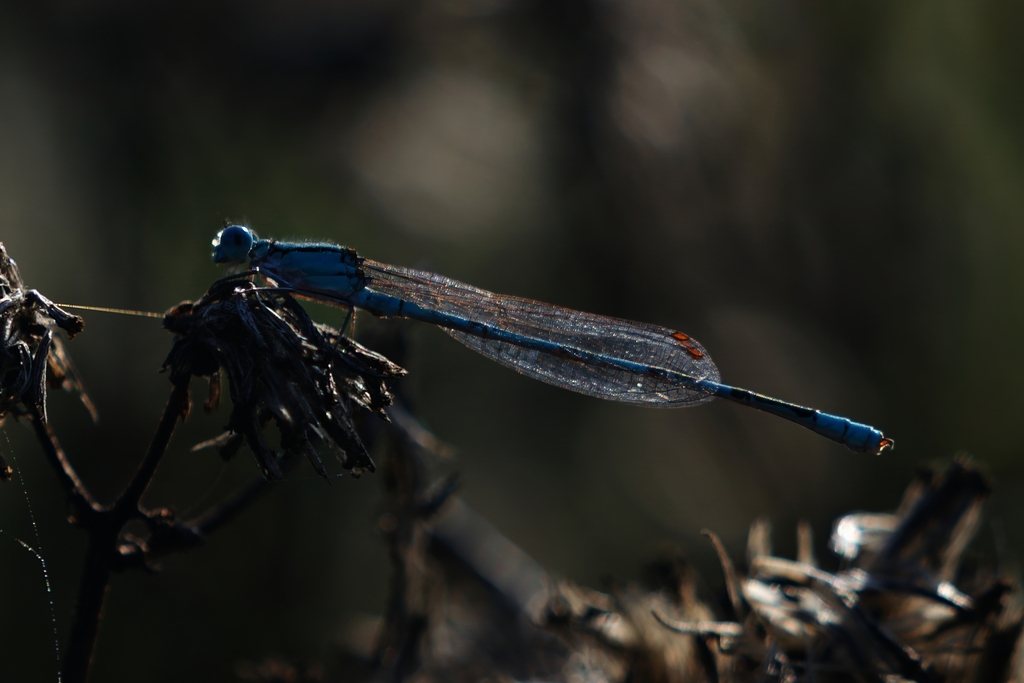
(c) Bill Levine, some rights reserved (CC BY) · licence
Family: Coenagrionidae · Class: Insecta · Order: Odonata
Enallagma eiseni (Baja Bluet) is a California animal in the Coenagrionidae family.
The Baja bluet (Enallagma eiseni) is a small damselfly in the family Coenagrionidae. Like other members of the genus Enallagma, adults typically measure 25-35 mm (1.0-1.4 inches) in length with a slender abdomen and transparent wings held parallel to the body when at rest. Males generally display blue coloration with black markings, while females are typically brownish or tan. The species can be distinguished from other bluets by specific details of male terminal appendages and thoracic markings, though field identification often requires close examination. Enallagma eiseni occurs in Baja California, Mexico, representing the southernmost distribution of any North American Enallagma species. The species' range extends from the northern Baja Peninsula southward, with populations documented in both coastal and inland areas of the region. This geographic distribution places it well south of the California border, despite its common name suggesting a connection to Baja California. The species inhabits freshwater aquatic environments typical of damselflies, including ponds, lakes, slow-moving streams, and marshy areas. Adults are generally found near these water bodies, particularly in areas with emergent vegetation that provides perching sites and hunting grounds. Like other coenagrionids, Baja bluets require clean freshwater habitats for larval development, as nymphs are aquatic and sensitive to water quality degradation. Adult Baja bluets are predatory insects that hunt small flying prey including midges, mosquitoes, and other small insects. They employ a sit-and-wait hunting strategy, perching on vegetation near water and making short flights to capture prey. Mating occurs during flight, with pairs forming tandem positions characteristic of damselflies. Females deposit eggs in aquatic vegetation or directly into water, where they develop through several nymphal stages before emerging as adults. The aquatic nymphs are also predatory, feeding on small aquatic invertebrates and serving as important components of freshwater food webs. As of December 2025, Enallagma eiseni does not appear on United States federal endangered species lists, likely due to its distribution being entirely within Mexico. Conservation status information specific to this species is limited, reflecting the generally poor documentation of many odonate species in Mexico. However, like many freshwater-dependent insects, the species potentially faces threats from habitat degradation, water pollution, and climate change effects on aquatic ecosystems. Urban development and agricultural practices in Baja California may impact local populations through habitat modification and water quality changes. The species' restricted range within a single biogeographic region makes it potentially vulnerable to localized environmental changes, though specific population trends and conservation needs have not been well documented in the scientific literature.
Classification
Class: Insecta · Order: Odonata · Family: Coenagrionidae
Frequently asked questions
How is Enallagma eiseni classified?
Enallagma eiseni belongs to class Insecta, order Odonata, family Coenagrionidae.
What family does Enallagma eiseni belong to?
Enallagma eiseni is in the Coenagrionidae family.
What is Enallagma eiseni?
The Baja bluet (Enallagma eiseni) is a small damselfly in the family Coenagrionidae.
Is Enallagma eiseni found in California?
Yes. Enallagma eiseni is recorded in California in The California Species Project's catalogue.
Related species
Other California species in the same genus, family, or bioregion.
Data from The California Species Project — 14,000+ California species with verified data from CNPS, CDFW, USFWS, and more.