Enoclerus sphegeus
Red-bellied Clerid
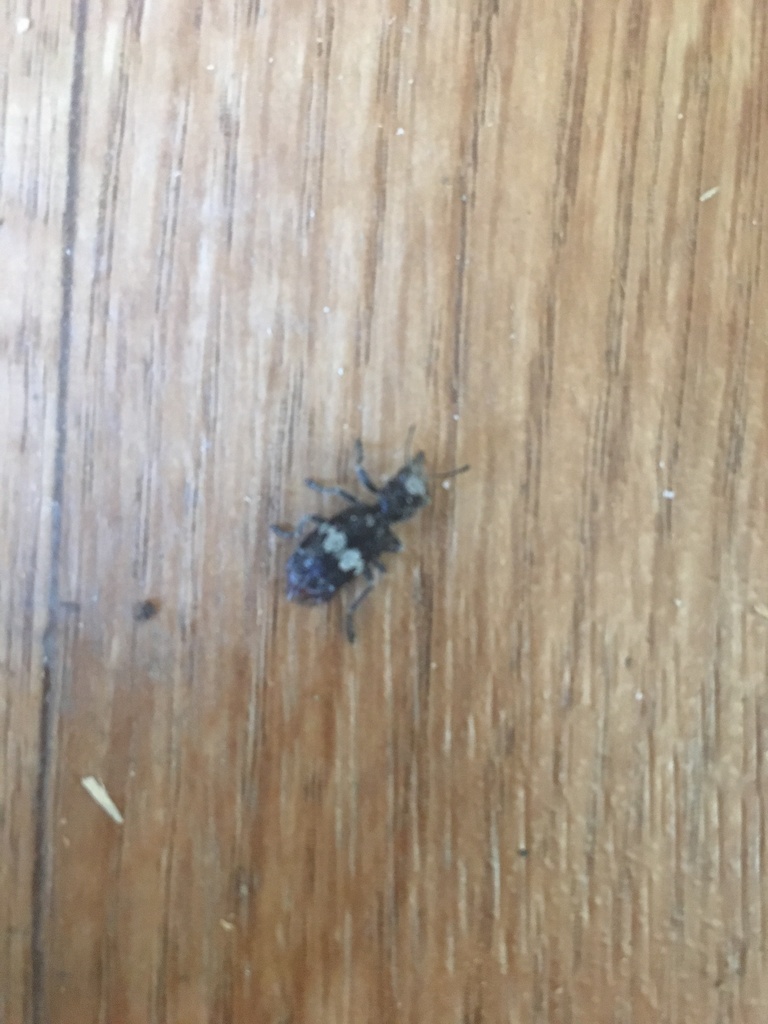
(c) Vincent Weber, some rights reserved (CC BY-SA) · licence
Family: Cleridae · Class: Insecta · Order: Coleoptera
Enoclerus sphegeus (Red-bellied Clerid) is a California animal in the Cleridae family.
The red-bellied clerid (Enoclerus sphegeus) is a predatory beetle belonging to the checkered beetle family Cleridae. Adults are characterized by their distinctive coloration, featuring a reddish-orange to red ventral surface that gives the species its common name, contrasting with darker dorsal coloration typical of clerid beetles. Like other members of the genus Enoclerus, this species displays the characteristic elongated body form and clubbed antennae of the family. Enoclerus sphegeus occurs across western North America, with documented populations in California and other western states. The species' distribution appears to be closely tied to forested ecosystems where its bark beetle prey are present. Specific range boundaries and population densities within California have not been comprehensively documented in recent surveys. This beetle inhabits forested environments, particularly coniferous forests where bark beetles are active. Adults and larvae are typically found in association with dead, dying, or stressed trees that harbor bark beetle populations. The species appears to prefer forest ecosystems with sufficient dead wood and bark beetle activity to support its predatory lifestyle. Enoclerus sphegeus functions as an important natural enemy of bark beetles, serving as a biological control agent in forest ecosystems. Adults actively hunt bark beetles on tree surfaces and within bark crevices, while larvae develop within bark beetle galleries where they feed on bark beetle larvae and pupae. According to forest entomology research, predation by clerid beetles can significantly impact bark beetle populations, with some studies documenting substantial mortality rates in bark beetle broods due to clerid predation (Xerces Society 2018). The species exhibits typical clerid life cycle patterns, with adults emerging to mate and lay eggs in bark beetle-infested wood. Larvae complete development within the host tree, pupating in bark crevices or galleries before emerging as adults. Seasonal activity patterns likely correspond with bark beetle emergence and activity periods, typically during warmer months when bark beetle populations are most active. The conservation status of Enoclerus sphegeus has not been formally evaluated by major conservation organizations. NatureServe Explorer indicates no special conservation designations for this species as of December 2025. The beetle's ecological role as a bark beetle predator makes it potentially beneficial in forest management contexts, particularly given increasing concerns about bark beetle outbreaks in western forests. However, like many forest-dwelling invertebrates, the species may face indirect threats from habitat modification, forest management practices, and climate-related changes that affect forest ecosystems and bark beetle dynamics. The lack of comprehensive population data and ecological studies limits assessment of current conservation needs. Further research into the species' distribution, abundance, and ecological requirements would enhance understanding of its conservation status and role in forest ecosystem health.
Classification
Class: Insecta · Order: Coleoptera · Family: Cleridae
Frequently asked questions
How is Enoclerus sphegeus classified?
Enoclerus sphegeus belongs to class Insecta, order Coleoptera, family Cleridae.
What family does Enoclerus sphegeus belong to?
Enoclerus sphegeus is in the Cleridae family.
What is Enoclerus sphegeus?
The red-bellied clerid (Enoclerus sphegeus) is a predatory beetle belonging to the checkered beetle family Cleridae.
Is Enoclerus sphegeus found in California?
Yes. Enoclerus sphegeus is recorded in California in The California Species Project's catalogue.
Related species
Other California species in the same genus, family, or bioregion.
Data from The California Species Project — 14,000+ California species with verified data from CNPS, CDFW, USFWS, and more.