Ensatina eschscholtzii croceater
Yellow-blotched Salamander
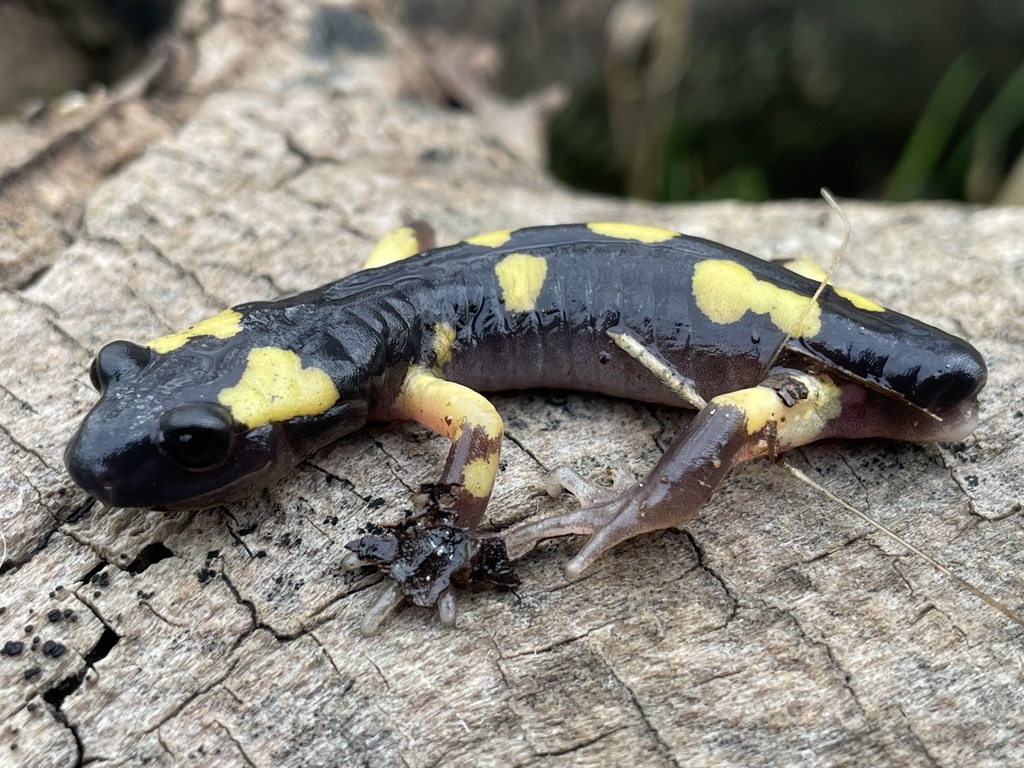
(c) Cricket Raspet, some rights reserved (CC BY) · licence
Family: Plethodontidae · Class: Amphibia · Order: Caudata
Conservation status: G5T3 S3
Ensatina eschscholtzii croceater (Yellow-blotched Salamander) is a California animal in the Plethodontidae family.
The Yellow-blotched Salamander (Ensatina eschscholtzii croceater) is a medium-sized, lungless salamander measuring 45 to 80 mm in snout-vent length and up to 145 mm total length. This subspecies exhibits smooth skin with 12 to 13 costal grooves and a distinctive constriction at the base of the swollen tail. The dorsal coloration is characterized by a brown to reddish-brown background with prominent yellow or orange blotches, giving the subspecies its common name. The ventral surface is typically pale or whitish. Like all Ensatina, this salamander lacks lungs and breathes through its moist skin and mouth lining. The Yellow-blotched Salamander occurs in the Transverse Ranges at the southern end of the Sierra Nevada in California, representing one of seven subspecies of Ensatina eschscholtzii distributed in a ring-like pattern around California's Central Valley. This subspecies is geographically isolated from other Ensatina populations and occupies a relatively small range compared to the species as a whole. The subspecies is endemic to California and does not occur in any other state or country. This salamander inhabits oak woodlands, particularly areas dominated by canyon live oak (Quercus chrysolepis), mixed coniferous forests, and chaparral communities. According to research in the Tehachapi Mountains, Yellow-blotched Salamanders show a positive association with canyon live oak habitat and avoid blue oak (Quercus douglasii) areas (Block & Morrison 1998). The subspecies occurs at elevations ranging from approximately 1,000 feet to 6,000 feet. During dry periods, individuals seek refuge under logs, bark, rocks, and in underground burrows, requiring moist microhabitats for survival. Yellow-blotched Salamanders are terrestrial and exhibit direct development, with eggs hatching directly into miniature adults without an aquatic larval stage. Breeding occurs during the wet season, typically from late fall through early spring. Females deposit eggs in moist, protected sites such as under logs or in underground chambers. The species is primarily nocturnal and becomes active during cool, moist conditions. Diet consists of small invertebrates including insects, spiders, snails, and worms. These salamanders play important ecological roles both as predators of soil invertebrates and as prey for snakes, birds, and mammals. The Yellow-blotched Salamander holds a NatureServe global rank of G5T3, indicating the subspecies is vulnerable with a moderate risk of extinction. While not federally listed, the subspecies faces threats from habitat loss due to development and oak woodland clearing in the Tehachapi Mountains region. Fire management practices that remove coarse woody debris also negatively impact populations by eliminating critical microhabitat. Climate change poses additional challenges through increased temperatures and altered precipitation patterns that could reduce the moist conditions essential for this species' survival. Conservation efforts focus on protecting remaining oak woodland habitats and maintaining forest floor debris that provides crucial refuge sites.
Classification
Class: Amphibia · Order: Caudata · Family: Plethodontidae
Conservation status
G5T3 S3
Frequently asked questions
How is Ensatina eschscholtzii croceater classified?
Ensatina eschscholtzii croceater belongs to class Amphibia, order Caudata, family Plethodontidae.
What family does Ensatina eschscholtzii croceater belong to?
Ensatina eschscholtzii croceater is in the Plethodontidae family.
Is Ensatina eschscholtzii croceater protected or of conservation concern?
Ensatina eschscholtzii croceater carries the following status: G5T3 S3.
What is Ensatina eschscholtzii croceater?
The Yellow-blotched Salamander (Ensatina eschscholtzii croceater) is a medium-sized, lungless salamander measuring 45 to 80 mm in snout-vent length and up to 145 mm total length.
Is Ensatina eschscholtzii croceater found in California?
Yes. Ensatina eschscholtzii croceater is recorded in California in The California Species Project's catalogue.
Related species
Other California species in the same genus, family, or bioregion.
Data from The California Species Project — 14,000+ California species with verified data from CNPS, CDFW, USFWS, and more.