Ensatina eschscholtzii klauberi
Large-blotched Salamander
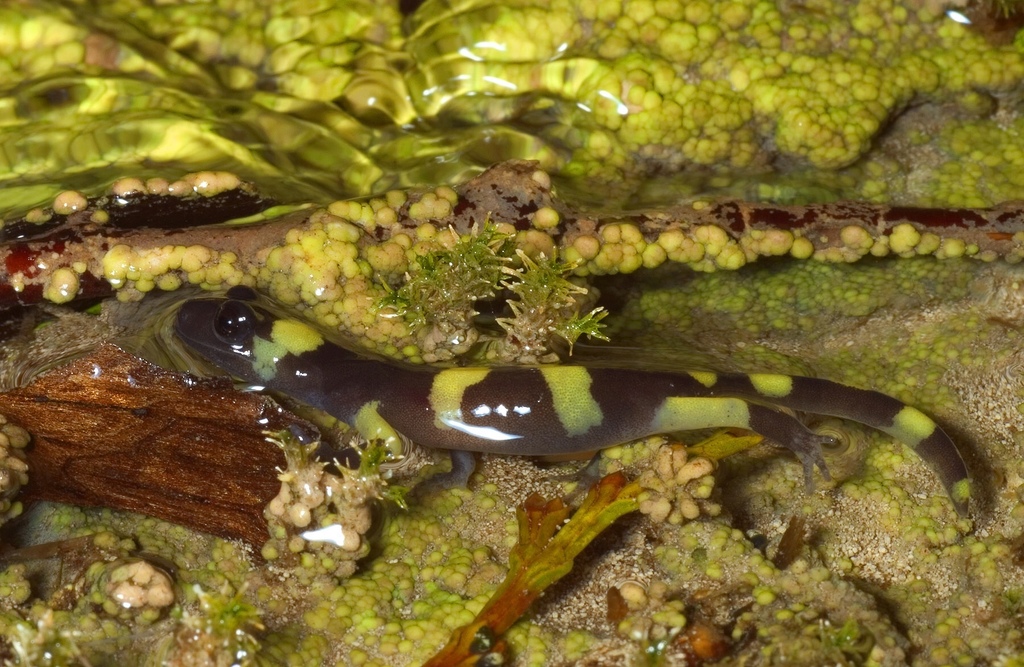
(c) Chris Brown, some rights reserved (CC BY) · licence
Family: Plethodontidae · Class: Amphibia · Order: Caudata
Conservation status: G5T2? S3
Ensatina eschscholtzii klauberi (Large-blotched Salamander) is a California animal in the Plethodontidae family.
The Large-blotched Salamander (Ensatina eschscholtzii klauberi) is a subspecies of the widespread Ensatina complex, distinguished by its distinctive coloration pattern of large, irregular blotches on a darker background. Adults typically measure 7.5 to 14 centimeters (3 to 5.5 inches) in total length, with a robust body and the characteristic constricted tail base found in all Ensatina subspecies. The dorsal surface displays prominent orange to reddish-brown blotches against a dark brown or black background, while the ventral surface is typically lighter with scattered dark pigmentation. This subspecies occurs in the peninsular ranges of southern California, including portions of the eastern San Bernardino Mountains, and extends into isolated populations in the San Pedro Mártir Mountains and Sierra Juárez of northern Baja California, Mexico (californiaherps.com). The range includes areas of Riverside, San Bernardino, Orange, and San Diego counties in California. Historical records from the San Gabriel Mountains have not been confirmed in recent surveys. The subspecies intergrades with the Yellow-blotched Ensatina (E. e. croceater) in the San Bernardino and San Jacinto Mountains, and is locally sympatric with the Monterey Ensatina (E. e. eschscholtzii) at four sites in southern California with minimal hybridization (AmphibiaWeb). Large-blotched Salamanders inhabit mixed coniferous and oak woodlands, typically in areas with abundant coarse woody debris on the forest floor. They are most commonly found under logs, rocks, bark, and within decaying wood, preferring moist microhabitats that provide protection from desiccation. During dry periods or cold weather, individuals retreat deeper into logs, animal burrows, root systems, or woodrat nests. The subspecies occurs at elevations ranging from near sea level to approximately 1,800 meters (6,000 feet) in mountainous terrain. Like other Ensatina subspecies, Large-blotched Salamanders are lungless, respiring entirely through their skin and mouth lining, which requires them to maintain moist skin surfaces. They are primarily nocturnal and become active during periods of high humidity, particularly during and after rainfall. The species exhibits direct development, with females depositing eggs in moist terrestrial locations where they undergo complete metamorphosis within the egg, hatching as miniature adults rather than aquatic larvae. Reproduction typically occurs during the cooler, wetter months when environmental conditions are optimal for egg survival. The Large-blotched Salamander carries a NatureServe global rank of G5T2?, indicating the subspecies may be imperiled with a small range and potentially declining populations, while the parent species Ensatina eschscholtzii is considered secure globally. In California, the subspecies holds a state rank of S3, and both E. e. klauberi and E. e. croceater are designated as California Species of Special Concern (AmphibiaWeb). Primary threats include habitat loss from urban development, timber harvesting, mining activities, and increasingly frequent wildfires associated with climate change. Additional concerns include feral pig populations that disturb forest floor habitat and potential impacts from chytrid fungal disease (NatureServe Explorer).
Classification
Class: Amphibia · Order: Caudata · Family: Plethodontidae
Conservation status
G5T2? S3
Frequently asked questions
How is Ensatina eschscholtzii klauberi classified?
Ensatina eschscholtzii klauberi belongs to class Amphibia, order Caudata, family Plethodontidae.
What family does Ensatina eschscholtzii klauberi belong to?
Ensatina eschscholtzii klauberi is in the Plethodontidae family.
Is Ensatina eschscholtzii klauberi protected or of conservation concern?
Ensatina eschscholtzii klauberi carries the following status: G5T2? S3.
What is Ensatina eschscholtzii klauberi?
The Large-blotched Salamander (Ensatina eschscholtzii klauberi) is a subspecies of the widespread Ensatina complex, distinguished by its distinctive coloration pattern of large, irregular blotches on a darker background.
Is Ensatina eschscholtzii klauberi found in California?
Yes. Ensatina eschscholtzii klauberi is recorded in California in The California Species Project's catalogue.
Related species
Other California species in the same genus, family, or bioregion.
Data from The California Species Project — 14,000+ California species with verified data from CNPS, CDFW, USFWS, and more.