Entephria bradorata
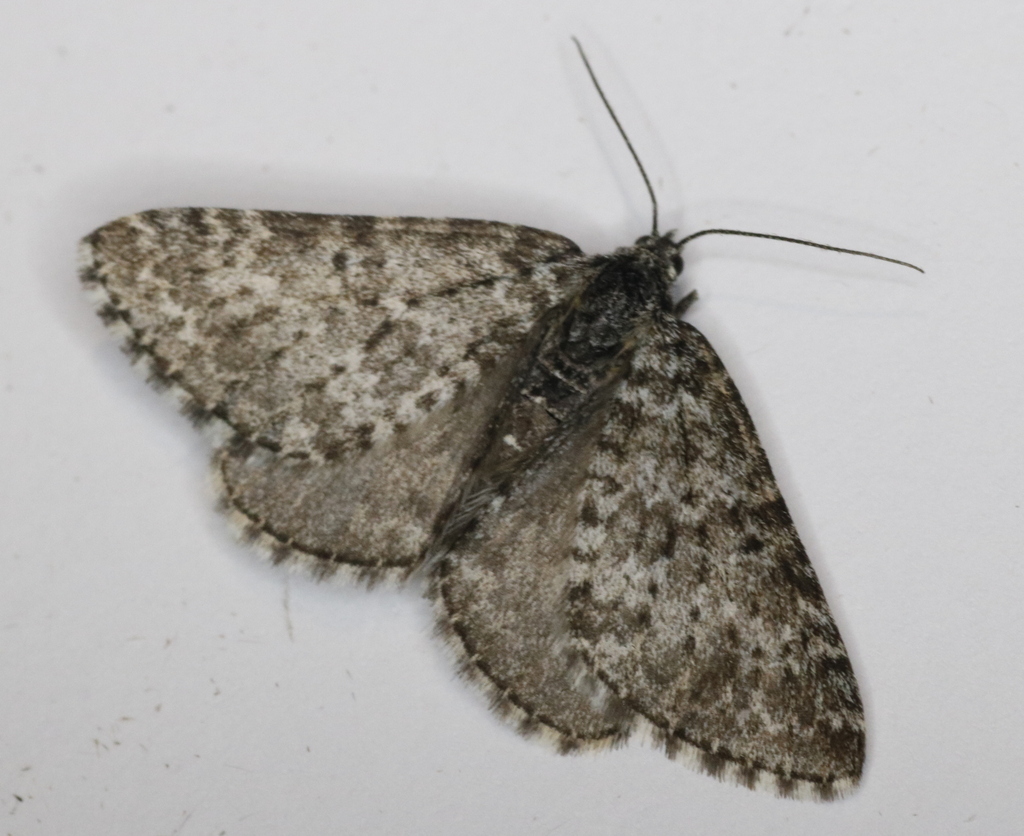
(c) a_anctil, some rights reserved (CC BY-SA) · licence
Family: Geometridae · Class: Insecta · Order: Lepidoptera
Entephria bradorata is a California animal in the Geometridae family.
Entephria bradorata is a geometrid moth species belonging to the family Geometridae, subfamily Larentiinae. This species is part of a genus of moths commonly known as carpet moths or wave moths, characterized by their typically cryptic wing patterns and crepuscular to nocturnal flight behavior. The adult moth displays the characteristic wing patterns typical of the Entephria genus, with forewings that exhibit subtle earth-tone coloration patterns that provide effective camouflage against tree bark and leaf litter. Like other geometrid moths, adults hold their wings horizontally when at rest. The wingspan and specific morphological details require further taxonomic verification, as comprehensive morphological descriptions for this species are limited in readily accessible literature. The geographic range and distribution of Entephria bradorata requires clarification through additional taxonomic research. The genus Entephria includes species distributed across northern temperate regions, with several species recorded from western North America. However, the specific range and occurrence of E. bradorata, particularly within California, needs verification from authoritative lepidopteran databases and regional surveys. Habitat preferences for this species are not well-documented in accessible literature. Members of the genus Entephria typically inhabit forested environments, including coniferous and mixed woodlands. The larvae of related Entephria species are known to feed on various shrubs and trees, often showing preferences for plants in families such as Rosaceae, Caprifoliaceae, or Ericaceae, though the specific host plant relationships for E. bradorata remain unclear. The life history and ecological behavior of Entephria bradorata follow the typical geometrid moth pattern, with complete metamorphosis including egg, larval, pupal, and adult stages. Geometridae larvae, commonly called inchworms or loopers, are characterized by their distinctive method of locomotion, arching their bodies as they move due to having fewer prolegs than other caterpillar families. Flight periods for adults likely occur during warmer months, though specific timing would depend on elevation and local climate conditions. No specific conservation status has been assigned to Entephria bradorata at federal or state levels. The species does not appear on current endangered species lists or species of special concern designations. However, the limited available information about this species' distribution, population status, and ecological requirements suggests it may warrant further taxonomic and ecological study to assess its conservation needs. Many geometrid moth species face threats from habitat loss, light pollution, and climate change, though species-specific impacts on E. bradorata remain undocumented. Further research is needed to establish comprehensive biological and ecological profiles for this species, including verification of its taxonomic status, geographic distribution within California, host plant relationships, and population trends.
Classification
Class: Insecta · Order: Lepidoptera · Family: Geometridae
Frequently asked questions
How is Entephria bradorata classified?
Entephria bradorata belongs to class Insecta, order Lepidoptera, family Geometridae.
What family does Entephria bradorata belong to?
Entephria bradorata is in the Geometridae family.
What is Entephria bradorata?
Entephria bradorata is a geometrid moth species belonging to the family Geometridae, subfamily Larentiinae.
Is Entephria bradorata found in California?
Yes. Entephria bradorata is recorded in California in The California Species Project's catalogue.
Related species
Other California species in the same genus, family, or bioregion.
Data from The California Species Project — 14,000+ California species with verified data from CNPS, CDFW, USFWS, and more.