Entephria multivagata
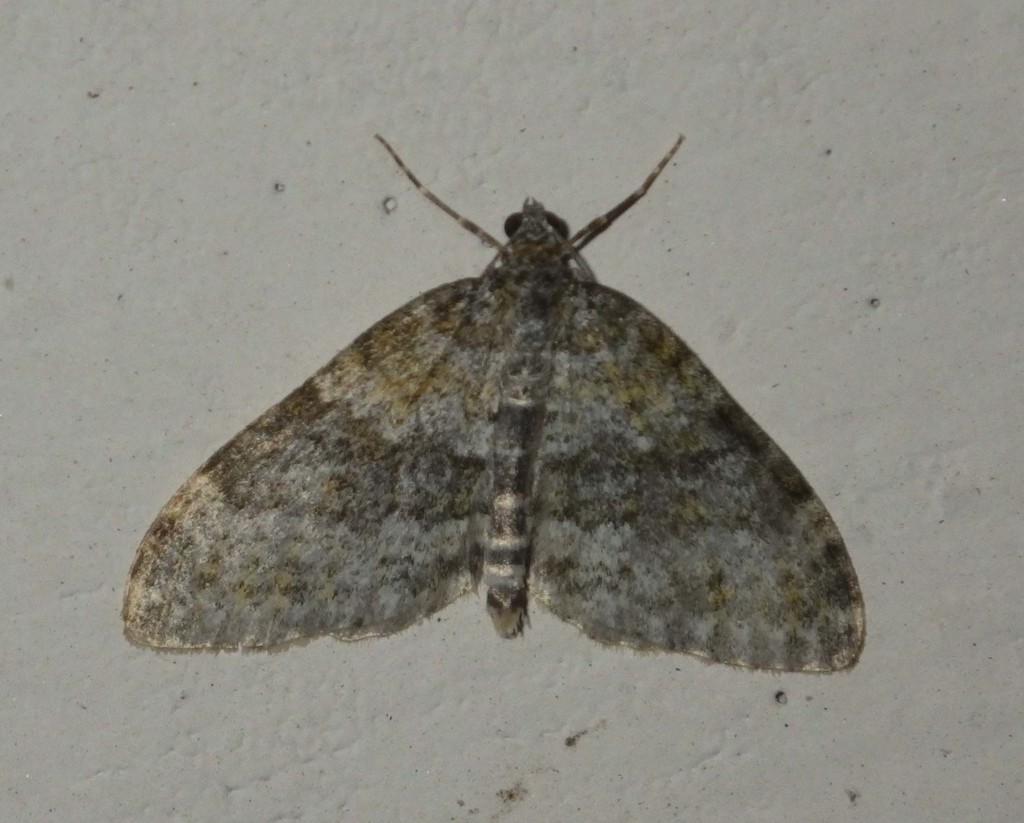
no rights reserved · CC0
Family: Geometridae · Class: Insecta · Order: Lepidoptera
Entephria multivagata is a California animal in the Geometridae family.
Entephria multivagata is a moth species belonging to the family Geometridae, commonly known as geometrids or inch-worms. This species represents one of the many geometrid moths found in western North America, though detailed morphological descriptions and ecological information remain limited in the scientific literature. As a member of the Geometridae family, E. multivagata likely exhibits the characteristic features common to this group, including relatively broad wings held horizontally when at rest and larvae that move in a distinctive looping motion. Adult geometrids typically have wingspans ranging from 15 to 40 mm, though specific measurements for this species are not well documented. The wings likely display cryptic coloration patterns that provide camouflage against bark or foliage, a common adaptation among geometrid moths. The geographic distribution of Entephria multivagata appears to be centered in western North America, though precise range boundaries and population distribution data are not readily available in current taxonomic databases. Many Entephria species are associated with montane and subalpine environments, suggesting this species may occupy similar elevational zones. The genus Entephria includes several species distributed across mountainous regions of North America. Habitat requirements for E. multivagata remain poorly characterized in available literature. Based on the ecological patterns of related Entephria species, this moth likely inhabits forested environments, potentially in association with coniferous or mixed forest communities. Many geometrid moths show strong host plant specificity during their larval stage, though the specific larval food plants for E. multivagata have not been definitively established. The life cycle of E. multivagata likely follows the typical geometrid pattern of complete metamorphosis. Adults probably emerge during specific seasonal windows, with timing potentially synchronized to host plant phenology or favorable environmental conditions. Larvae likely feed on foliage of specific plant species, though without documented host plant associations, the feeding ecology remains speculative. As with many geometrid species, overwintering may occur in the pupal stage. Conservation status information for Entephria multivagata is not available in major conservation databases, including federal and state listing programs. The species lacks formal conservation rankings from NatureServe or inclusion on the IUCN Red List. This absence of conservation status data likely reflects limited survey effort and taxonomic research rather than indicating the species is secure. Many lepidopteran species, particularly smaller moths, remain poorly studied regarding population trends and conservation needs. The taxonomic status and species boundaries within the genus Entephria may require further research using modern molecular techniques. Historical classifications of geometrid moths have undergone significant revisions as new morphological and genetic data become available. Future research efforts focusing on western North American geometrids may provide essential baseline data on distribution, ecology, and conservation status for E. multivagata and related species.
Classification
Class: Insecta · Order: Lepidoptera · Family: Geometridae
Frequently asked questions
How is Entephria multivagata classified?
Entephria multivagata belongs to class Insecta, order Lepidoptera, family Geometridae.
What family does Entephria multivagata belong to?
Entephria multivagata is in the Geometridae family.
What is Entephria multivagata?
Entephria multivagata is a moth species belonging to the family Geometridae, commonly known as geometrids or inch-worms.
Is Entephria multivagata found in California?
Yes. Entephria multivagata is recorded in California in The California Species Project's catalogue.
Related species
Other California species in the same genus, family, or bioregion.
Data from The California Species Project — 14,000+ California species with verified data from CNPS, CDFW, USFWS, and more.