Entomobrya atrocincta
Dimorphic Springtail
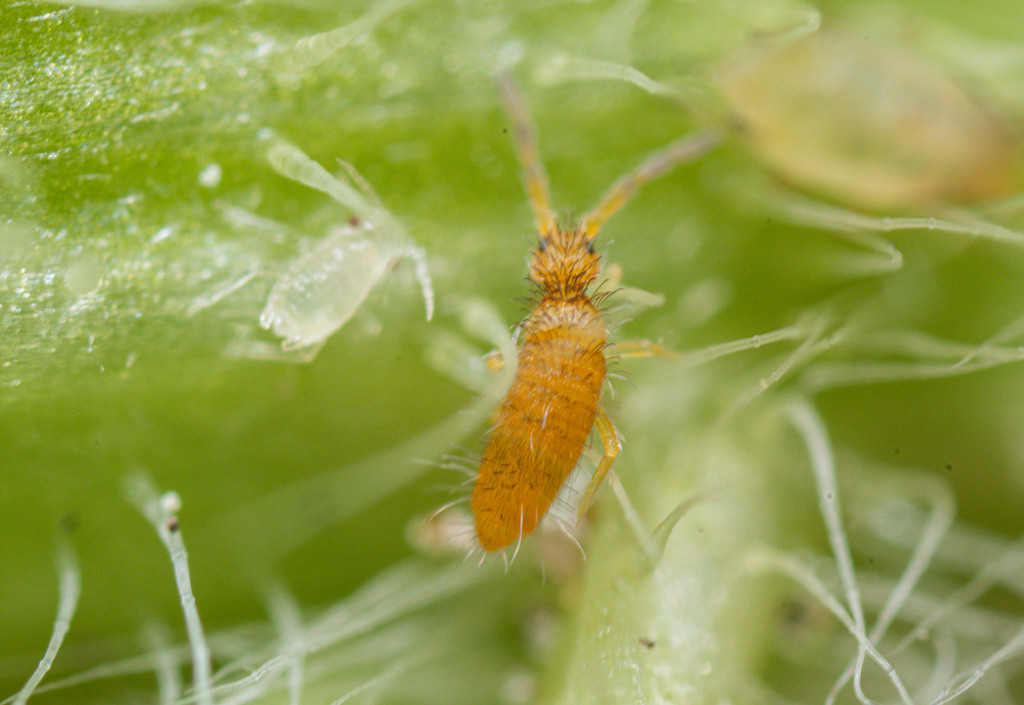
(c) Jeremiah Degenhardt, some rights reserved (CC BY) · licence
Family: Entomobryidae · Class: Collembola · Order: Entomobryomorpha
Entomobrya atrocincta (Dimorphic Springtail) is a California animal in the Entomobryidae family.
The Dimorphic Springtail (Entomobrya atrocincta) is a small hexapod arthropod belonging to the Class Collembola, commonly known as springtails. Adults measure approximately 2 millimeters (0.08 inches) in length, making them barely visible to the naked eye (BugGuide 2009). The species exhibits typical springtail morphology with an elongated body plan and the characteristic furcula, a forked appendage that allows for rapid jumping locomotion when disturbed. Entomobrya atrocincta has been documented in California, with verified observations from Alameda County in the San Francisco Bay Area (BugGuide 2009). The species belongs to a diverse genus containing 59 recognized species within the family Entomobryidae (USFWS Taxonomic Tree). The full geographic distribution of this springtail species remains poorly documented in scientific literature, though springtails as a group are found worldwide in terrestrial environments. This springtail inhabits typical collembolan microhabitats including soil, leaf litter, and decomposing organic matter. The documented observation from Alameda County shows the species foraging on radish leaves during late morning hours, suggesting activity on vegetation surfaces as well as ground-level habitats (BugGuide 2009). Like other members of the Entomobryidae family, this species likely requires moist conditions and is sensitive to desiccation, restricting its distribution to areas with adequate humidity levels. As with most springtails, Entomobrya atrocincta feeds primarily on decomposing organic matter, fungi, bacteria, and algae. The species plays an important ecological role as a decomposer, helping to break down leaf litter and other organic materials in soil ecosystems. Springtails reproduce through indirect sperm transfer, with males depositing spermatophores that females subsequently collect. Development is ametabolous, meaning juveniles resemble miniature adults and molt multiple times before reaching maturity. The species likely maintains populations year-round in suitable habitats, with activity levels fluctuating based on temperature and moisture conditions. Currently, Entomobrya atrocincta has no federal or state conservation listing status. The species does not appear on California's Special Animals List maintained by the California Department of Fish and Wildlife Natural Diversity Database, indicating it is not considered a species at risk (CDFW 2016). However, like many soil-dwelling invertebrates, springtail populations can be affected by habitat disturbance, pesticide applications, and urban development that destroys natural soil communities. Detailed ecological studies of this springtail species are limited, with most available information coming from taxonomic databases and citizen science observations. The species' small size, cryptic lifestyle, and specialized identification requirements contribute to the lack of comprehensive biological data. Research on springtail ecology in California remains an understudied field, despite these organisms' important roles in soil ecosystem functioning and nutrient cycling.
Classification
Class: Collembola · Order: Entomobryomorpha · Family: Entomobryidae
Frequently asked questions
How is Entomobrya atrocincta classified?
Entomobrya atrocincta belongs to class Collembola, order Entomobryomorpha, family Entomobryidae.
What family does Entomobrya atrocincta belong to?
Entomobrya atrocincta is in the Entomobryidae family.
What is Entomobrya atrocincta?
The Dimorphic Springtail (Entomobrya atrocincta) is a small hexapod arthropod belonging to the Class Collembola, commonly known as springtails.
Is Entomobrya atrocincta found in California?
Yes. Entomobrya atrocincta is recorded in California in The California Species Project's catalogue.
Related species
Other California species in the same genus, family, or bioregion.
Data from The California Species Project — 14,000+ California species with verified data from CNPS, CDFW, USFWS, and more.