Entomobrya katzi
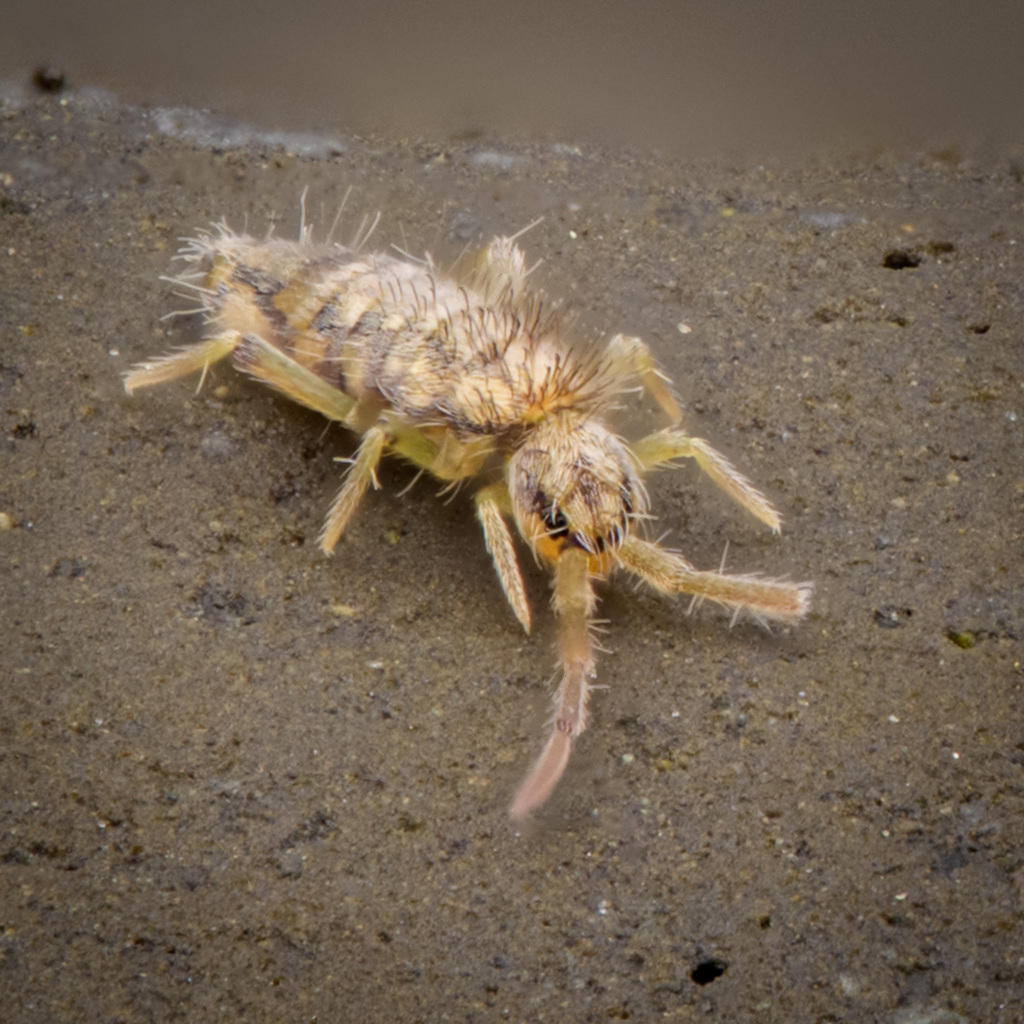
(c) Claus Giloi, some rights reserved (CC BY) · licence
Family: Entomobryidae · Class: Collembola · Order: Entomobryomorpha
Entomobrya katzi is a California animal in the Entomobryidae family.
Entomobrya katzi is a springtail species in the family Entomobryidae, belonging to the order Entomobryomorpha within the class Collembola. As a member of this diverse group of hexapods, E. katzi represents one of the numerous springtail species found in terrestrial ecosystems, though specific morphological details for this particular species have not been well documented in readily accessible scientific literature. The distributional range of Entomobrya katzi appears to be poorly documented, with limited information available regarding its specific occurrence within California or broader geographic distribution. Like other members of the genus Entomobrya, this species likely occurs in soil and leaf litter environments, though precise habitat preferences have not been thoroughly characterized in available scientific sources. Springtails in the genus Entomobrya typically inhabit soil, leaf litter, decaying organic matter, and moss layers in forest floors and other terrestrial environments. These microhabitats provide the moisture and organic material necessary for springtail survival and reproduction. The specific habitat requirements for E. katzi, including preferred vegetation types, elevation ranges, and microclimate conditions, remain undocumented in current literature. As with other Entomobryidae, E. katzi likely feeds on decomposing organic matter, fungal hyphae, bacteria, and other microorganisms present in soil and litter layers. Springtails play important ecological roles as decomposers, contributing to nutrient cycling in terrestrial ecosystems. Their feeding activities help break down organic matter and facilitate soil formation processes. Reproductive biology, seasonal activity patterns, and population dynamics for this species have not been specifically studied or reported. The conservation status of Entomobrya katzi is not established, as the species lacks federal or state listing designations. No critical habitat has been designated, and population trends are unknown. The absence of comprehensive taxonomic and ecological research on this species reflects a broader pattern common among soil-dwelling invertebrates, where many species remain poorly studied despite their ecological importance. Springtails face potential threats from habitat degradation, pesticide use, and climate change impacts on soil ecosystems, though specific threats to E. katzi cannot be assessed without baseline population and distribution data. The limited scientific documentation for this species highlights the need for additional taxonomic and ecological research on California's soil invertebrate fauna. Many springtail species remain inadequately described or studied, representing significant knowledge gaps in our understanding of terrestrial biodiversity. Comprehensive surveys and taxonomic studies would be necessary to better characterize the distribution, ecology, and conservation needs of E. katzi and related species. Scientific documentation for this species remains extremely limited. If you have additional verified information about this species' biology, distribution, or ecology, please contact us to help improve this species account.
Classification
Class: Collembola · Order: Entomobryomorpha · Family: Entomobryidae
Frequently asked questions
How is Entomobrya katzi classified?
Entomobrya katzi belongs to class Collembola, order Entomobryomorpha, family Entomobryidae.
What family does Entomobrya katzi belong to?
Entomobrya katzi is in the Entomobryidae family.
What is Entomobrya katzi?
Entomobrya katzi is a springtail species in the family Entomobryidae, belonging to the order Entomobryomorpha within the class Collembola.
Is Entomobrya katzi found in California?
Yes. Entomobrya katzi is recorded in California in The California Species Project's catalogue.
Related species
Other California species in the same genus, family, or bioregion.
Data from The California Species Project — 14,000+ California species with verified data from CNPS, CDFW, USFWS, and more.