Entosphenus similis
Klamath River lamprey
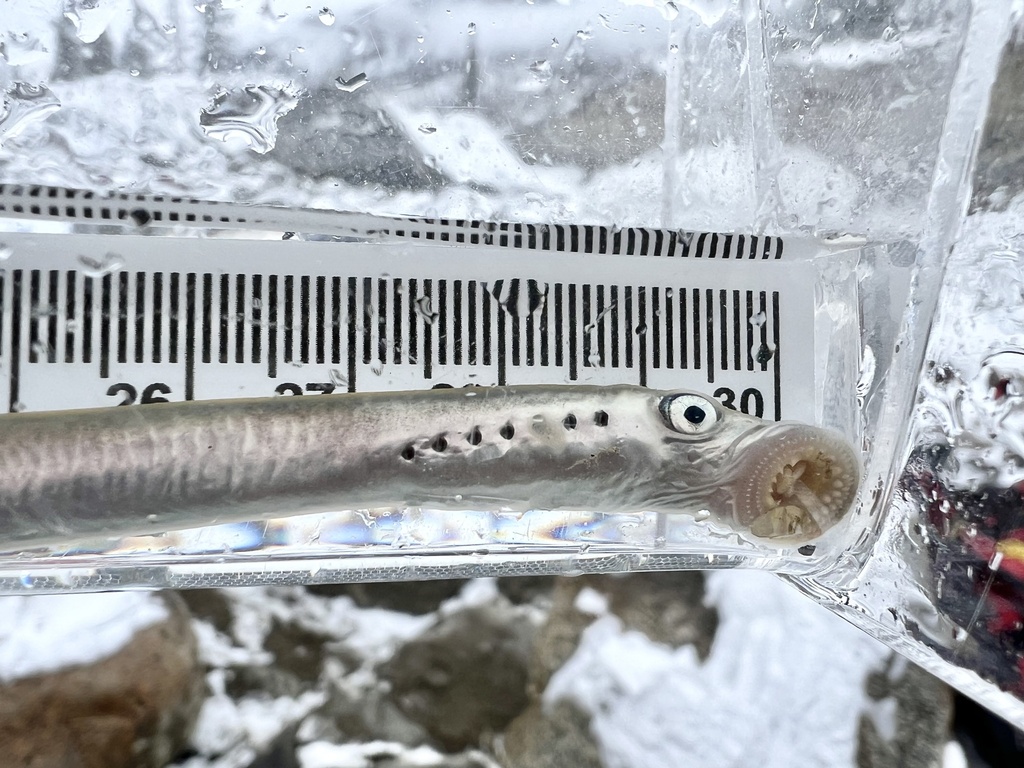
(c) Jason Alexander, some rights reserved (CC BY) · licence
Family: Petromyzontidae · Class: Petromyzontida · Order: Petromyzontiformes
Conservation status: G3G4Q S3
Entosphenus similis (Klamath River lamprey) is a California animal in the Petromyzontidae family.
The Klamath River lamprey (Entosphenus similis) is a parasitic lamprey species native to the Pacific Coast of North America. Adults typically measure 300 to 650 mm (12 to 26 inches) in total length, making them one of the larger lamprey species in the region. The cylindrical, eel-like body lacks paired fins and scales. Adults display a mottled brown to olive coloration on the dorsal surface with lighter yellowish sides. The circular, sucker-like oral disc contains rows of keratinized teeth arranged in concentric patterns, distinguishing it from the closely related Pacific lamprey by its smaller disc size relative to body length and fewer rows of posterior teeth. The species was formerly classified as Lampetra similis before taxonomic revision placed it in the genus Entosphenus. Historically, Klamath River lamprey occurred throughout the Klamath River basin in northern California and southern Oregon, extending from the Pacific Ocean to upstream reaches above present-day dams. The species also inhabited coastal streams from the Smith River in California north to the Umpqua River in Oregon. Current distribution is significantly reduced due to dam construction and habitat degradation. In California, the species persists primarily in the lower Klamath River below Iron Gate Dam and in select coastal tributaries including the Smith River system. Adults inhabit marine and estuarine environments during their parasitic phase, while juveniles (ammocoetes) require freshwater streams with soft sediment substrates for burrowing. Spawning adults prefer gravel beds in flowing water, typically at depths of 0.3 to 1.5 meters. Ammocoetes filter-feed in fine sand and silt deposits in stream margins and backwater areas. The species requires unobstructed migration corridors between marine and freshwater habitats. Klamath River lamprey exhibit an anadromous life cycle spanning five to seven years. Juveniles spend three to five years as filter-feeding ammocoetes buried in stream sediments, consuming detritus, algae, and microscopic organisms. Following metamorphosis, juveniles migrate to marine waters where they parasitize marine fish species including salmon, rockfish, and lingcod by attaching with their oral disc and feeding on body fluids. Adults return to freshwater streams to spawn after 12 to 20 months in the marine environment. Spawning occurs from April through July, with females constructing redds in gravel substrates. Adults die after spawning, with females depositing approximately 60,000 to 100,000 eggs. The species holds a Global rank of G3G4Q (vulnerable to apparently secure, with taxonomic questions) and a California State rank of S3 (vulnerable). While not federally listed, populations have declined significantly due to dam construction blocking migration routes, habitat degradation, and water diversions. The Klamath River dam removal project, scheduled for completion in 2024, may provide opportunities for population recovery by restoring access to historical spawning and rearing habitat in upper basin areas.
Classification
Class: Petromyzontida · Order: Petromyzontiformes · Family: Petromyzontidae
Conservation status
G3G4Q S3
Frequently asked questions
How is Entosphenus similis classified?
Entosphenus similis belongs to class Petromyzontida, order Petromyzontiformes, family Petromyzontidae.
What family does Entosphenus similis belong to?
Entosphenus similis is in the Petromyzontidae family.
Is Entosphenus similis protected or of conservation concern?
Entosphenus similis carries the following status: G3G4Q S3.
What is Entosphenus similis?
The Klamath River lamprey (Entosphenus similis) is a parasitic lamprey species native to the Pacific Coast of North America.
Is Entosphenus similis found in California?
Yes. Entosphenus similis is recorded in California in The California Species Project's catalogue.
Related species
Other California species in the same genus, family, or bioregion.
Data from The California Species Project — 14,000+ California species with verified data from CNPS, CDFW, USFWS, and more.