Eoreuma callista
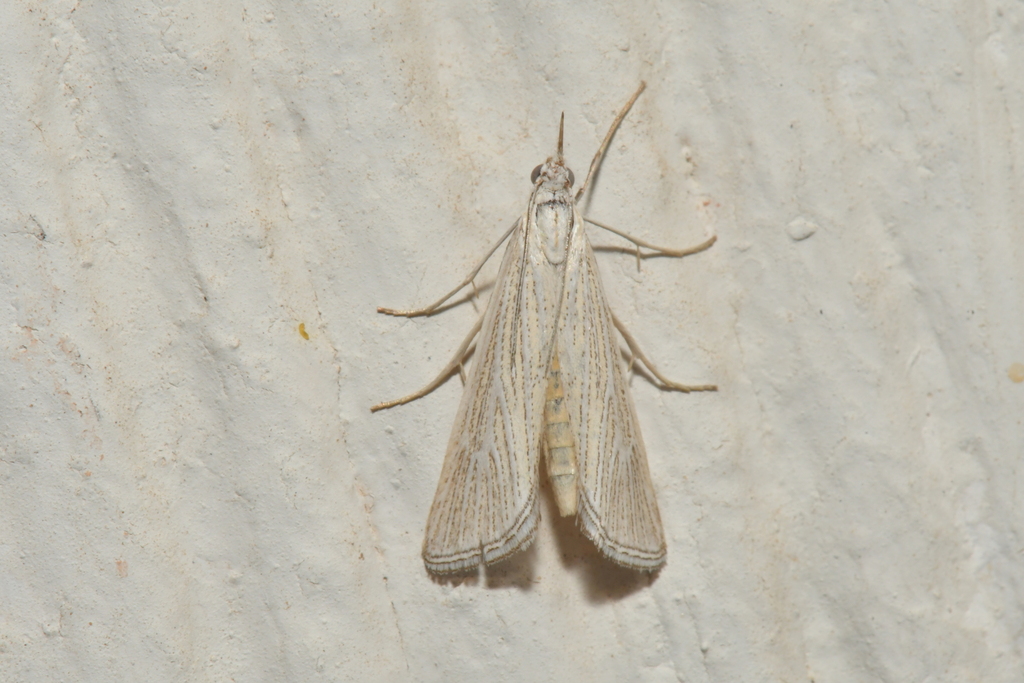
(c) Tom Kennedy, some rights reserved (CC BY) · licence
Family: Crambidae · Class: Insecta · Order: Lepidoptera
Eoreuma callista is a California animal in the Crambidae family.
Eoreuma callista is a moth species in the family Crambidae, commonly known as grass moths or snout moths. This lepidopteran belongs to a genus of small to medium-sized moths characterized by their distinctive wing patterns and grass-associated ecology. Adult moths typically measure 15 to 25 mm in wingspan, though specific morphometric data for E. callista remains limited in available literature. The forewings display a characteristic crambid pattern with pale ground coloration marked by darker longitudinal streaks and cross-lines. The hindwings are typically lighter than the forewings, often appearing whitish or pale cream. Like other Eoreuma species, E. callista likely possesses the elongated labial palps that give crambid moths their "snout moth" designation. Sexual dimorphism may be present, with males potentially showing more developed antennae for pheromone detection. The geographic range and distribution of Eoreuma callista in California requires further documentation through systematic surveys. The genus Eoreuma contains several species with restricted ranges in western North America, suggesting this species may have limited distribution within specific ecological zones. Without comprehensive collection records, the precise counties and elevational range remain unclear. Habitat preferences for E. callista likely align with other Eoreuma species, which typically inhabit grassland and shrubland environments. These moths are generally associated with native grass communities and may prefer areas with specific soil moisture conditions. The larval host plants are presumed to be grasses, following the pattern established for related species in the genus. Larvae likely feed as stem borers or root feeders, developing within grass tissues during their growth phases. Adult flight periods for Eoreuma callista have not been definitively established through systematic study. Related species in the genus typically emerge during late spring through summer months, with peak activity periods varying by elevation and local climate conditions. Males likely use pheromone communication to locate females for mating, with females depositing eggs on or near suitable host plants. The complete life cycle duration and number of generations per year remain undocumented. The conservation status of Eoreuma callista is poorly understood due to limited survey data and taxonomic research. As of December 2025, this species lacks formal conservation ranking at state or federal levels. The absence of comprehensive distribution data makes threat assessment difficult. Potential conservation concerns may include habitat conversion of native grasslands, invasive plant species altering host plant communities, and climate change impacts on suitable habitat zones. Urban development and agricultural conversion of grassland habitats could pose threats to populations if the species has restricted habitat requirements. Systematic surveys targeting Eoreuma callista are needed to establish baseline population data and distribution patterns. Light trapping and pheromone studies could provide valuable information about adult activity periods and population densities. Additionally, larval ecology studies would clarify host plant relationships and habitat requirements essential for conservation planning.
Classification
Class: Insecta · Order: Lepidoptera · Family: Crambidae
Frequently asked questions
How is Eoreuma callista classified?
Eoreuma callista belongs to class Insecta, order Lepidoptera, family Crambidae.
What family does Eoreuma callista belong to?
Eoreuma callista is in the Crambidae family.
What is Eoreuma callista?
Eoreuma callista is a moth species in the family Crambidae, commonly known as grass moths or snout moths.
Is Eoreuma callista found in California?
Yes. Eoreuma callista is recorded in California in The California Species Project's catalogue.
Related species
Other California species in the same genus, family, or bioregion.
Data from The California Species Project — 14,000+ California species with verified data from CNPS, CDFW, USFWS, and more.