Epargyreus clarus
Silver-spotted Skipper
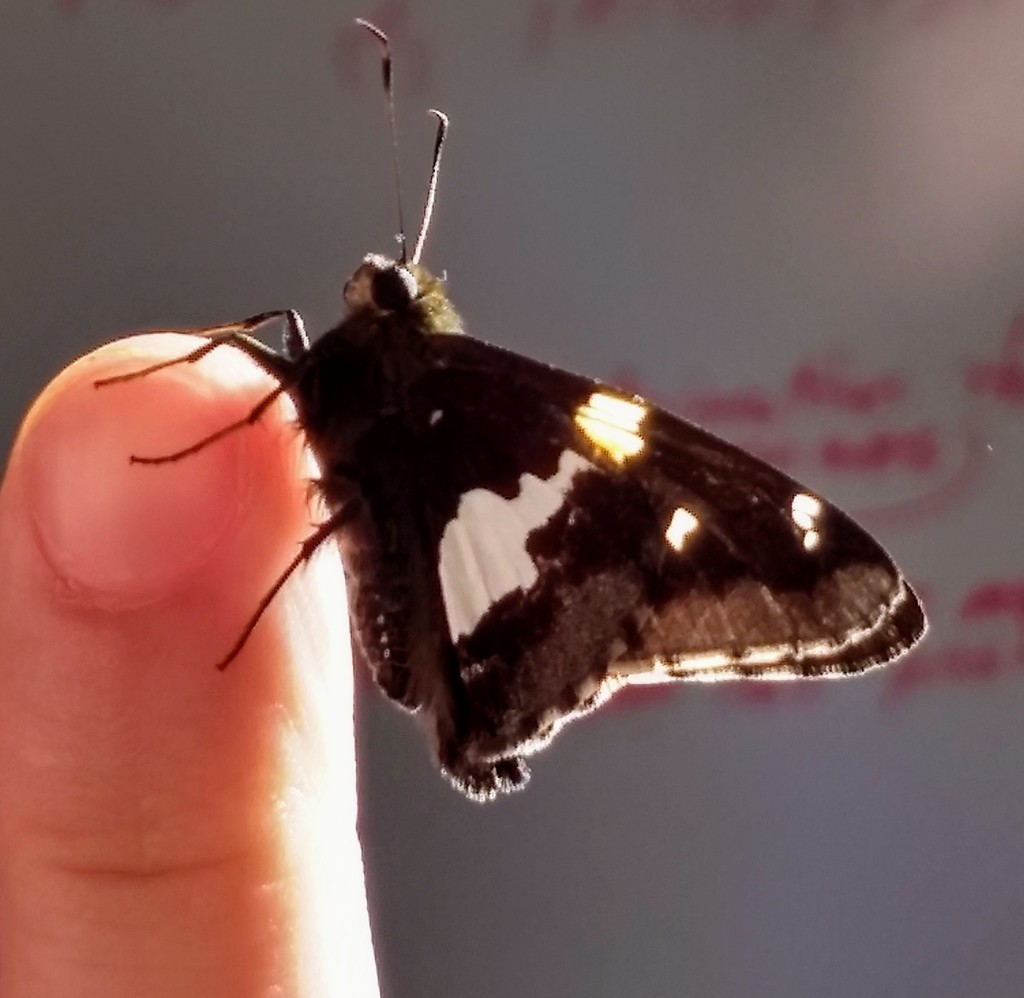
(c) Jason Hill, some rights reserved (CC BY) · licence
Family: Hesperiidae · Class: Insecta · Order: Lepidoptera
Epargyreus clarus (Silver-spotted Skipper) is a California animal in the Hesperiidae family.
The silver-spotted skipper is a large, robust butterfly in the family Hesperiidae, distinguished by its distinctive wing pattern and strong flight. Adults have a wingspan ranging from 44 to 54 mm (1.7 to 2.1 inches). The dorsal forewings are dark brown with prominent golden-orange spots arranged in a distinctive pattern. The hindwings display a large, metallic silver patch on the ventral surface that gives the species its common name. Males possess a dark stigma on the forewings that females lack. The body is thick and robust, typical of skipper butterflies, with a large head and prominent compound eyes. The silver-spotted skipper occurs across extreme southern Canada and most of the continental United States except the Great Basin and west Texas, extending into northern Mexico. In California, the species is found primarily in areas where suitable host plants occur, including foothills, riparian zones, and disturbed habitats. The species shows strong site fidelity, with populations often concentrated around patches of host plants. Habitat requirements center on the availability of woody and herbaceous legumes. Adults frequent open areas including fields, gardens, forest edges, and roadsides where nectar sources are abundant. The species utilizes a wide range of elevations but typically occurs below 2,000 meters. Adults are commonly observed nectaring on flowers such as lantana, buttonbush, and various composites. The species tolerates habitat disturbance and can thrive in suburban environments when host plants are present. Silver-spotted skippers utilize many woody legumes as larval hosts, including black locust (Robinia pseudacacia), honey locust (Gleditsia triacanthos), and false indigo (Amorpha species), as well as selected herbaceous legumes such as Glycyrrhiza species. Females lay single eggs on host plant leaves, typically on the upper surface. Larvae construct individual leaf shelters by folding and securing leaves with silk. The species produces two to three broods annually in most of its range, with overwintering occurring in the pupal stage. Adults are strong fliers and highly mobile, capable of dispersing considerable distances between suitable habitat patches. The silver-spotted skipper is not federally or state listed and maintains stable populations across most of its range. The species benefits from its broad host plant requirements and tolerance of habitat modification. Urban and suburban landscaping that includes native and non-native legumes can support local populations. Climate change may affect northern range limits, though the species' broad ecological tolerances suggest continued stability. The butterfly serves as an important pollinator for various flowering plants and provides ecosystem services in both natural and modified habitats.
Classification
Class: Insecta · Order: Lepidoptera · Family: Hesperiidae
Frequently asked questions
How is Epargyreus clarus classified?
Epargyreus clarus belongs to class Insecta, order Lepidoptera, family Hesperiidae.
What family does Epargyreus clarus belong to?
Epargyreus clarus is in the Hesperiidae family.
What is Epargyreus clarus?
The silver-spotted skipper is a large, robust butterfly in the family Hesperiidae, distinguished by its distinctive wing pattern and strong flight.
Is Epargyreus clarus found in California?
Yes. Epargyreus clarus is recorded in California in The California Species Project's catalogue.
Related species
Other California species in the same genus, family, or bioregion.
Data from The California Species Project — 14,000+ California species with verified data from CNPS, CDFW, USFWS, and more.