Ephestiodes erythrella
Pink-Washed Epheltes Moth
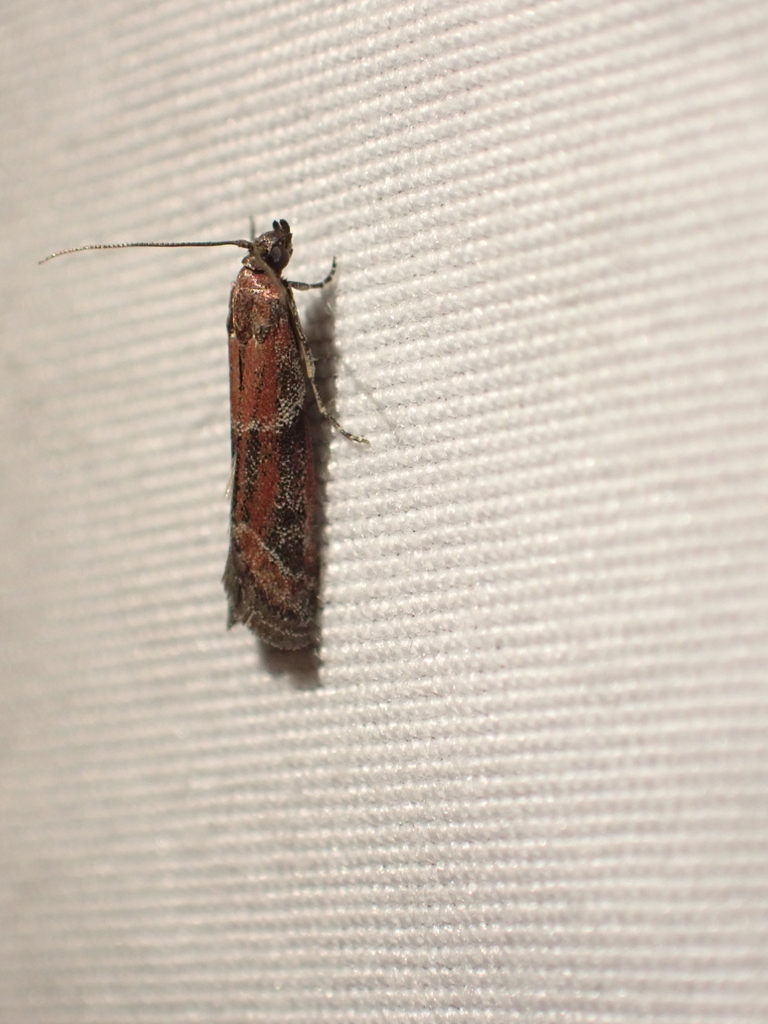
no rights reserved · CC0
Family: Pyralidae · Class: Insecta · Order: Lepidoptera
Ephestiodes erythrella (Pink-Washed Epheltes Moth) is a California animal in the Pyralidae family.
The Pink-Washed Epheltes Moth (Ephestiodes erythrella) is a small pyralid moth in the subfamily Phycitinae. Adults have a wingspan of 13 to 17 millimeters (0.51 to 0.67 inches), with forewings measuring approximately 5.75 millimeters in length (BugGuide.Net). The forewings display a distinctive vinous red coloration, dusted with whitish gray in the basal area, giving the species its common name reference to pink-washed appearance (BugGuide.Net). The species belongs to the Ephestia series within the tribe Phycitini and was originally described by Ragonot in 1887. Ephestiodes erythrella occurs across North America, with documented records extending from California to eastern states. In California, the species has been recorded in Siskiyou County, specifically in the Eddy Mountains at elevations of approximately 3,650 feet (1,113 meters) (BugGuide.Net). The species appears to have a broad continental distribution, as it is also documented in states as distant as New York, where it is listed among the Species of Greatest Conservation Need in the state's 2015 Wildlife Action Plan (BugGuide.Net). The habitat preferences of this species have not been extensively documented in the scientific literature. Based on available records, the moth occurs in mountainous regions at moderate elevations. The Siskiyou County record suggests the species may inhabit mixed forest or woodland environments typical of northern California's interior mountain ranges. However, specific vegetation associations and microhabitat requirements remain poorly characterized. Detailed behavioral and ecological information for Ephestiodes erythrella is limited in the available literature. As with other members of the Phycitinae subfamily, larvae likely develop as internal feeders within plant tissues, seeds, or stored organic matter. Adult flight periods and reproductive behavior have not been well documented. The August collection date from the California record suggests at least partial summer activity, but the complete seasonal phenology remains unknown. Host plant relationships, if any, have not been established for this species. Ephestiodes erythrella does not appear on federal endangered species lists and lacks formal conservation status designations in California as of December 2025. However, its inclusion in New York's Species of Greatest Conservation Need list suggests potential conservation concerns in at least part of its range. The species may face pressures common to many moths, including habitat modification and light pollution, though specific threats have not been assessed. The limited ecological documentation for this species reflects a broader pattern of knowledge gaps for many North American pyralid moths, highlighting the need for additional taxonomic and biological research. Scientific documentation for this species remains limited. The information presented here is based on available sources including BugGuide.Net and state wildlife databases. Additional research is needed to better understand the distribution, ecology, and conservation needs of this species across its range.
Classification
Class: Insecta · Order: Lepidoptera · Family: Pyralidae
Frequently asked questions
How is Ephestiodes erythrella classified?
Ephestiodes erythrella belongs to class Insecta, order Lepidoptera, family Pyralidae.
What family does Ephestiodes erythrella belong to?
Ephestiodes erythrella is in the Pyralidae family.
What is Ephestiodes erythrella?
The Pink-Washed Epheltes Moth (Ephestiodes erythrella) is a small pyralid moth in the subfamily Phycitinae.
Is Ephestiodes erythrella found in California?
Yes. Ephestiodes erythrella is recorded in California in The California Species Project's catalogue.
Related species
Other California species in the same genus, family, or bioregion.
Data from The California Species Project — 14,000+ California species with verified data from CNPS, CDFW, USFWS, and more.