Ephestiodes gilvescentella
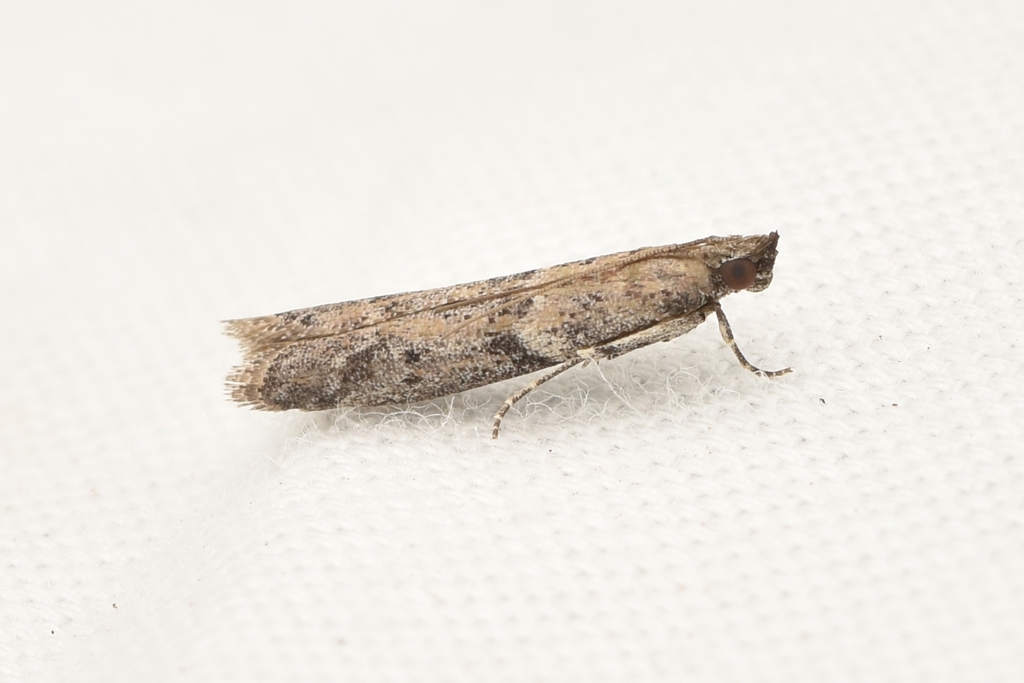
(c) Luke Padon, some rights reserved (CC BY) · licence
Family: Pyralidae · Class: Insecta · Order: Lepidoptera
Ephestiodes gilvescentella is a California animal in the Pyralidae family.
Ephestiodes gilvescentella is a small moth in the family Pyralidae, commonly known as snout moths or grass moths. This species belongs to the order Lepidoptera and represents one of the many pyralid moths found in North America. Adult moths typically measure 8 to 12 mm in wingspan, with forewings displaying a grayish-brown to yellowish-brown coloration that gives the species its Latin name 'gilvescentella,' referring to its pale yellowish appearance. The forewings often exhibit subtle darker markings or streaking patterns, while the hindwings are typically lighter in color with reduced patterning. The range of Ephestiodes gilvescentella includes portions of western North America, with documented occurrences in California. The species appears to have a limited distribution within the state, though comprehensive survey data remains sparse. Most records come from coastal and inland valley regions, suggesting the species may be adapted to Mediterranean climate conditions characteristic of much of California. This moth inhabits areas with appropriate host plant communities, likely associated with grasses or herbaceous plants typical of pyralid moth larvae. The species appears to favor open habitats including grasslands, meadows, and disturbed areas where suitable larval food sources occur. Elevation ranges and specific microhabitat preferences require further documentation through targeted surveys. Adult Ephestiodes gilvescentella likely exhibit typical pyralid moth behavior, being primarily nocturnal and attracted to artificial lights. The life cycle follows the standard lepidopteran pattern of egg, larva, pupa, and adult stages. Larvae probably feed on grasses or related herbaceous plants, constructing silk-lined feeding galleries or shelters within plant tissues. Flight periods and number of generations per year remain poorly documented, though most pyralid species in California produce multiple generations annually in suitable climates. The conservation status of Ephestiodes gilvescentella is not formally assessed by federal or state agencies. The species does not appear on the U.S. Fish and Wildlife Service's list of endangered or threatened species, nor is it included in California's special status species lists as of December 2025. Limited distribution records and apparent rarity suggest the species may warrant further investigation to determine population status and habitat requirements. Primary threats likely include habitat loss from urban development and agricultural conversion, particularly in California's rapidly developing coastal and valley regions. Climate change may also impact the species through alterations to temperature and precipitation patterns that affect host plant communities and suitable habitat distribution. Additional surveys and taxonomic research are needed to better understand the species' distribution, ecology, and conservation needs within California.
Classification
Class: Insecta · Order: Lepidoptera · Family: Pyralidae
Frequently asked questions
How is Ephestiodes gilvescentella classified?
Ephestiodes gilvescentella belongs to class Insecta, order Lepidoptera, family Pyralidae.
What family does Ephestiodes gilvescentella belong to?
Ephestiodes gilvescentella is in the Pyralidae family.
What is Ephestiodes gilvescentella?
Ephestiodes gilvescentella is a small moth in the family Pyralidae, commonly known as snout moths or grass moths.
Is Ephestiodes gilvescentella found in California?
Yes. Ephestiodes gilvescentella is recorded in California in The California Species Project's catalogue.
Related species
Other California species in the same genus, family, or bioregion.
Data from The California Species Project — 14,000+ California species with verified data from CNPS, CDFW, USFWS, and more.