Epiactis prolifera
Brooding Anemone
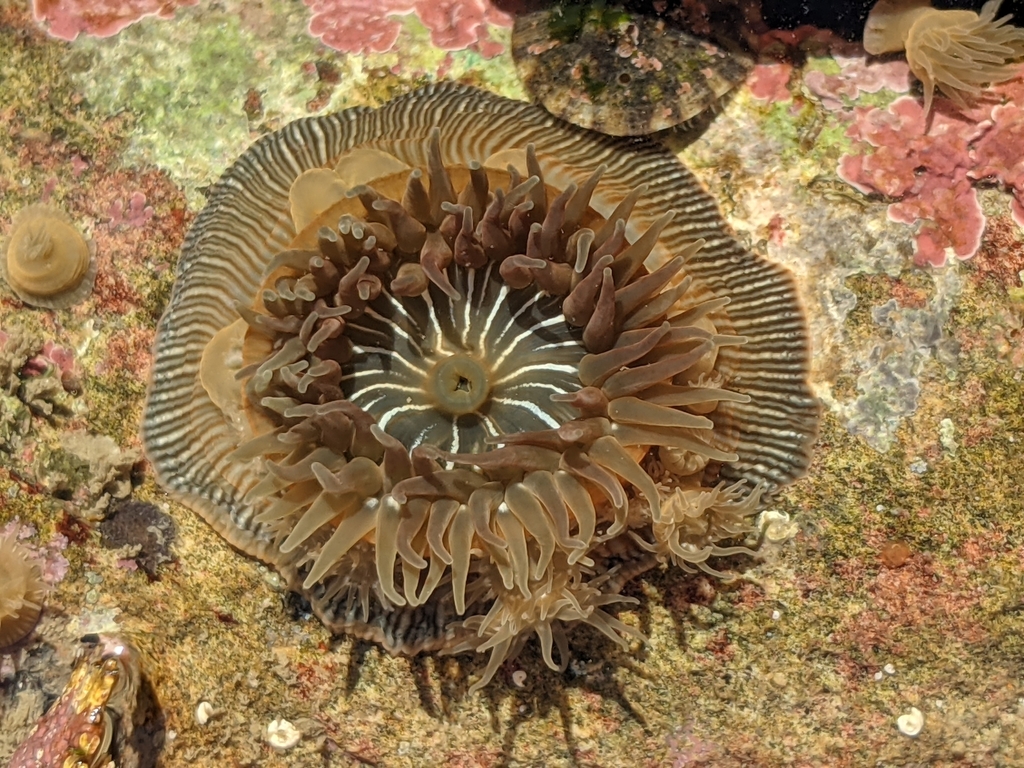
no rights reserved · CC0
Family: Actiniidae · Class: Anthozoa · Order: Actiniaria
Epiactis prolifera (Brooding Anemone) is a California animal in the Actiniidae family.
The brooding anemone is a small sea anemone belonging to the family Actiniidae, distinguished by its unique reproductive behavior and association with marine algae. This species exhibits a typical actiniarian body plan with a cylindrical column topped by a crown of tentacles surrounding a central oral disc. The column can contract significantly when disturbed, and the tentacles are used for capturing prey and defense. Epiactis prolifera occurs along the Pacific coast of North America, with documented populations in California waters. The species is found in both intertidal and shallow subtidal environments, often in association with kelp forest ecosystems. According to the California Department of Fish and Wildlife, this anemone serves as a holdfast-dwelling species that associates with giant kelp and bull kelp forests, where it contributes to the complex community structure of these marine ecosystems. The brooding anemone inhabits rocky substrates in intertidal and shallow subtidal zones, typically attaching to hard surfaces including kelp holdfasts, rocks, and other stable structures. This species demonstrates a preference for areas with moderate water movement that facilitates feeding while providing protection from strong wave action. The anemone's habitat requirements include access to planktonic prey organisms and suitable attachment sites within the kelp forest canopy or understory. This species exhibits the reproductive strategy indicated by its common name, with brooding behavior that involves retaining developing young within or on the parent's body rather than releasing them immediately into the water column. Like other actiniarians, E. prolifera is a carnivorous cnidarian that uses its tentacles armed with nematocysts to capture small fish, crustaceans, and other planktonic organisms. The species contributes to kelp forest biodiversity by serving as both predator and prey within these complex marine communities. According to CDFW documentation, the brooding anemone functions as one of the holdfast-dwelling organisms that utilize kelp rafts as dispersal vessels, potentially enhancing ecosystem connectivity across marine habitats. The brooding anemone currently lacks formal conservation status designations at federal or state levels. However, as a kelp forest associate, this species may be indirectly affected by factors influencing kelp ecosystem health, including ocean warming, sea urchin population dynamics, and coastal development. The California Department of Fish and Wildlife has identified this species as part of the kelp forest community in their enhanced status reports, recognizing its role in marine ecosystem function. Population trends and specific conservation needs for E. prolifera have not been comprehensively assessed, though the species' association with kelp forests suggests that broader kelp conservation efforts may benefit this anemone. Climate change impacts on marine temperatures and ocean chemistry could potentially affect this species' distribution and abundance, particularly given its dependence on kelp forest habitats that are themselves vulnerable to environmental change.
Classification
Class: Anthozoa · Order: Actiniaria · Family: Actiniidae
Frequently asked questions
How is Epiactis prolifera classified?
Epiactis prolifera belongs to class Anthozoa, order Actiniaria, family Actiniidae.
What family does Epiactis prolifera belong to?
Epiactis prolifera is in the Actiniidae family.
What is Epiactis prolifera?
The brooding anemone is a small sea anemone belonging to the family Actiniidae, distinguished by its unique reproductive behavior and association with marine algae.
Is Epiactis prolifera found in California?
Yes. Epiactis prolifera is recorded in California in The California Species Project's catalogue.
Related species
Other California species in the same genus, family, or bioregion.
Data from The California Species Project — 14,000+ California species with verified data from CNPS, CDFW, USFWS, and more.