Epiblema strenuana
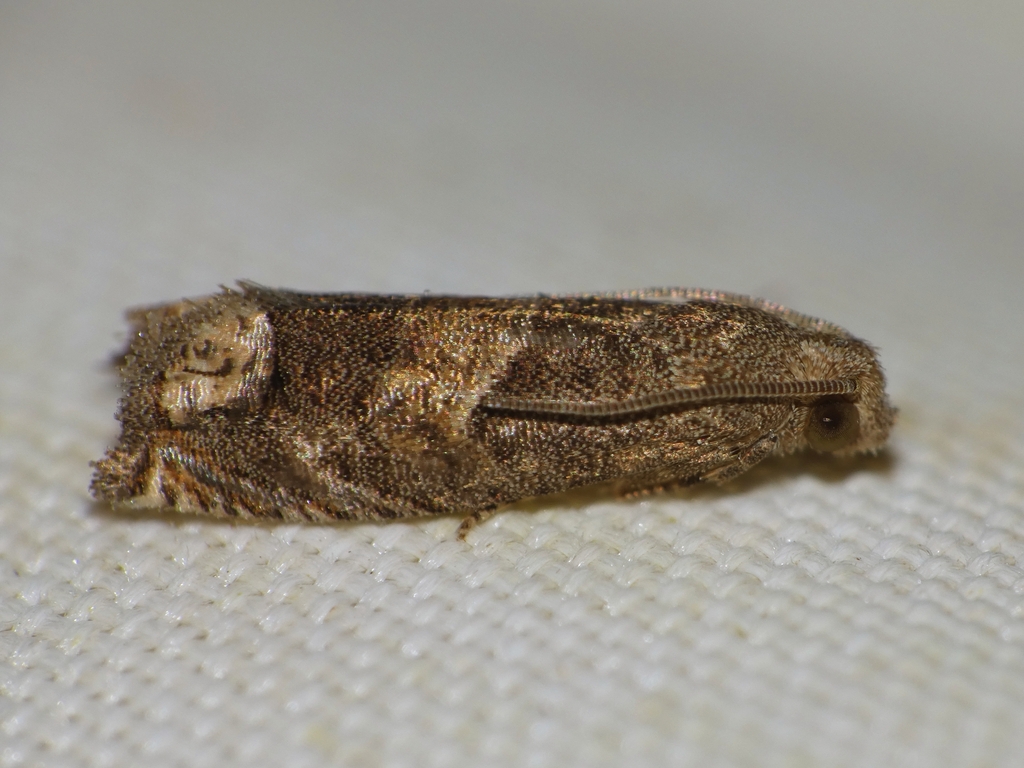
(c) Kai Squires, some rights reserved (CC BY) · licence
Family: Tortricidae · Class: Insecta · Order: Lepidoptera
Epiblema strenuana is a California animal in the Tortricidae family.
Epiblema strenuana is a species of tortricid moth in the family Tortricidae, commonly known as leafroller moths. This small moth belongs to a diverse family of microlepidoptera that includes numerous agricultural and forest pests, though the specific ecological role of E. strenuana remains poorly documented in scientific literature. The physical characteristics of E. strenuana follow the general morphology typical of tortricid moths. Adults likely measure 8 to 15 millimeters (0.3 to 0.6 inches) in wingspan, consistent with other Epiblema species. The forewings typically display mottled patterns in earth tones, providing effective camouflage when the moth rests on bark or vegetation. The hindwings are generally paler than the forewings. Sexual dimorphism may be present, with males potentially having more feathered antennae used for detecting female pheromones. The distribution and range of E. strenuana in California and North America remain inadequately documented in accessible scientific databases. Many tortricid species have restricted ranges or specific habitat requirements that have not been thoroughly surveyed. Without comprehensive distributional data, the species' occurrence in California counties cannot be definitively stated. Habitat preferences for E. strenuana are not well-established in current literature. Tortricid moths typically inhabit areas where their larval host plants occur. Many species in this family are associated with woody plants, including both deciduous and coniferous trees and shrubs. Some tortricids are specialists on particular plant genera, while others exhibit broader host ranges. The specific plant associations for E. strenuana require further investigation. The life cycle of E. strenuana likely follows the typical tortricid pattern of complete metamorphosis. Larvae probably feed within rolled or folded leaves, creating characteristic shelters that give the family its common name. Pupation may occur within the larval feeding site or in soil litter. Adult flight periods vary among tortricid species but often coincide with optimal conditions for mating and oviposition. Many species are multivoltine, producing multiple generations per year in favorable climates. The conservation status of E. strenuana is not currently assessed by major conservation organizations. The species lacks federal or state listing status, and its population trends are unknown. This data deficiency reflects broader gaps in knowledge about many invertebrate species, particularly small moths. Climate change, habitat fragmentation, and pesticide use represent potential threats to tortricid moths generally, but specific impacts on E. strenuana cannot be evaluated without baseline population and ecological data. Further taxonomic and ecological research is needed to understand this species' conservation needs and establish appropriate management strategies.
Classification
Class: Insecta · Order: Lepidoptera · Family: Tortricidae
Frequently asked questions
How is Epiblema strenuana classified?
Epiblema strenuana belongs to class Insecta, order Lepidoptera, family Tortricidae.
What family does Epiblema strenuana belong to?
Epiblema strenuana is in the Tortricidae family.
What is Epiblema strenuana?
Epiblema strenuana is a species of tortricid moth in the family Tortricidae, commonly known as leafroller moths.
Is Epiblema strenuana found in California?
Yes. Epiblema strenuana is recorded in California in The California Species Project's catalogue.
Related species
Other California species in the same genus, family, or bioregion.
Data from The California Species Project — 14,000+ California species with verified data from CNPS, CDFW, USFWS, and more.