Epicauta puncticollis
Punctate blister beetle
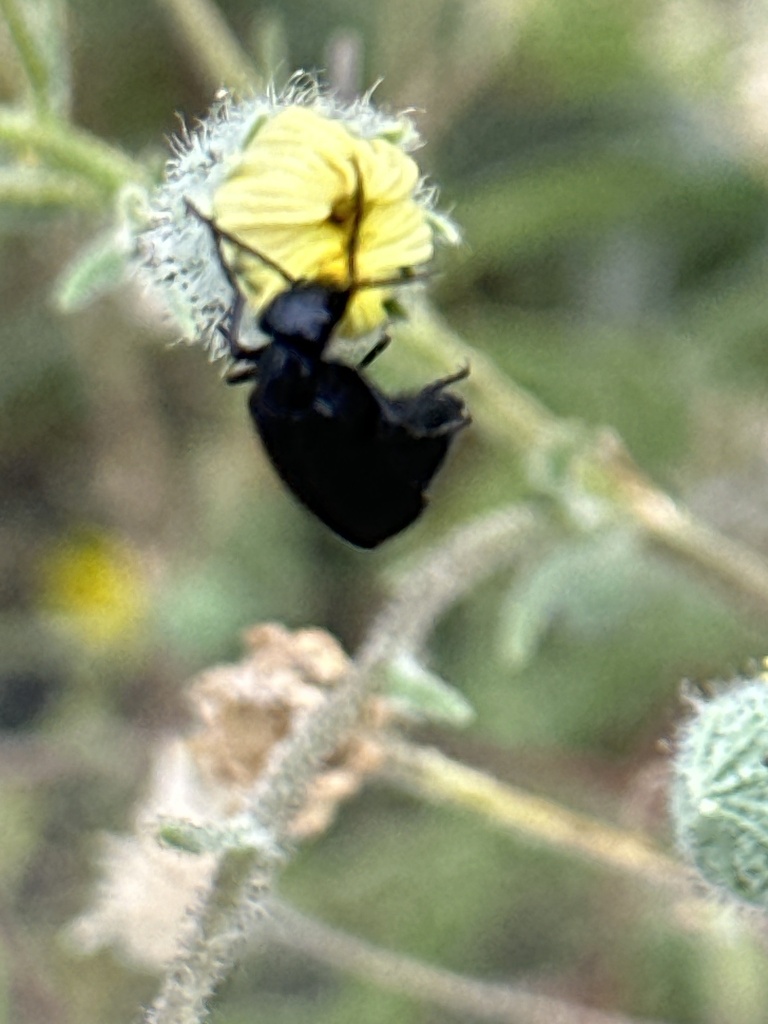
(c) Mike Unger, some rights reserved (CC BY) · licence
Family: Meloidae · Class: Insecta · Order: Coleoptera
Epicauta puncticollis (Punctate blister beetle) is a California animal in the Meloidae family.
The punctate blister beetle (Epicauta puncticollis) is a member of the blister beetle family Meloidae within the order Coleoptera. This species belongs to Epicauta, one of the largest blister beetle genera worldwide, containing approximately 360 described species as of 2011 (Wikipedia). The genus Epicauta was first scientifically described by Pierre François Marie Auguste Dejean in 1834 and is distributed nearly worldwide, with species native to all continents except Australia and Antarctica. Like other blister beetles in the family Meloidae, E. puncticollis likely possesses the characteristic ability to produce cantharidin, a toxic compound that causes blistering of skin upon contact. The specific morphological features distinguishing this species from other Epicauta beetles have not been well documented in readily available scientific literature. The geographic distribution and specific habitat requirements of E. puncticollis remain poorly documented. The genus Epicauta shows particular diversity in northern Arizona within the United States, though the specific range of this species requires further documentation. Few Epicauta species occur in Arctic regions, with none recorded farther north than the southern edge of the Northwest Territories, Canada. Specific habitat preferences for E. puncticollis have not been thoroughly documented in available sources. Members of the genus Epicauta typically inhabit diverse terrestrial environments, though individual species often show specific habitat associations that may include particular vegetation types or elevation ranges. Detailed ecological information regarding the life history, reproductive biology, and feeding behavior of E. puncticollis is lacking in current scientific literature. Blister beetles in the genus Epicauta generally undergo complete metamorphosis with egg, larval, pupal, and adult stages. Many species in this family are known to be herbivorous as adults, often feeding on flowers and foliage of various plant species. The larvae of some blister beetle species are parasitoids or predators of other insects, particularly grasshopper eggs, though the specific larval ecology of E. puncticollis has not been documented. No specific conservation status has been assigned to E. puncticollis at federal, state, or international levels as of December 2025. The species does not appear on current endangered species lists or conservation databases. This absence from conservation listings may reflect either a stable population status or, more likely, insufficient scientific study to assess population trends and conservation needs. The lack of detailed biological and ecological information for this species represents a significant knowledge gap that limits effective conservation planning and management recommendations. Scientific documentation for this species remains extremely limited. The information presented here synthesizes available data from taxonomic databases and general literature on the genus Epicauta. Additional field studies, taxonomic research, and ecological investigations are needed to develop a comprehensive understanding of this species' biology, distribution, and conservation requirements.
Classification
Class: Insecta · Order: Coleoptera · Family: Meloidae
Frequently asked questions
How is Epicauta puncticollis classified?
Epicauta puncticollis belongs to class Insecta, order Coleoptera, family Meloidae.
What family does Epicauta puncticollis belong to?
Epicauta puncticollis is in the Meloidae family.
What is Epicauta puncticollis?
The punctate blister beetle (Epicauta puncticollis) is a member of the blister beetle family Meloidae within the order Coleoptera.
Is Epicauta puncticollis found in California?
Yes. Epicauta puncticollis is recorded in California in The California Species Project's catalogue.
Related species
Other California species in the same genus, family, or bioregion.
Data from The California Species Project — 14,000+ California species with verified data from CNPS, CDFW, USFWS, and more.