Epinotia johnsonana
Johnson’s Epinotia
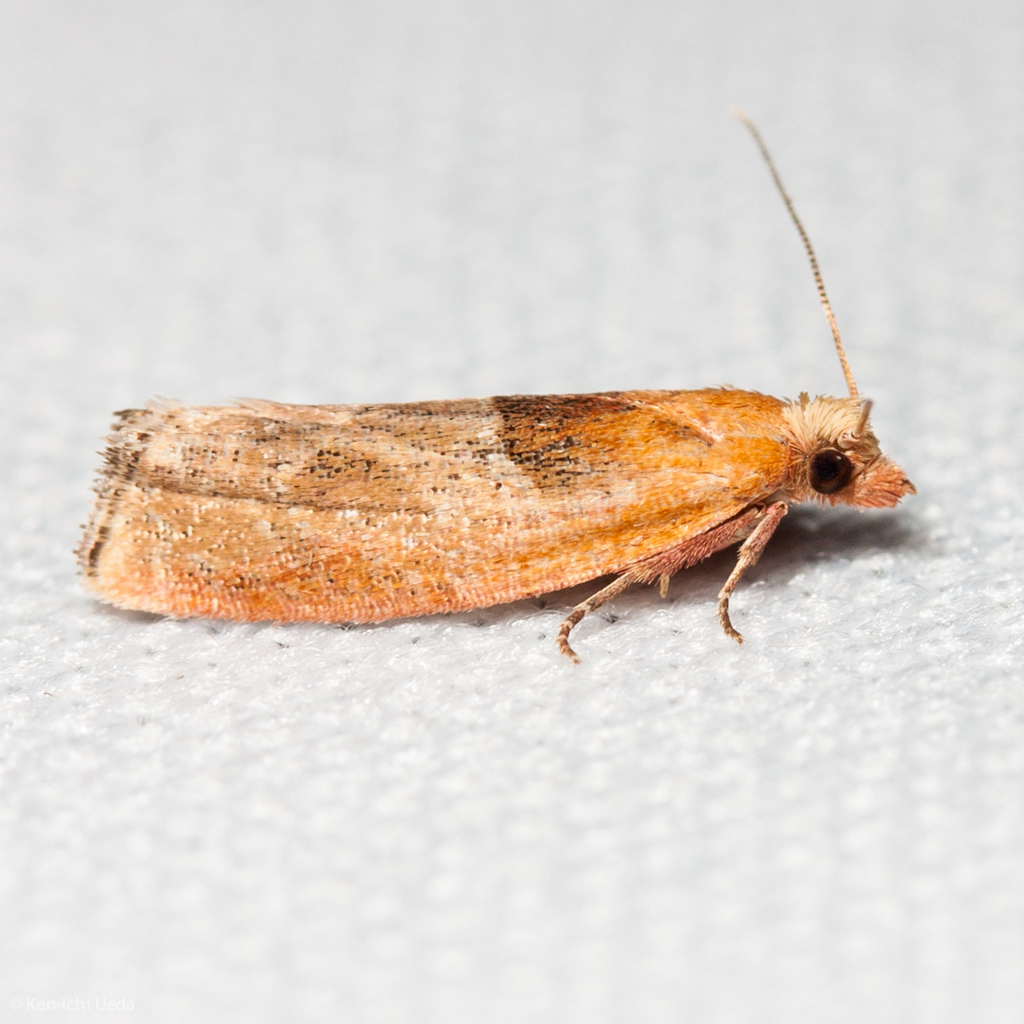
(c) Ken-ichi Ueda, some rights reserved (CC BY) · licence
Family: Tortricidae · Class: Insecta · Order: Lepidoptera
Epinotia johnsonana (Johnson’s Epinotia) is a California animal in the Tortricidae family.
Johnson's Epinotia is a small moth in the family Tortricidae, subfamily Olethreutinae. Adults have a wingspan of 14 to 15 mm, with forewings measuring 6 to 8 mm in length (BugGuide). The forewings display typical tortricid patterns with earth-tone coloration that provides effective camouflage against bark and foliage surfaces. This species ranges from California eastward to Colorado and northward to British Columbia (BugGuide). The lectotype female was designated by Heinrich in 1923 from a specimen collected by Hy. Edwards in Nevada, now housed in the American Museum of Natural History (BugGuide). Within this broad western North American distribution, the species occurs across diverse elevational gradients and habitat types. Johnson's Epinotia inhabits areas supporting its known host plant families Rhamnaceae and Rosaceae. Specifically documented host genera include Ceanothus (California lilac) and Holodiscus (ocean spray) (Moth Photographers Group). These shrubs are characteristic of chaparral, mixed conifer forests, and montane habitats throughout the western United States, suggesting the moth occupies similarly diverse ecological zones. Larvae feed within tightly rolled leaf shelters constructed on their host plants (Powell & Opler 2009). This feeding behavior is typical of many tortricid moths, where caterpillars create protective silk-lined retreats by rolling or folding leaves. The larvae's feeding activities likely occur during spring and early summer months when new foliage is most suitable. Adults have been documented flying in mid-summer, with collection records from July in Washington state (BugGuide). The species appears to have a single generation per year, though detailed life cycle studies have not been published. The specific epithet honors University of Washington Professor Orson Bennett "Bug" Johnson (1848-1917), who collected one of the first specimens (BugGuide). Johnson also has other arthropod species named after him, including the butterfly Callophrys johnsoni and a rove beetle Cafius johnsoni. Johnson's Epinotia appears on Species of Greatest Conservation Need lists in multiple states including Arkansas, New Mexico, and New York (BugGuide), suggesting regional conservation concerns despite its broad range. These listings typically indicate species that are rare, experiencing population declines, or lack sufficient data to determine their conservation status. However, no federal or state endangered species protections currently apply to this moth. The inclusion on multiple state conservation lists may reflect the species' apparent rarity and limited documentation rather than confirmed population threats. Detailed ecological studies of Johnson's Epinotia remain limited. The genus Epinotia contains more than 80 species in North America, many of which are poorly studied (BugGuide). Research gaps include seasonal activity patterns, population densities, habitat requirements, and potential threats. The species' association with native shrub communities suggests it could be affected by habitat loss, fire management practices, or climate change impacts on host plant distributions, though these relationships have not been quantified.
Classification
Class: Insecta · Order: Lepidoptera · Family: Tortricidae
Frequently asked questions
How is Epinotia johnsonana classified?
Epinotia johnsonana belongs to class Insecta, order Lepidoptera, family Tortricidae.
What family does Epinotia johnsonana belong to?
Epinotia johnsonana is in the Tortricidae family.
What is Epinotia johnsonana?
Johnson's Epinotia is a small moth in the family Tortricidae, subfamily Olethreutinae.
Is Epinotia johnsonana found in California?
Yes. Epinotia johnsonana is recorded in California in The California Species Project's catalogue.
Related species
Other California species in the same genus, family, or bioregion.
Data from The California Species Project — 14,000+ California species with verified data from CNPS, CDFW, USFWS, and more.