Epiphyas postvittana
Light Brown Apple Moth
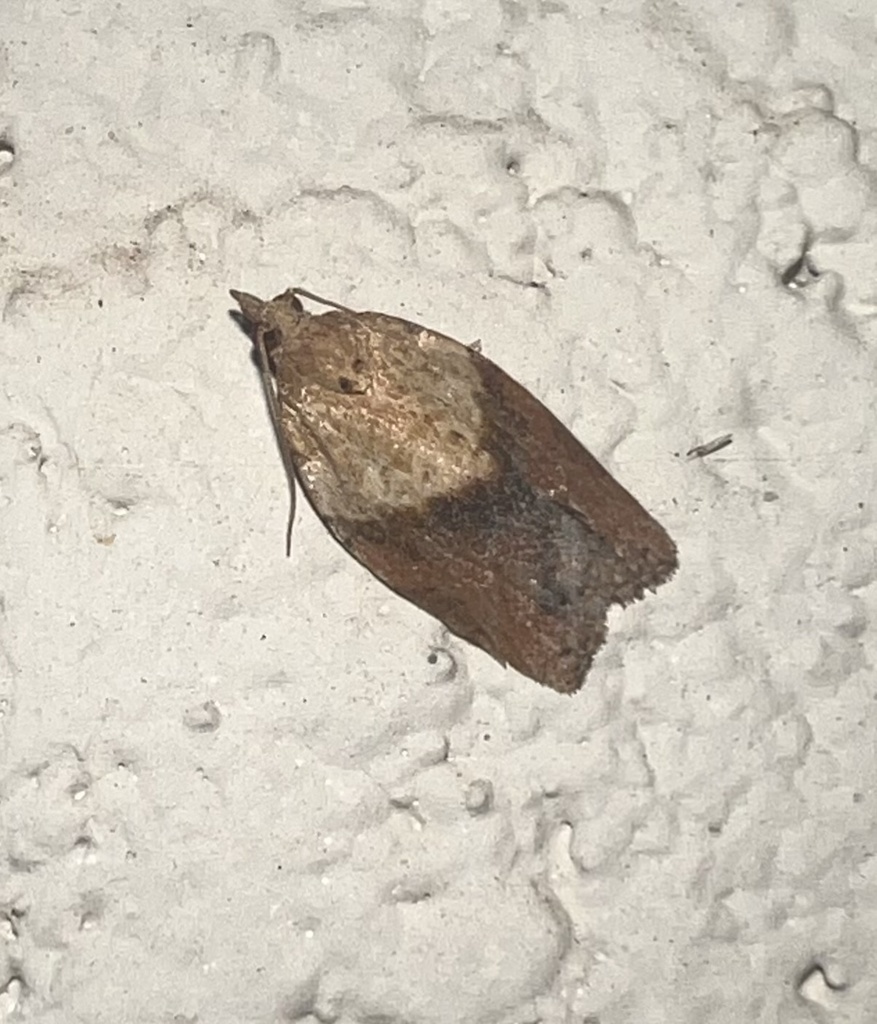
no rights reserved · CC0
Family: Tortricidae · Class: Insecta · Order: Lepidoptera
Epiphyas postvittana (Light Brown Apple Moth) is a California animal in the Tortricidae family.
The light brown apple moth (Epiphyas postvittana) is a small invasive tortricid moth native to Australia that has established populations in California. Adults have a wingspan of 18-25 mm (0.7-1.0 inches), with forewings that vary considerably in coloration from pale cream to dark brown. The forewings typically display oblique darker bands or patches, though wing patterns are highly variable. Males are generally smaller and more uniformly colored than females, which often exhibit more pronounced markings. The hindwings are pale gray to whitish with a subtle iridescent sheen. Originally endemic to southeastern Australia, the light brown apple moth was first detected in California in 2006 in Alameda County. The species has since spread throughout much of coastal California, with established populations documented from Sonoma County south to Ventura County. The moth has also been found in portions of the Central Valley and Sierra Nevada foothills. Outside California, established populations occur in New Zealand, the United Kingdom, and Hawaii. The species inhabits a wide range of environments, from urban gardens and agricultural areas to natural plant communities. Light brown apple moth larvae are extremely polyphagous, feeding on over 250 plant species across more than 60 families. The moth thrives in coastal Mediterranean climates with mild temperatures and moderate humidity. Adults are active year-round in California's milder regions, with peak activity during spring and fall months. Light brown apple moth exhibits a complex life cycle with overlapping generations throughout the year in California. Females lay clusters of 50-150 pale yellow eggs on host plant surfaces, which hatch after 10-21 days depending on temperature. Larvae feed by creating silk-lined shelters on leaves, buds, and fruit, causing characteristic leaf rolling and webbing. The five larval instars complete development in 30-50 days under optimal conditions. Pupation occurs within the larval shelter or in leaf litter, lasting 10-25 days. Adults are primarily nocturnal and are attracted to artificial lights. As an invasive species, the light brown apple moth is subject to regulatory oversight by the California Department of Food and Agriculture. The moth poses significant economic threats to California agriculture, particularly to grape, apple, citrus, and berry crops. Larvae can cause direct feeding damage to fruit and foliage, while their webbing can contaminate harvested crops. The species' broad host range and rapid reproductive potential make it a persistent management challenge. Integrated pest management approaches combine pheromone trapping, biological control agents including parasitoid wasps, and selective pesticide applications. The moth's establishment in California represents one of the most significant invasive Lepidoptera introductions in recent decades, highlighting ongoing biosecurity challenges in global trade.
Classification
Class: Insecta · Order: Lepidoptera · Family: Tortricidae
Frequently asked questions
How is Epiphyas postvittana classified?
Epiphyas postvittana belongs to class Insecta, order Lepidoptera, family Tortricidae.
What family does Epiphyas postvittana belong to?
Epiphyas postvittana is in the Tortricidae family.
What is Epiphyas postvittana?
The light brown apple moth (Epiphyas postvittana) is a small invasive tortricid moth native to Australia that has established populations in California.
Is Epiphyas postvittana found in California?
Yes. Epiphyas postvittana is recorded in California in The California Species Project's catalogue.
Related species
Other California species in the same genus, family, or bioregion.
Data from The California Species Project — 14,000+ California species with verified data from CNPS, CDFW, USFWS, and more.