Epirrhoe plebeculata
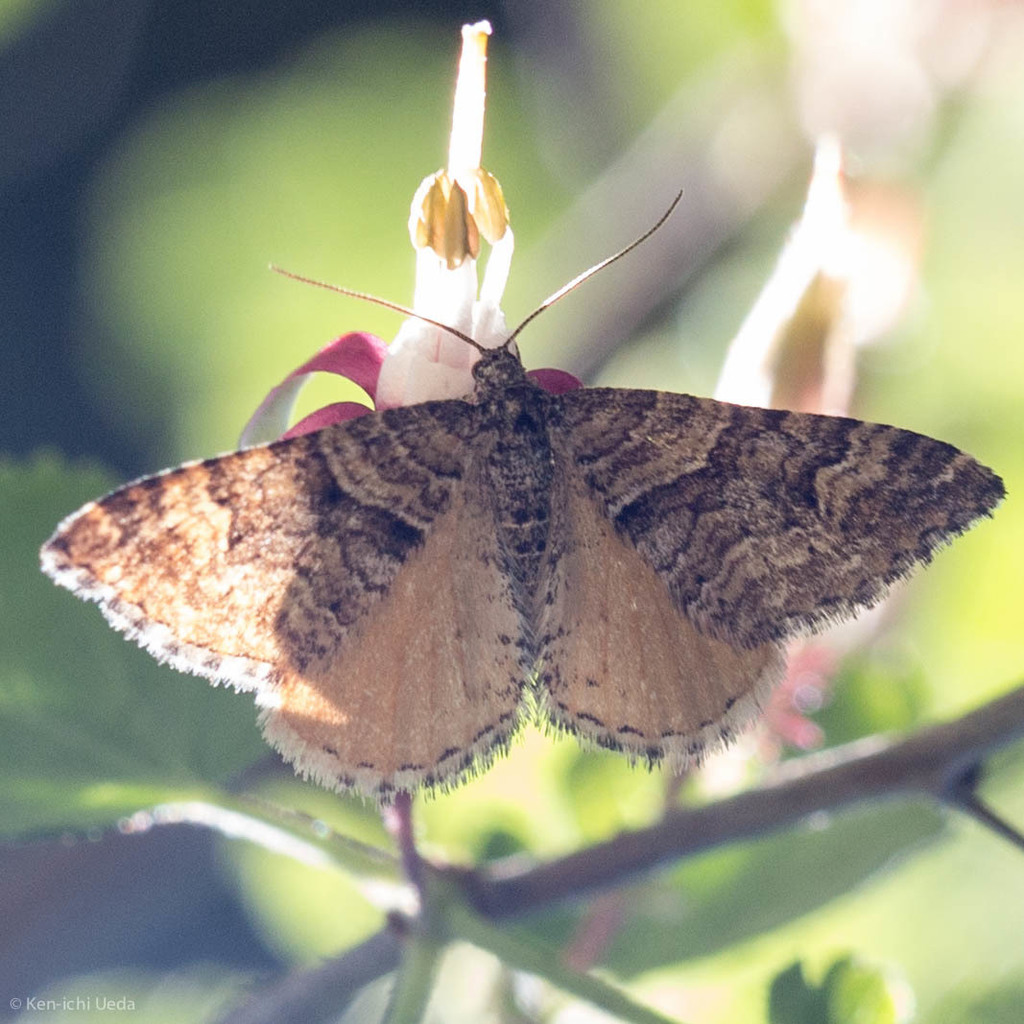
(c) Ken-ichi Ueda, some rights reserved (CC BY) · licence
Family: Geometridae · Class: Insecta · Order: Lepidoptera
Epirrhoe plebeculata is a California animal in the Geometridae family.
Epirrhoe plebeculata is a geometrid moth in the family Geometridae, commonly known as a carpet moth. This species belongs to the subfamily Larentiinae, which includes numerous small to medium-sized moths characterized by their intricate wing patterns and geometric designs. Adult moths typically display cryptic coloration with complex patterns of browns, grays, and pale markings across the forewings. The hindwings are generally paler than the forewings, often with subtle banding or spotting. Wing patterns frequently include transverse lines and geometric shapes that provide camouflage when resting on tree bark or among vegetation. The wingspan and specific morphological details require additional taxonomic verification from specialized lepidopteran literature. Epirrhoe plebeculata ranges from British Columbia east to Alberta, extending south through western North America to California, Utah, and Colorado. This distribution pattern suggests the species is adapted to temperate montane and boreal forest ecosystems across a significant latitudinal gradient. The presence across multiple provinces and states indicates tolerance for varied climatic conditions within its preferred habitat types. The species inhabits areas where its host plants, Galium species (bedstraws), are present. Galium comprises a diverse genus of herbaceous plants in the coffee family (Rubiaceae) that grow in various habitats including woodlands, meadows, and forest edges. These host plants are widely distributed across North America, often forming dense mats or climbing through other vegetation. The moth's distribution likely correlates closely with the availability of suitable Galium species, which serve as the primary food source for larvae. Larvae feed exclusively on Galium species, developing through several instars before pupating. Like other Geometridae moths, the caterpillars are likely "inchworms" or "loopers," moving by extending and contracting their bodies in a characteristic arching motion. Adult flight periods and specific reproductive behaviors require verification from entomological sources, though most temperate geometrid moths have distinct seasonal activity patterns tied to host plant phenology and local climate conditions. The conservation status of Epirrhoe plebeculata appears to be unassessed at federal, state, and international levels based on available listing information. The species lacks formal conservation rankings from NatureServe or IUCN assessment. Its wide distribution across multiple jurisdictions suggests stable populations, though specific population trends and threats have not been documented. Like many Lepidoptera species, potential threats could include habitat modification, climate change impacts on host plant distributions, and pesticide applications in areas where Galium species grow. The species' dependence on Galium host plants makes it vulnerable to factors affecting bedstraw populations, including invasive species competition and land use changes that alter native plant communities.
Classification
Class: Insecta · Order: Lepidoptera · Family: Geometridae
Frequently asked questions
How is Epirrhoe plebeculata classified?
Epirrhoe plebeculata belongs to class Insecta, order Lepidoptera, family Geometridae.
What family does Epirrhoe plebeculata belong to?
Epirrhoe plebeculata is in the Geometridae family.
What is Epirrhoe plebeculata?
Epirrhoe plebeculata is a geometrid moth in the family Geometridae, commonly known as a carpet moth.
Is Epirrhoe plebeculata found in California?
Yes. Epirrhoe plebeculata is recorded in California in The California Species Project's catalogue.
Related species
Other California species in the same genus, family, or bioregion.
Data from The California Species Project — 14,000+ California species with verified data from CNPS, CDFW, USFWS, and more.