Erechthias minuscula
Caribbean Scavenger Moth
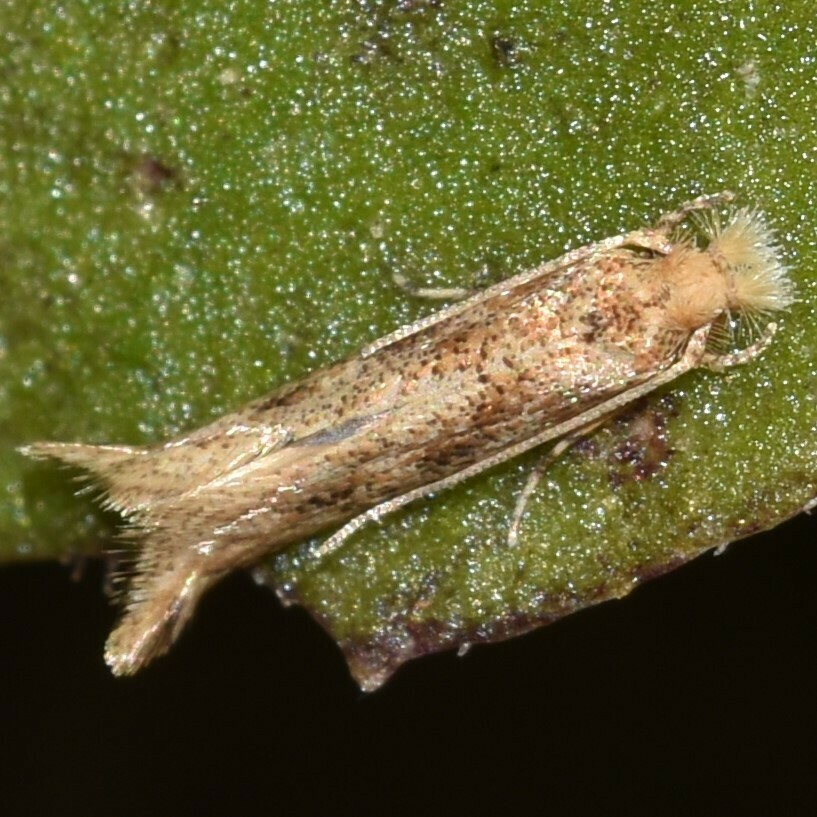
no rights reserved · CC0
Family: Tineidae · Class: Insecta · Order: Lepidoptera
Erechthias minuscula (Caribbean Scavenger Moth) is a California animal in the Tineidae family.
The Caribbean Scavenger Moth is a small moth in the family Tineidae, also known as the erechthias clothes moth. This species was first described by Lord Walsingham in 1897 and represents one of the most widely distributed moths in the world. The species exhibits the typical small size and muted coloration characteristic of the clothes moth family, though specific morphological details have not been extensively documented in the scientific literature. Erechthias minuscula demonstrates one of the most extensive distributions among Lepidoptera species. According to iNaturalist and BugGuide, this moth has been recorded from Africa, Sri Lanka, Java, Australia, the Caroline Islands, Fiji, Samoa, the Marquesas, the West Indies, Hawaii, and Florida. The species' presence in California has not been well documented in available sources, though its widespread distribution across tropical and subtropical regions suggests potential establishment in suitable microclimates throughout the state. The species inhabits tropical and subtropical environments, favoring areas with organic debris and stored materials. As a member of the Tineidae family, this moth likely occupies similar ecological niches to other clothes moths, utilizing various organic substrates for larval development. The species appears to thrive in both natural and anthropogenic environments, contributing to its successful global dispersal. Larvae of Erechthias species are typically scavengers, feeding on organic matter including dried plant materials, animal products, and stored goods. Research on Ascension Island populations indicates that Erechthias larvae can utilize diverse organic substrates (ResearchGate publication on Ascension Island Erechthias). The species likely completes multiple generations per year in favorable climates, though specific details of its reproductive biology and seasonal activity patterns have not been comprehensively studied. Adult moths are presumably attracted to lights and may be found near potential larval food sources. The Caribbean Scavenger Moth does not appear on any federal or state conservation lists, and no specific conservation status has been assigned to this species. Its extremely wide distribution and apparent adaptability to diverse environments suggest stable populations globally. The species' ability to utilize anthropogenic environments and stored materials may actually benefit from human activities, potentially explaining its successful establishment across multiple continents and island systems. Scientific documentation for this species remains limited despite its widespread occurrence. The information presented here is based on available sources including iNaturalist, BugGuide, and taxonomic databases. Detailed studies of this species' biology, ecological requirements, and population dynamics in California would enhance understanding of its role in local ecosystems and potential interactions with native fauna.
Classification
Class: Insecta · Order: Lepidoptera · Family: Tineidae
Frequently asked questions
How is Erechthias minuscula classified?
Erechthias minuscula belongs to class Insecta, order Lepidoptera, family Tineidae.
What family does Erechthias minuscula belong to?
Erechthias minuscula is in the Tineidae family.
What is Erechthias minuscula?
The Caribbean Scavenger Moth is a small moth in the family Tineidae, also known as the erechthias clothes moth.
Is Erechthias minuscula found in California?
Yes. Erechthias minuscula is recorded in California in The California Species Project's catalogue.
Related species
Other California species in the same genus, family, or bioregion.
Data from The California Species Project — 14,000+ California species with verified data from CNPS, CDFW, USFWS, and more.