Eremanthe chemsaki
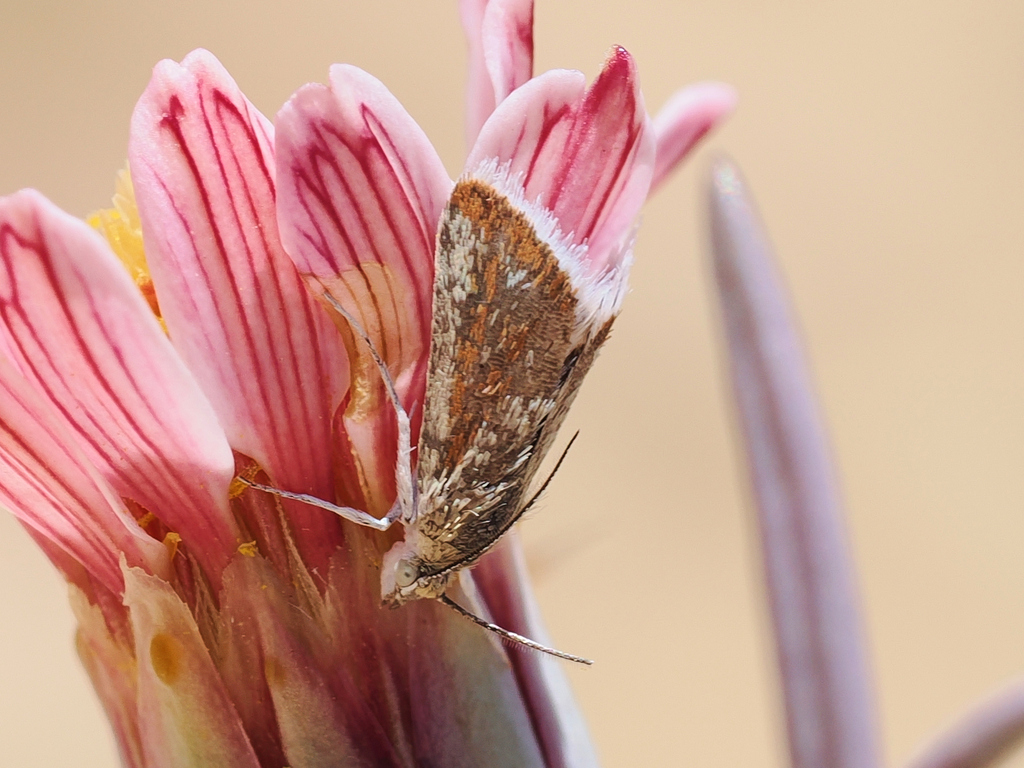
(c) Ken-ichi Ueda, some rights reserved (CC BY) · licence
Family: Crambidae · Class: Insecta · Order: Lepidoptera
Eremanthe chemsaki is a California animal in the Crambidae family.
Eremanthe chemsaki is a moth species in the family Crambidae, a diverse group of small to medium-sized lepidopterans commonly known as grass moths or snout moths. As a member of the Crambidae, this species likely exhibits the characteristic features of the family, including narrow forewings, broad hindwings, and prominent labial palps that form a snout-like projection from the head. Adult moths in this family typically measure 15 to 25 millimeters in wingspan, though specific measurements for E. chemsaki are not well documented in available literature. The range and distribution of Eremanthe chemsaki remain poorly documented in scientific literature. Limited taxonomic records suggest this species occurs in western North America, potentially including California based on its inclusion in regional databases, though specific county records and distribution boundaries require further verification. The species appears to have a restricted range typical of many specialized Crambidae moths. Habitat requirements for Eremanthe chemsaki are not well established in current literature. Members of the Crambidae family typically inhabit areas where their larval host plants occur, which often include grasslands, shrublands, and forest margins. Many crambid moths are associated with specific plant families, and larvae may feed on roots, stems, or leaves of herbaceous plants. The microhabitat preferences and elevation range for this species remain undocumented. The life history and ecological behavior of Eremanthe chemsaki are largely unknown. Like other Crambidae, the species likely undergoes complete metamorphosis with egg, larval, pupal, and adult stages. Adult flight periods, breeding behavior, and larval development timing have not been documented in available scientific literature. The feeding habits of larvae and adults remain uncharacterized, though adults of related species typically feed on nectar from flowers or may not feed at all during their brief adult lifespan. The conservation status of Eremanthe chemsaki is not established, as the species lacks formal assessment by federal or state wildlife agencies. No federal or California listing status has been assigned, and the species does not appear in IUCN Red List assessments as of December 2025. The absence of population data, distribution maps, and ecological studies makes it impossible to assess conservation needs or population trends. This data deficiency is common among many small moth species, particularly those that may have restricted distributions or specialized habitat requirements. The taxonomic validity and nomenclatural status of Eremanthe chemsaki require verification through modern systematic research. Many historical moth species names have been subjected to taxonomic revision, synonymization, or reclassification as lepidopteran systematics has advanced. Without recent taxonomic treatment or comprehensive surveys, the current status of this species name and its relationship to other Crambidae remains uncertain. Further research combining morphological examination, molecular analysis, and field surveys would be necessary to clarify the taxonomy, distribution, and conservation status of this poorly known moth species.
Classification
Class: Insecta · Order: Lepidoptera · Family: Crambidae
Frequently asked questions
How is Eremanthe chemsaki classified?
Eremanthe chemsaki belongs to class Insecta, order Lepidoptera, family Crambidae.
What family does Eremanthe chemsaki belong to?
Eremanthe chemsaki is in the Crambidae family.
What is Eremanthe chemsaki?
Eremanthe chemsaki is a moth species in the family Crambidae, a diverse group of small to medium-sized lepidopterans commonly known as grass moths or snout moths.
Is Eremanthe chemsaki found in California?
Yes. Eremanthe chemsaki is recorded in California in The California Species Project's catalogue.
Related species
Other California species in the same genus, family, or bioregion.
Data from The California Species Project — 14,000+ California species with verified data from CNPS, CDFW, USFWS, and more.