Eremarionta immaculata
White Desertsnail
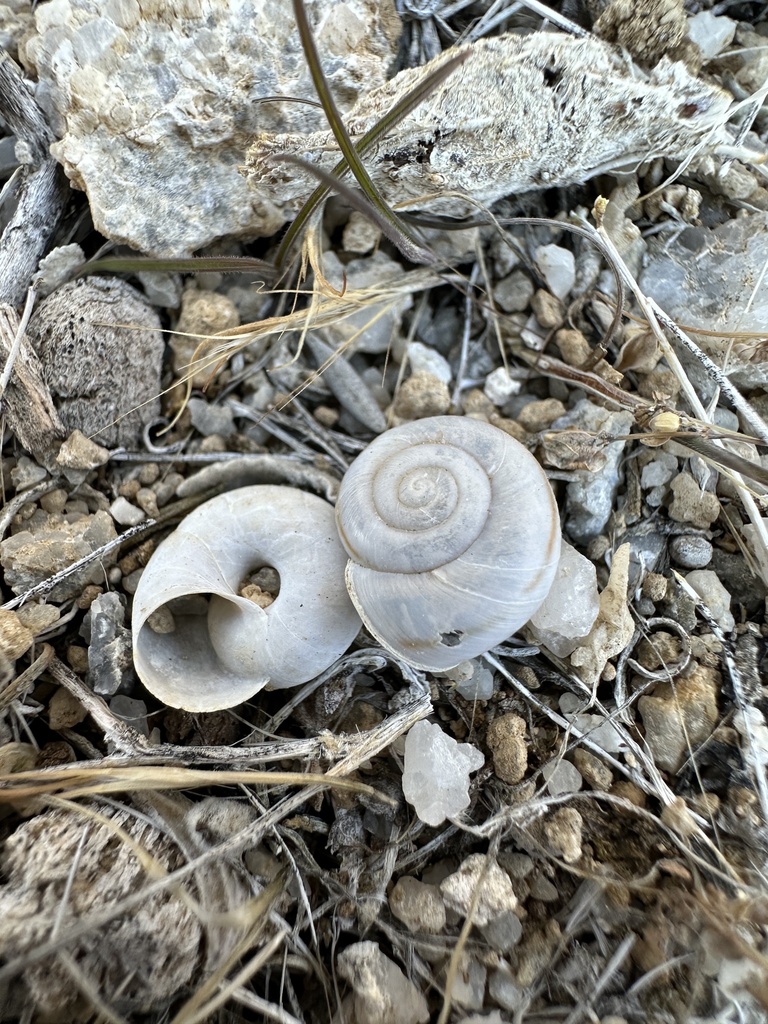
(c) Matt Berger, some rights reserved (CC BY) · licence
Family: Helminthoglyptidae · Class: Gastropoda · Order: Stylommatophora
Conservation status: G1 S1
Eremarionta immaculata (White Desertsnail) is a California animal in the Helminthoglyptidae family.
The White Desertsnail is a terrestrial gastropod mollusk in the family Helminthoglyptidae. As indicated by its taxonomic classification in the genus Eremarionta, this species represents one of ten species within this desert-adapted snail genus, with the U.S. Fish and Wildlife Service maintaining focus on three species within the group for conservation purposes. Physical characteristics of this species have not been comprehensively documented in available scientific literature, though as a member of the Helminthoglyptidae family, it likely exhibits typical desert snail adaptations including a robust shell structure suited to arid environments. The White Desertsnail appears to have an extremely restricted distribution, as reflected in its Global/State Rank of G1 S1, indicating it is critically imperiled both globally and within California. The species' range and specific habitat requirements have not been well documented in current scientific databases. Based on its common name and genus classification, the species likely occurs in desert or semi-arid regions of California, though precise locality data are not available through standard wildlife databases. Habitat preferences for this species remain poorly documented. Given its classification within Eremarionta, a genus adapted to desert conditions, the White Desertsnail likely inhabits arid or semi-arid environments typical of California's desert regions. Desert snails in this family typically occupy areas with rocky substrates, sparse vegetation, and low annual precipitation. Many desert gastropods are associated with specific soil types, elevation ranges, or microhabitat features such as rock crevices or areas beneath shrubs that provide moisture retention and thermal refugia. Ecological and behavioral information for this species is extremely limited in available scientific literature. Desert snails typically exhibit adaptations to water conservation, including behavioral modifications such as aestivation during dry periods and activity patterns timed to coincide with moisture availability. Reproductive biology, dietary preferences, seasonal activity patterns, and population dynamics have not been documented for this species. Many desert gastropods are herbivorous, feeding on decomposing plant matter, lichens, or algae, but specific feeding habits of the White Desertsnail remain unknown. The conservation status of the White Desertsnail reflects significant concern for the species' persistence. The G1 S1 ranking indicates this species is at extreme risk of extinction, with five or fewer occurrences or very few remaining individuals. Despite this critical conservation ranking, the species does not appear to have federal protection under the Endangered Species Act as of December 2025. The lack of comprehensive biological and ecological data represents a significant knowledge gap that hampers effective conservation planning. Primary threats to the species likely include habitat modification, climate change impacts on desert ecosystems, and the species' apparent extremely limited distribution, though specific threat assessments have not been conducted. Scientific documentation for this species remains extremely limited. This species is included on the California Department of Fish and Wildlife's Special Animals List. The information presented here is based on available taxonomic databases and conservation rankings. If you have additional verified information about this species' biology, distribution, or ecology, please contact us to help improve this species account.
Classification
Class: Gastropoda · Order: Stylommatophora · Family: Helminthoglyptidae
Conservation status
G1 S1
Frequently asked questions
How is Eremarionta immaculata classified?
Eremarionta immaculata belongs to class Gastropoda, order Stylommatophora, family Helminthoglyptidae.
What family does Eremarionta immaculata belong to?
Eremarionta immaculata is in the Helminthoglyptidae family.
Is Eremarionta immaculata protected or of conservation concern?
Eremarionta immaculata carries the following status: G1 S1.
What is Eremarionta immaculata?
The White Desertsnail is a terrestrial gastropod mollusk in the family Helminthoglyptidae.
Is Eremarionta immaculata found in California?
Yes. Eremarionta immaculata is recorded in California in The California Species Project's catalogue.
Related species
Other California species in the same genus, family, or bioregion.
Data from The California Species Project — 14,000+ California species with verified data from CNPS, CDFW, USFWS, and more.