Eremarionta millepalmarum
Thousand Palms Desertsnail
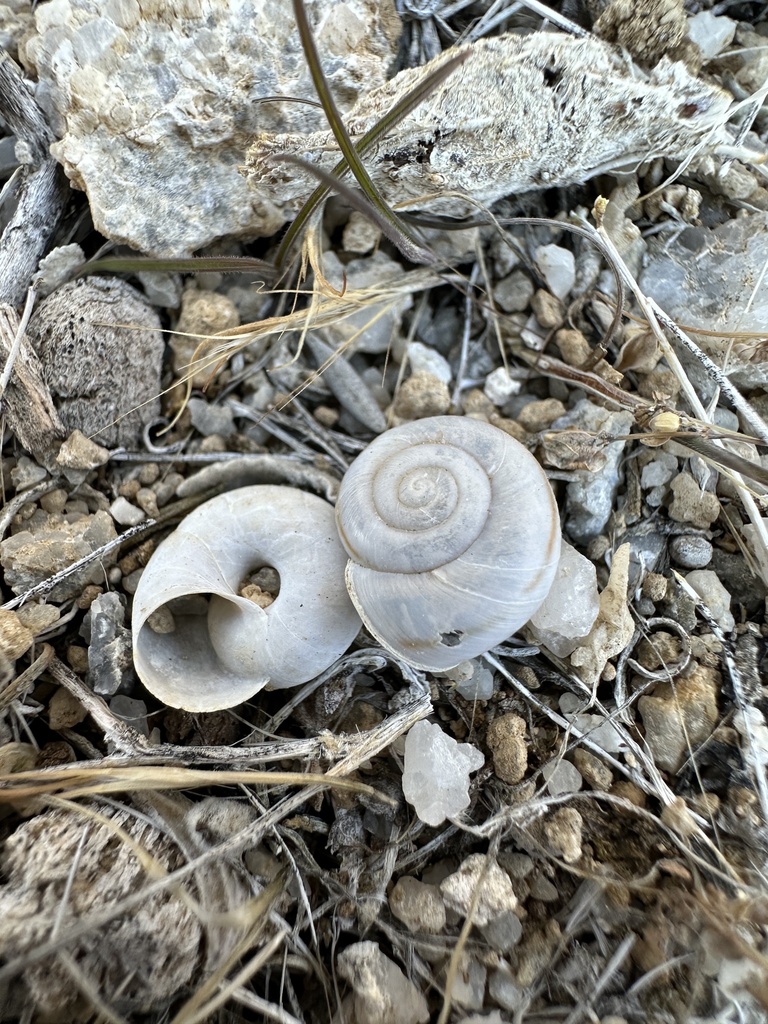
(c) Matt Berger, some rights reserved (CC BY) · licence
Family: Helminthoglyptidae · Class: Gastropoda · Order: Stylommatophora
Conservation status: G1 S1
Eremarionta millepalmarum (Thousand Palms Desertsnail) is a California animal in the Helminthoglyptidae family.
The Thousand Palms Desertsnail (Eremarionta millepalmarum) is a terrestrial gastropod mollusk endemic to southern California's desert regions. This small desert snail is characterized by its spiral shell adapted to arid conditions, though detailed morphological descriptions remain limited in the scientific literature. The species belongs to the family Helminthoglyptidae, a group of air-breathing land snails native to western North America. The species' range is extremely restricted, occurring only in the Coachella Valley of Riverside County, California. The snail is known from the Thousand Palms area, from which it derives its common name, and surrounding desert oasis habitats in the Colorado Desert region. This highly localized distribution makes it one of California's most geographically restricted gastropod species. Eremarionta millepalmarum inhabits desert oasis environments characterized by palm groves and associated riparian vegetation. These specialized habitats occur at springs and seeps in an otherwise arid landscape, creating isolated refugia that support unique assemblages of desert-adapted species. The species appears dependent on the specific microhabitat conditions provided by these desert oases, including elevated soil moisture, shade from palm canopies, and accumulations of organic matter from decaying vegetation. Little is documented about the species' behavior and ecology. Like other desert land snails, E. millepalmarum likely exhibits adaptations to extreme aridity, including behavioral modifications such as estivation during the hottest and driest periods. The species presumably feeds on decaying plant matter, fungi, and other organic detritus typical of terrestrial gastropod diets. Reproductive biology and seasonal activity patterns have not been well studied for this species. The Thousand Palms Desertsnail carries a conservation ranking of G1 S1, indicating it is critically imperiled both globally and within California due to extreme rarity and vulnerability to extinction. The species faces significant threats from habitat loss and degradation of desert oasis environments. Urban development, groundwater pumping that affects spring flows, and recreational activities in sensitive oasis habitats pose ongoing risks to the remaining populations. Climate change may exacerbate these threats by altering precipitation patterns and increasing temperatures in an already marginal environment. The U.S. Fish and Wildlife Service maintains a species profile for E. millepalmarum, reflecting federal awareness of its conservation status, though the species does not currently appear on the federal Endangered Species List as of December 2025. The extremely restricted range and specialized habitat requirements make this species particularly vulnerable to environmental changes and human disturbances. Conservation efforts for desert oasis habitats in the Coachella Valley benefit not only this endemic snail but also other rare species dependent on these unique desert refugia. Additional research is needed to better understand the species' population status, ecological requirements, and specific conservation needs.
Classification
Class: Gastropoda · Order: Stylommatophora · Family: Helminthoglyptidae
Conservation status
G1 S1
Frequently asked questions
How is Eremarionta millepalmarum classified?
Eremarionta millepalmarum belongs to class Gastropoda, order Stylommatophora, family Helminthoglyptidae.
What family does Eremarionta millepalmarum belong to?
Eremarionta millepalmarum is in the Helminthoglyptidae family.
Is Eremarionta millepalmarum protected or of conservation concern?
Eremarionta millepalmarum carries the following status: G1 S1.
What is Eremarionta millepalmarum?
The Thousand Palms Desertsnail (Eremarionta millepalmarum) is a terrestrial gastropod mollusk endemic to southern California's desert regions.
Is Eremarionta millepalmarum found in California?
Yes. Eremarionta millepalmarum is recorded in California in The California Species Project's catalogue.
Related species
Other California species in the same genus, family, or bioregion.
Data from The California Species Project — 14,000+ California species with verified data from CNPS, CDFW, USFWS, and more.