Eremarionta morongoana
Morongo (=colorado) Desertsnail
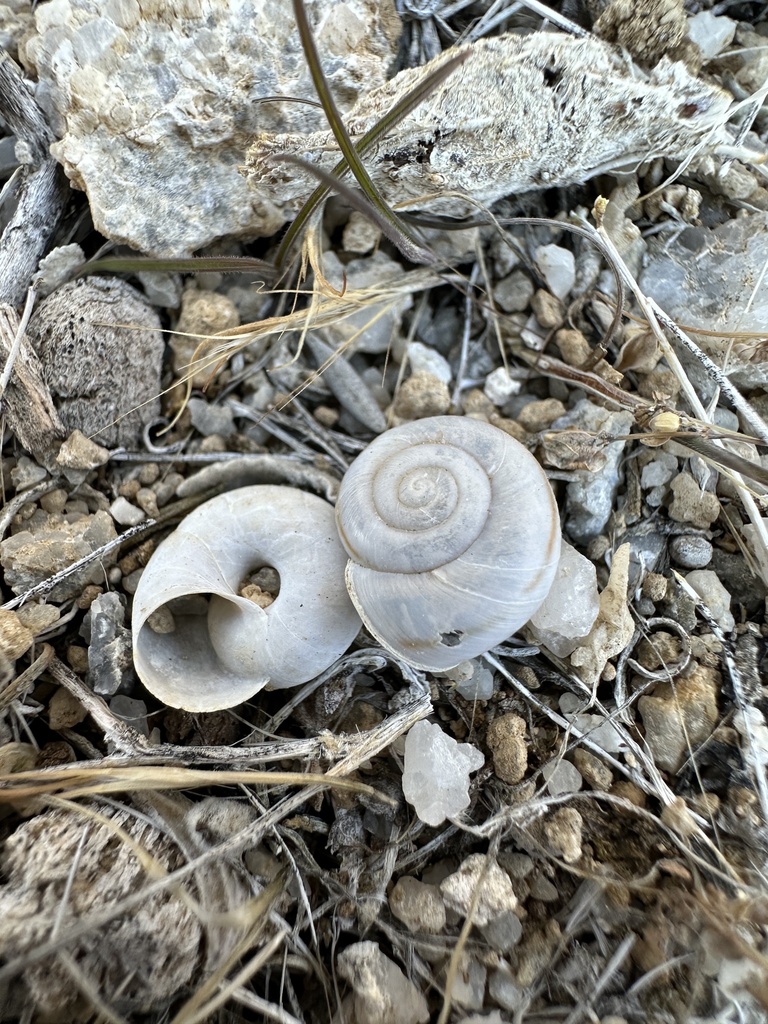
(c) Matt Berger, some rights reserved (CC BY) · licence
Family: Helminthoglyptidae · Class: Gastropoda · Order: Stylommatophora
Conservation status: G1G3 S1
Eremarionta morongoana (Morongo (=colorado) Desertsnail) is a California animal in the Helminthoglyptidae family.
The Morongo desertsnail is a terrestrial gastropod mollusk endemic to Southern California. This small land snail belongs to the family Helminthoglyptidae and represents one of the more geographically restricted desert snail species in the region. Physical characteristics of this species have not been extensively documented in the scientific literature, though like other members of its genus, it likely possesses a low, flattened shell typical of desert-adapted snails. The species is known only from the Morongo Valley area in San Bernardino County, California, near the communities of Yucca Valley and Cabazon. This extremely limited range places the species at the interface between the Mojave and Colorado Desert regions, in the vicinity of the San Bernardino Mountains. The type locality and primary known habitat occurs in the Big Morongo Canyon area, which sits at approximately 600-900 meters elevation in the desert transition zone. Morongo desertsnails inhabit desert scrub and chaparral communities characteristic of the Colorado Desert subdivision of the Sonoran Desert. The species appears to be associated with rocky canyon environments and desert washes where moisture retention is higher than in surrounding areas. Big Morongo Canyon Preserve, where the species occurs, supports a mixture of desert and riparian vegetation including desert willow, mesquite, and various cacti and desert shrubs. The area receives limited rainfall, typically 10-15 centimeters annually, with most precipitation occurring during winter months. Like other desert land snails, this species likely exhibits behavioral adaptations to extreme aridity, including extended periods of estivation during dry conditions. Desert snails typically emerge during cooler, moister periods following rainfall to feed on decaying plant material, algae, and fungal matter. Reproduction in desert gastropods generally occurs during favorable moisture conditions, with eggs deposited in protected microhabitats such as under rocks or in soil crevices. The species' life cycle and specific ecological requirements remain poorly studied. The Morongo desertsnail carries a global conservation rank of G1G3, indicating it is critically imperiled to vulnerable throughout its range. Its state rank of S1 designates it as critically imperiled in California. The species faces significant conservation challenges due to its extremely restricted distribution in an area subject to ongoing development pressure. The Morongo Valley region has experienced substantial residential and commercial development, including casino and resort construction. Habitat fragmentation, groundwater pumping, and altered hydrology pose continuing threats to the limited suitable habitat. Climate change may exacerbate these pressures through increased temperature extremes and altered precipitation patterns. The species' occurrence within Big Morongo Canyon Preserve provides some habitat protection, though the preserve encompasses only a portion of the species' potential range. Additional research is needed to better understand population status, habitat requirements, and specific conservation needs for this narrowly distributed endemic snail.
Classification
Class: Gastropoda · Order: Stylommatophora · Family: Helminthoglyptidae
Conservation status
G1G3 S1
Frequently asked questions
How is Eremarionta morongoana classified?
Eremarionta morongoana belongs to class Gastropoda, order Stylommatophora, family Helminthoglyptidae.
What family does Eremarionta morongoana belong to?
Eremarionta morongoana is in the Helminthoglyptidae family.
Is Eremarionta morongoana protected or of conservation concern?
Eremarionta morongoana carries the following status: G1G3 S1.
What is Eremarionta morongoana?
The Morongo desertsnail is a terrestrial gastropod mollusk endemic to Southern California.
Is Eremarionta morongoana found in California?
Yes. Eremarionta morongoana is recorded in California in The California Species Project's catalogue.
Related species
Other California species in the same genus, family, or bioregion.
Data from The California Species Project — 14,000+ California species with verified data from CNPS, CDFW, USFWS, and more.