Erinnyis obscura
Obscure sphinx
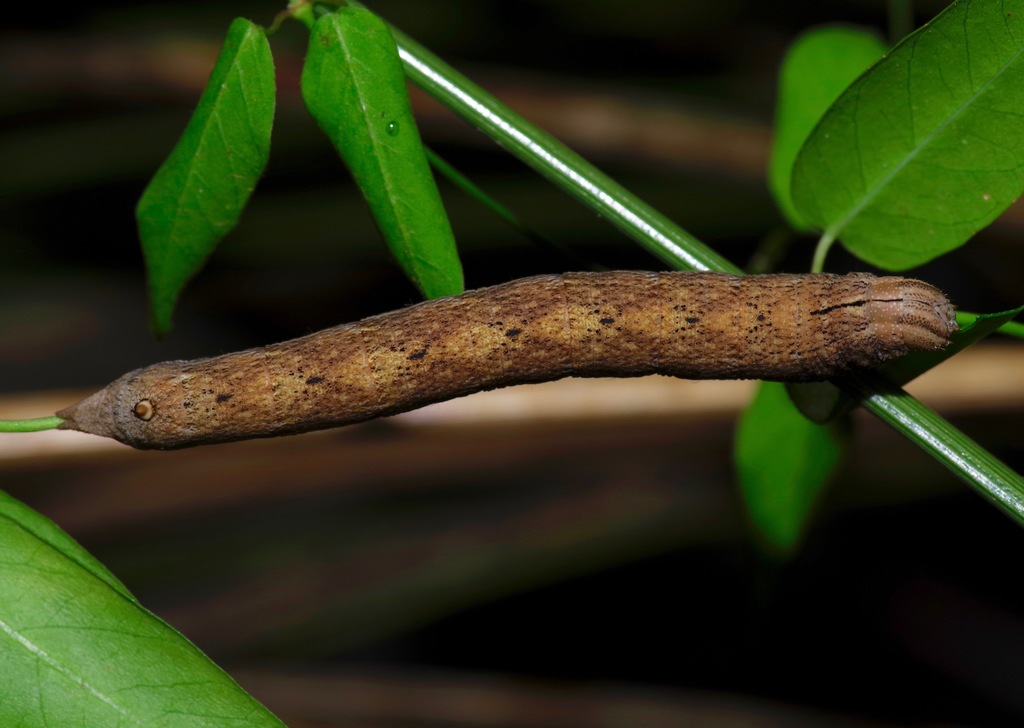
(c) Michelle W. (鍾偉瑋), some rights reserved (CC BY) · licence
Family: Sphingidae · Class: Insecta · Order: Lepidoptera
Erinnyis obscura (Obscure sphinx) is a California animal in the Sphingidae family.
The obscure sphinx is a medium to large hawkmoth with a wingspan typically measuring 70 to 100 mm (2.8 to 3.9 inches). Adults display mottled brown and gray forewings with intricate patterns of darker lines and pale patches that provide effective camouflage against tree bark. The hindwings are lighter brown with darker marginal bands. The thorax is robust and densely scaled, while the abdomen tapers to a pointed tip and bears alternating light and dark banding. At rest, the forewings are held roof-like over the body, characteristic of sphingid moths. Erinnyis obscura ranges from Uruguay north through Central America, Mexico, and the West Indies to Florida, Mississippi, Texas, New Mexico, Arizona, and southern California. The species has strayed to Arkansas, Oklahoma, Nebraska, North Dakota, and Pennsylvania, indicating strong dispersal capabilities. In California, records are primarily from desert regions and coastal areas of the southern counties, where suitable host plants occur. The species inhabits a variety of warm-climate environments including tropical and subtropical forests, desert scrublands, agricultural areas, and urban gardens where host plants are present. Adults are attracted to flowering plants for nectar feeding and can be found in elevations from sea level to approximately 1,500 meters (4,900 feet). The species shows preference for areas with moderate to high humidity during breeding periods. Obscure sphinx moths are crepuscular and nocturnal, becoming active at dusk to feed on flower nectar using their long proboscis. Adults are strong fliers capable of hovering at flowers like hummingbirds. Larvae feed on papaya (Carica papaya), various plants in the dogbane family (Apocynaceae) including Philibertia and Cynanchum species, and various plants in the spurge family (Euphorbiaceae) including Poinsettia. Caterpillars are typically green with diagonal white stripes and a prominent horn at the posterior end. Pupation occurs in underground chambers, with the pupal stage lasting several weeks to months depending on environmental conditions. In warmer regions, multiple generations per year are possible. The obscure sphinx is not federally or state-listed in California and appears to maintain stable populations across much of its range. The species benefits from its polyphagous larval feeding habits and strong dispersal ability, allowing colonization of new areas where suitable host plants are available. Urban and agricultural environments often provide abundant host plants, particularly cultivated papaya and ornamental euphorbiaceous plants. Climate change may potentially expand the species' range northward as temperatures increase. Primary conservation concerns include habitat loss in native ecosystems and potential impacts from pesticide use in agricultural areas where larvae feed on crop plants. The species serves as a pollinator for various native and cultivated flowering plants throughout its range.
Classification
Class: Insecta · Order: Lepidoptera · Family: Sphingidae
Frequently asked questions
How is Erinnyis obscura classified?
Erinnyis obscura belongs to class Insecta, order Lepidoptera, family Sphingidae.
What family does Erinnyis obscura belong to?
Erinnyis obscura is in the Sphingidae family.
What is Erinnyis obscura?
The obscure sphinx is a medium to large hawkmoth with a wingspan typically measuring 70 to 100 mm (2.8 to 3.9 inches).
Is Erinnyis obscura found in California?
Yes. Erinnyis obscura is recorded in California in The California Species Project's catalogue.
Related species
Other California species in the same genus, family, or bioregion.
Data from The California Species Project — 14,000+ California species with verified data from CNPS, CDFW, USFWS, and more.