Erpetogomphus compositus
White-belted ringtail
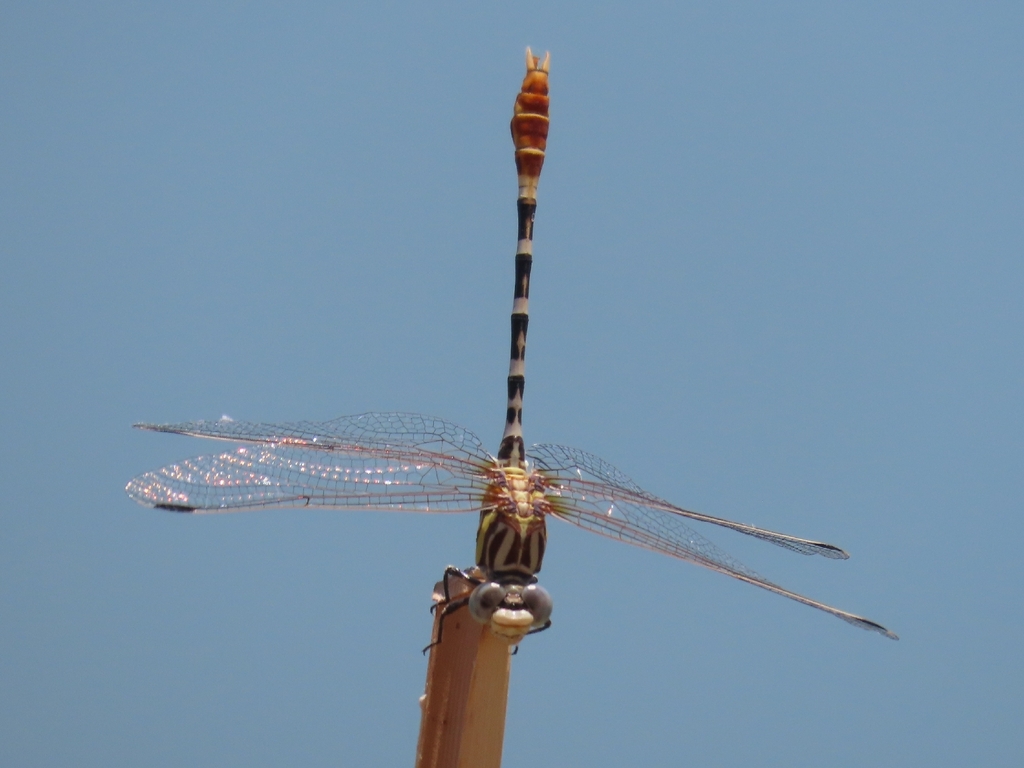
(c) Bob Miller, some rights reserved (CC BY) · licence
Family: Gomphidae · Class: Insecta · Order: Odonata
Erpetogomphus compositus (White-belted ringtail) is a California animal in the Gomphidae family.
The white-belted ringtail (Erpetogomphus compositus) is a North American dragonfly species in the clubtail family Gomphidae. As a member of the Anisoptera suborder, this species exhibits the characteristic robust build and strong flight capabilities typical of dragonflies. Adults display the distinctive white-banded abdomen that gives the species its common name, though detailed morphological descriptions remain limited in the scientific literature. Erpetogomphus compositus has a broad distribution extending from the northwestern United States to northern Mexico. Within the United States, the species is documented from Arizona, California, Idaho, Nevada, New Mexico, Oregon, Texas, Utah, Washington, and Wyoming (Xerces Society). In California, the species occurs alongside populations in Arizona, Nevada, and Oregon as indicated in the provided range data. However, the species shows highly variable regional abundance, being critically imperiled in Washington and possibly extirpated from Utah (Xerces Society). The white-belted ringtail inhabits lotic depositional environments characterized by fine sediments, including sandy rivers and streams. These aquatic systems typically feature slow-moving or still waters with muddy or sandy substrates that support the species' larval development. The nymphs develop in the benthic sediments of these waterways, where they serve as important predators in the aquatic ecosystem. Adult emergence occurs near these breeding habitats, with adults remaining in proximity to suitable water sources. Like other gomphid dragonflies, white-belted ringtails are aerial predators that capture insects during flight. Adults patrol territories along streams and rivers, hunting for prey while also seeking mates. Reproductive behavior involves males establishing territories near suitable oviposition sites, where females deposit eggs in the sediment or on submerged vegetation. The larval stage, known as nymphs or naiads, can extend over multiple years as they develop through numerous molts before emerging as adults. Specific details regarding flight period, mating behaviors, and larval development duration have not been well documented for this species. Although globally secure with a G5 conservation ranking, Erpetogomphus compositus faces significant regional conservation challenges. Habitat disturbance and degradation represent the primary threats to this species. The fine-grained flood plain deposits that characterize the species' preferred habitats are particularly susceptible to erosion, which can be exacerbated by livestock grazing and poor farming practices (Xerces Society). Water quality degradation from agricultural runoff, including insecticides, herbicides, and other pollutants, poses additional risks to both larval and adult stages. Stream alteration and flow modification further threaten the depositional habitats required for successful reproduction. Conservation efforts focus on protecting and restoring riparian buffers around known aquatic habitats, implementing adaptive land management practices, and maintaining water quality in breeding streams. The species' unranked status in most states reflects the need for additional survey work to better understand population trends and distribution patterns across its range.
Classification
Class: Insecta · Order: Odonata · Family: Gomphidae
Frequently asked questions
How is Erpetogomphus compositus classified?
Erpetogomphus compositus belongs to class Insecta, order Odonata, family Gomphidae.
What family does Erpetogomphus compositus belong to?
Erpetogomphus compositus is in the Gomphidae family.
What is Erpetogomphus compositus?
The white-belted ringtail (Erpetogomphus compositus) is a North American dragonfly species in the clubtail family Gomphidae.
Is Erpetogomphus compositus found in California?
Yes. Erpetogomphus compositus is recorded in California in The California Species Project's catalogue.
Related species
Other California species in the same genus, family, or bioregion.
Data from The California Species Project — 14,000+ California species with verified data from CNPS, CDFW, USFWS, and more.