Erpetogomphus lampropeltis
Serpent Ringtail
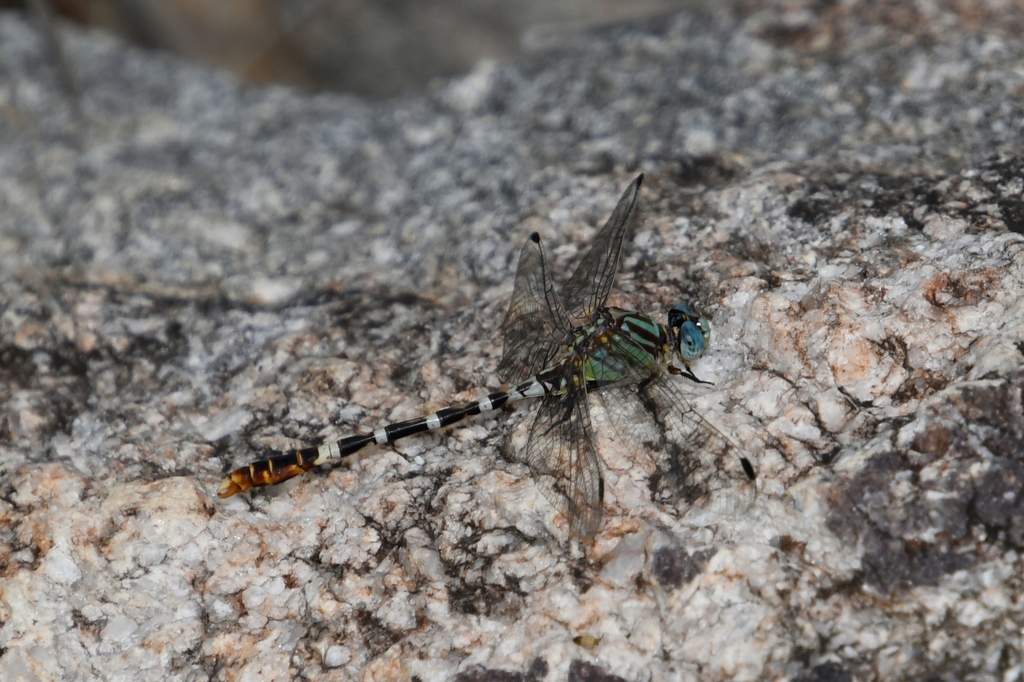
(c) Mike Ostrowski, some rights reserved (CC BY-SA) · licence
Family: Gomphidae · Class: Insecta · Order: Odonata
Erpetogomphus lampropeltis (Serpent Ringtail) is a California animal in the Gomphidae family.
The Serpent Ringtail is a dragonfly species in the family Gomphidae, found in Mexico and the United States. As a member of the clubtail dragonfly family, this species exhibits the characteristic enlarged abdomen tip and separated eyes typical of gomphids. Like other Erpetogomphus species, adults likely measure approximately 5-6 centimeters in length with a wingspan of similar dimensions, though specific morphometric data for E. lampropeltis remains undocumented in the scientific literature. The species occurs in both Mexico and the southwestern United States, though its precise distribution within California requires further documentation. The genus Erpetogomphus is primarily associated with desert and semi-arid regions of the southwestern United States and northwestern Mexico. Two subspecies are recognized: E. l. lampropeltis and E. l. natrix, though the specific ranges and distinguishing characteristics of these subspecies have not been well documented in available sources. Serpent Ringtails inhabit aquatic environments typical of desert dragonflies, likely including streams, springs, and seasonal water bodies in arid and semi-arid landscapes. Like other gomphid species, larvae are aquatic and develop in sandy or muddy substrates of flowing or standing water. The specific habitat requirements, including elevation range, water chemistry preferences, and associated vegetation communities, have not been thoroughly studied for this species. As with other dragonfly species, Serpent Ringtails are predatory throughout their life cycle. Larvae are benthic predators that capture small aquatic invertebrates, while adults are aerial hunters that feed on flying insects including mosquitoes, flies, and other small arthropods. Adults likely emerge during warmer months, though specific flight periods and breeding behaviors for E. lampropeltis have not been documented. Females presumably deposit eggs directly into water or on aquatic vegetation, following typical gomphid reproductive patterns. No federal or state conservation status has been assigned to the Serpent Ringtail, and it does not appear on current threatened or endangered species lists. The species' conservation status remains unclear due to limited ecological and population data. Like many southwestern dragonfly species, potential threats may include habitat loss from water diversions, drought, and development pressures in desert aquatic systems. Climate change impacts on desert water sources could affect populations, though specific population trends and conservation needs have not been assessed. Scientific documentation for this species remains extremely limited despite its recognition as a valid taxon. The information presented here is based on available sources including iNaturalist observations and general knowledge of gomphid ecology. If you have additional verified information about this species' biology, distribution, or ecology, please contact us to help improve this species account.
Classification
Class: Insecta · Order: Odonata · Family: Gomphidae
Frequently asked questions
How is Erpetogomphus lampropeltis classified?
Erpetogomphus lampropeltis belongs to class Insecta, order Odonata, family Gomphidae.
What family does Erpetogomphus lampropeltis belong to?
Erpetogomphus lampropeltis is in the Gomphidae family.
What is Erpetogomphus lampropeltis?
The Serpent Ringtail is a dragonfly species in the family Gomphidae, found in Mexico and the United States.
Is Erpetogomphus lampropeltis found in California?
Yes. Erpetogomphus lampropeltis is recorded in California in The California Species Project's catalogue.
Related species
Other California species in the same genus, family, or bioregion.
Data from The California Species Project — 14,000+ California species with verified data from CNPS, CDFW, USFWS, and more.