Esox lucius
Northern pike
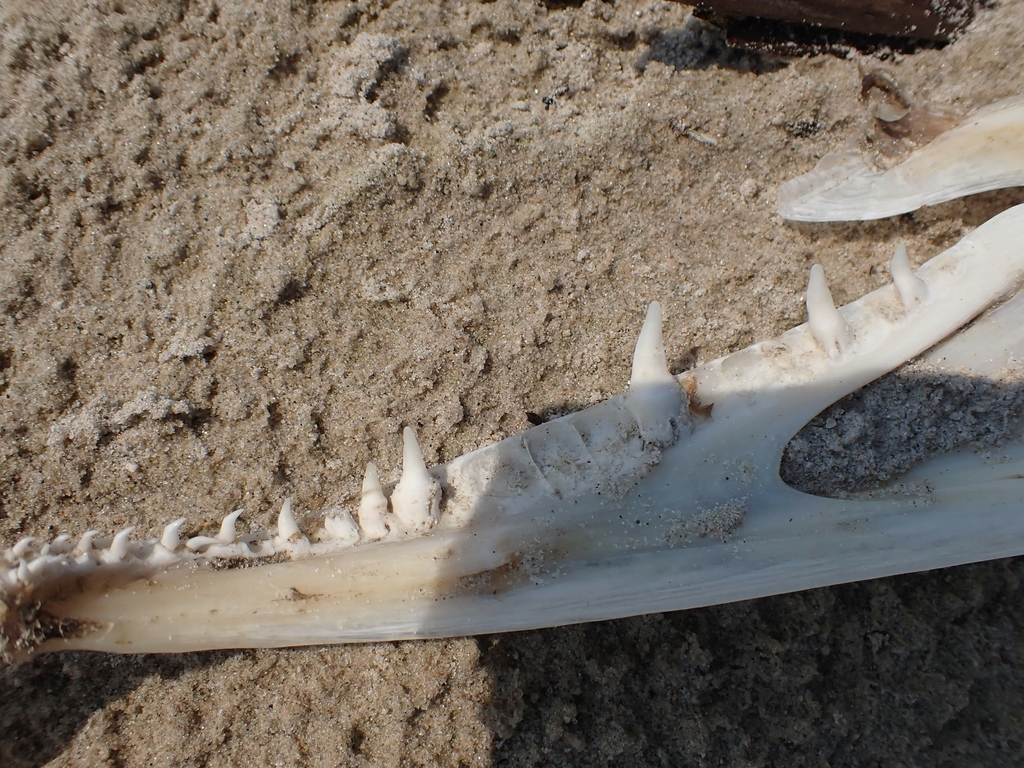
(c) Mary Krieger, some rights reserved (CC BY) · licence
Family: Esocidae · Class: Actinopterygii · Order: Salmoniformes
Esox lucius (Northern pike) is a California animal in the Esocidae family.
The northern pike is a large, elongated freshwater fish with a distinctive torpedo-shaped body adapted for ambush predation. Adults typically measure 60 to 100 cm (24 to 39 inches) in length, with exceptional individuals reaching up to 150 cm (59 inches). Body weight ranges from 1.4 to 9 kg (3 to 20 pounds), with females generally growing larger than males. The species displays a characteristic olive-green to dark green dorsal coloration with light-colored, bean-shaped or oval spots along the sides. The ventral surface is cream to white. The head is elongated with a flattened, duck-like snout containing numerous sharp teeth. The dorsal and anal fins are positioned far back on the body, near the caudal fin. Northern pike have a circumpolar distribution across northern regions of North America, Europe, and Asia. In North America, the species ranges from Alaska across Canada to the Great Lakes region and extends into the northern United States. The native range does not include California, where northern pike are considered a non-native species. However, populations have been established in some California waters through unauthorized introductions, particularly in isolated lakes and reservoirs in the northern part of the state. The species inhabits cool, clear lakes, slow-moving rivers, and vegetated wetlands. Northern pike prefer shallow areas with abundant aquatic vegetation, which provides cover for ambush hunting. They are typically found in water temperatures ranging from 4 to 20°C (39 to 68°F), with optimal temperatures between 15 to 18°C (59 to 64°F). The species tolerates a wide range of pH levels from 6.0 to 8.5 and can survive in both soft and moderately hard water conditions. Northern pike are apex predators that employ a sit-and-wait hunting strategy. Their diet consists primarily of fish, including yellow perch, walleye, and smaller pike, but they also consume amphibians, waterfowl, small mammals, and aquatic invertebrates. Spawning occurs in early spring immediately after ice break-up, typically when water temperatures reach 4 to 6°C (39 to 43°F). Females deposit 15,000 to 75,000 adhesive eggs in shallow, vegetated areas. Males reach sexual maturity at 2 to 3 years, while females mature at 3 to 4 years. The species can live up to 25 years in favorable conditions. Northern pike are not federally listed and are considered secure throughout most of their native range. However, in California, they are classified as a prohibited species under state regulations due to their potential negative impacts on native fish populations. The California Department of Fish and Wildlife considers northern pike a threat to native species and ecosystems where they have been introduced. Management efforts focus on preventing further introductions and controlling existing populations to protect native aquatic communities.
Classification
Class: Actinopterygii · Order: Salmoniformes · Family: Esocidae
Frequently asked questions
How is Esox lucius classified?
Esox lucius belongs to class Actinopterygii, order Salmoniformes, family Esocidae.
What family does Esox lucius belong to?
Esox lucius is in the Esocidae family.
What is Esox lucius?
The northern pike is a large, elongated freshwater fish with a distinctive torpedo-shaped body adapted for ambush predation.
Is Esox lucius found in California?
Yes. Esox lucius is recorded in California in The California Species Project's catalogue.
More California species
This species has no close relatives in our California data — here are other species to explore.
Data from The California Species Project — 14,000+ California species with verified data from CNPS, CDFW, USFWS, and more.