Esperia sulphurella
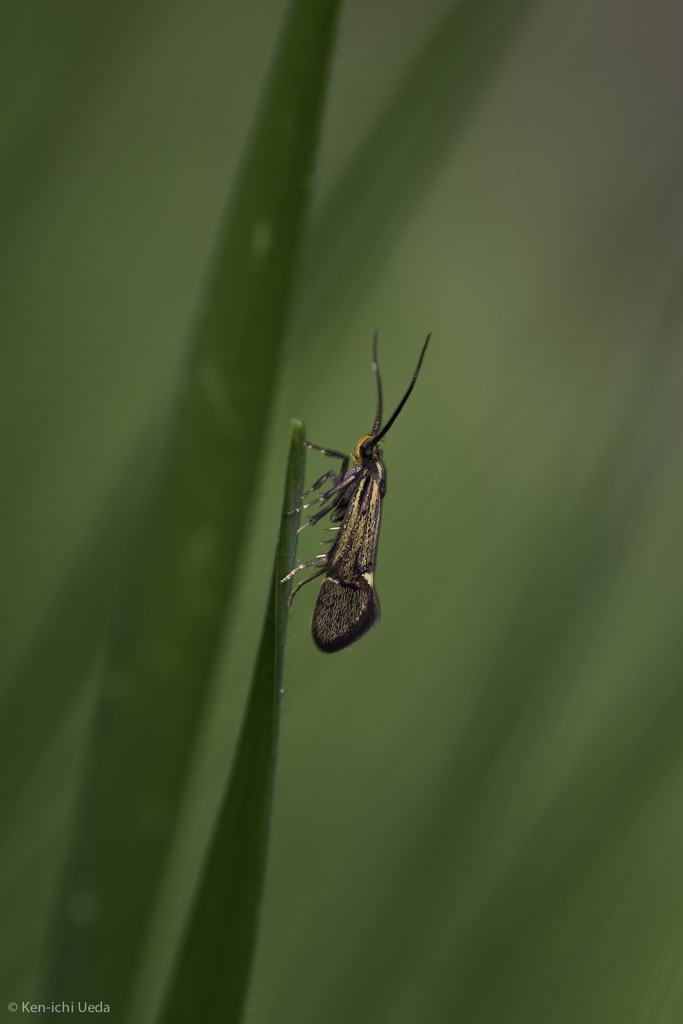
(c) Ken-ichi Ueda, some rights reserved (CC BY) · licence
Family: Oecophoridae · Class: Insecta · Order: Lepidoptera
Esperia sulphurella is a California animal in the Oecophoridae family.
Esperia sulphurella is a small moth in the family Oecophoridae, part of the concealer moth group. This species belongs to the order Lepidoptera and represents one of the lesser-documented members of the North American Oecophoridae fauna. Adult moths typically measure 8 to 12 millimeters in wingspan, displaying the characteristic narrow forewings and reduced hindwings common to the family. The forewings are generally pale yellowish or sulphur-colored, which corresponds to the species epithet 'sulphurella,' with subtle darker markings along the wing margins and costa. The distribution of Esperia sulphurella appears to be limited within North America, though comprehensive range data remains incomplete due to the challenges of identifying and surveying micro-lepidoptera. Available records suggest occurrence in western North America, potentially including California, but definitive distributional boundaries require further taxonomic and field survey work. The species' range may overlap with other Esperia species, complicating accurate distribution mapping. Habitat preferences for Esperia sulphurella are not well-documented in the scientific literature. Like other Oecophoridae moths, the species likely inhabits areas supporting its larval host plants, which may include various shrubs or herbaceous plants. Many concealer moths in this family demonstrate specificity to particular plant families or genera, suggesting that habitat distribution closely follows host plant availability. Elevational preferences and specific microhabitat requirements remain largely unknown. The life cycle and behavioral ecology of Esperia sulphurella follow the typical lepidopteran pattern but lack detailed documentation. Adults are likely active during specific seasonal periods, with flight times varying by geographic location and local climate conditions. Larvae probably feed as concealed borers or leaf miners within host plant tissues, as indicated by the family common name 'concealer moths.' Pupation likely occurs within the host plant or in nearby soil or debris. Adult moths may be attracted to artificial lights during nocturnal activity periods. Conservation status information for Esperia sulphurella is not available through standard federal or state wildlife databases as of December 2025. The species lacks formal conservation rankings from NatureServe, IUCN, or state wildlife agencies. This absence of status information reflects the broader challenge of assessing micro-lepidoptera, many of which remain poorly studied despite potential conservation concerns. Limited distributional data, taxonomic uncertainties, and difficulties in field detection contribute to knowledge gaps. The species may face threats common to other small moths, including habitat loss, pesticide applications, and climate change effects on host plants and seasonal timing. Comprehensive surveys and taxonomic clarification would be necessary to determine actual conservation needs and appropriate management strategies.
Classification
Class: Insecta · Order: Lepidoptera · Family: Oecophoridae
Frequently asked questions
How is Esperia sulphurella classified?
Esperia sulphurella belongs to class Insecta, order Lepidoptera, family Oecophoridae.
What family does Esperia sulphurella belong to?
Esperia sulphurella is in the Oecophoridae family.
What is Esperia sulphurella?
Esperia sulphurella is a small moth in the family Oecophoridae, part of the concealer moth group.
Is Esperia sulphurella found in California?
Yes. Esperia sulphurella is recorded in California in The California Species Project's catalogue.
Related species
Other California species in the same genus, family, or bioregion.
Data from The California Species Project — 14,000+ California species with verified data from CNPS, CDFW, USFWS, and more.