Estigmene acrea
Salt Marsh Moth
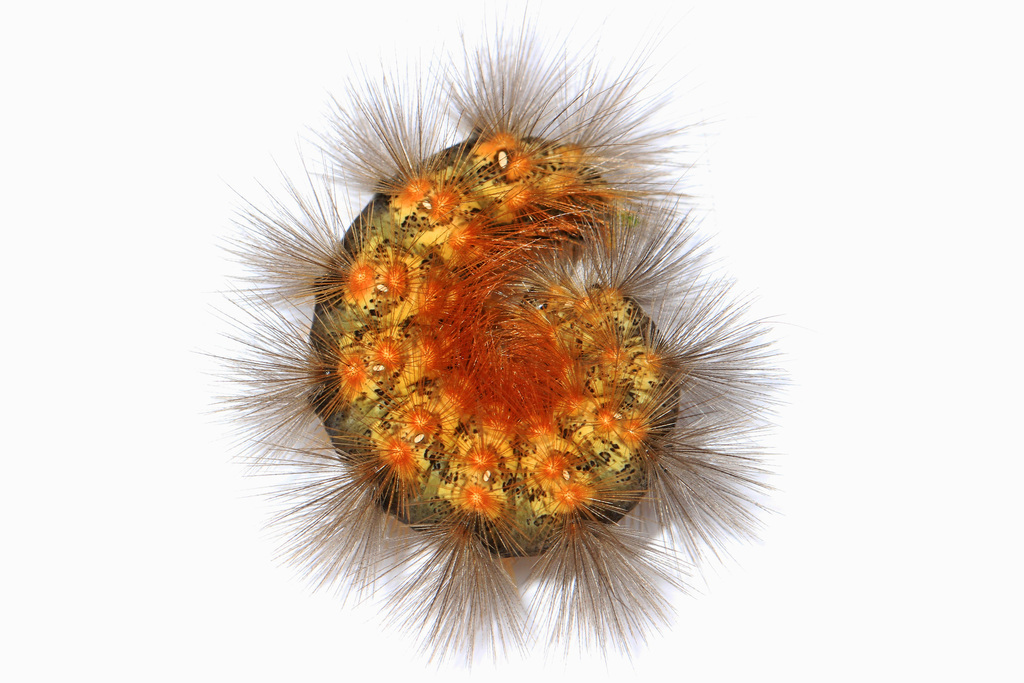
(c) Judy Gallagher, some rights reserved (CC BY-SA) · licence
Family: Erebidae · Class: Insecta · Order: Lepidoptera
Estigmene acrea (Salt Marsh Moth) is a California animal in the Erebidae family.
The Salt Marsh Moth (Estigmene acrea) is a medium-sized moth in the family Erebidae, measuring 37 to 50 mm (1.5 to 2.0 inches) in wingspan. Males display white forewings with variable black spotting, while females exhibit more extensive black markings creating a distinctive pattern. The hindwings are typically white to pale yellow with black spots along the margins. The thorax is white with black spots, and the abdomen features alternating black and orange segments with a row of black spots along the dorsal surface. Males are generally smaller and more heavily marked than females. The Salt Marsh Moth occurs throughout North America, ranging from southern Canada to northern Mexico. In California, the species is found statewide from sea level to moderate elevations, inhabiting both coastal and inland regions. The moth is particularly common in agricultural areas, gardens, and disturbed habitats where host plants are abundant. Despite its common name suggesting salt marsh habitats, the species occurs in diverse environments including grasslands, agricultural fields, urban areas, and woodland edges. This polyphagous species utilizes an exceptionally broad range of host plants, including apple trees, cabbage, clover, corn, cotton, peas, potato, and tobacco. Larvae feed on numerous additional plant families, making them significant agricultural pests in some regions. Adults are active primarily at night and are attracted to artificial lights. The species typically produces two to three generations per year in California, with timing varying by local climate conditions. Salt Marsh Moth larvae, known as woolly bears, are densely covered with stiff bristles and exhibit variable coloration from pale yellow to dark brown or black. Caterpillars feed voraciously on host plant foliage, often causing significant defoliation when populations are high. Pupation occurs in a loosely constructed cocoon incorporating larval hairs, typically in leaf litter or soil debris. Adults emerge after 10 to 14 days and mate shortly after emergence. Females deposit eggs in clusters on host plant leaves, with each female capable of laying several hundred eggs. Mating behavior involves pheromone communication, with females releasing chemical signals to attract males from considerable distances. The species overwinters as pupae in temperate regions, though in warmer areas of California, development may continue year-round with overlapping generations. Natural enemies include various parasitoid wasps and flies that help regulate populations. The Salt Marsh Moth is not listed under federal or state endangered species legislation and maintains stable populations throughout its range. The species' broad host plant range and adaptability to disturbed habitats have contributed to its success in human-modified landscapes. In agricultural settings, the moth can reach pest status, particularly on crops such as alfalfa, soybeans, and various vegetable crops. Integrated pest management strategies typically focus on biological control agents and targeted pesticide applications when economic thresholds are exceeded. Climate change may influence the species' distribution and voltinism patterns, potentially expanding its range northward and increasing the number of annual generations in some regions.
Classification
Class: Insecta · Order: Lepidoptera · Family: Erebidae
Frequently asked questions
How is Estigmene acrea classified?
Estigmene acrea belongs to class Insecta, order Lepidoptera, family Erebidae.
What family does Estigmene acrea belong to?
Estigmene acrea is in the Erebidae family.
What is Estigmene acrea?
The Salt Marsh Moth (Estigmene acrea) is a medium-sized moth in the family Erebidae, measuring 37 to 50 mm (1.5 to 2.0 inches) in wingspan.
Is Estigmene acrea found in California?
Yes. Estigmene acrea is recorded in California in The California Species Project's catalogue.
Related species
Other California species in the same genus, family, or bioregion.
Data from The California Species Project — 14,000+ California species with verified data from CNPS, CDFW, USFWS, and more.