Ethmia albistrigella
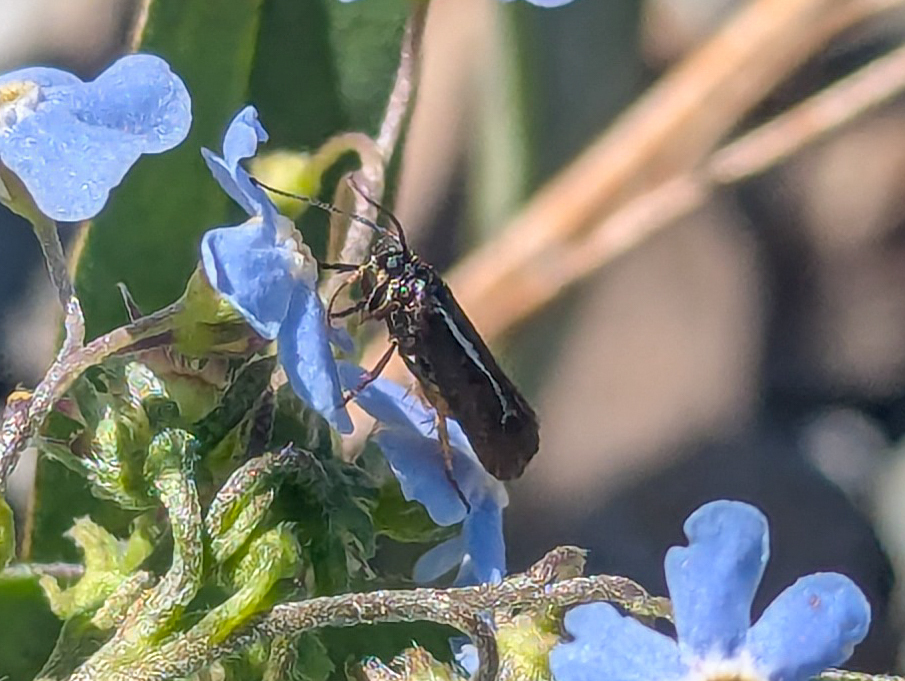
(c) Tom Field, some rights reserved (CC BY) · licence
Family: Depressariidae · Class: Insecta · Order: Lepidoptera
Ethmia albistrigella is a California animal in the Depressariidae family.
Ethmia albistrigella is a small moth in the family Depressariidae, a diverse group of microlepidoptera commonly known as grass miner moths. This species belongs to the genus Ethmia, which comprises approximately 200 described species worldwide, with several species documented from California and the southwestern United States. Adult moths of E. albistrigella are characterized by narrow forewings typical of the Depressariidae family. The forewings display a distinctive pattern of white striping on a darker background, as suggested by the specific epithet 'albistrigella,' which refers to white stripes or bands. The hindwings are typically pale or whitish with reduced venation. Wing span measurements for this species have not been widely documented in accessible literature, but most Ethmia species range from 12 to 20 millimeters in wingspan. The geographic distribution of Ethmia albistrigella appears to be limited, with records primarily from California and potentially adjacent southwestern states. Specific county-level distribution data for this species is not readily available in current taxonomic databases, suggesting either limited collection records or restricted range. The species may occur in multiple biogeographic regions within California, but comprehensive survey data is lacking. Habitat preferences for E. albistrigella remain poorly documented in published literature. Most Ethmia species are associated with specific plant families, particularly Boraginaceae (borage family), Hydrophyllaceae (waterleaf family), and Ehretiaceae. Adult moths are typically found in areas where their larval host plants occur, which may include chaparral, coastal scrub, desert margins, or oak woodland habitats depending on the specific plant associations. The life cycle of E. albistrigella follows the typical lepidopteran pattern of complete metamorphosis. Larvae are likely leaf miners or external feeders on specific host plants, as is characteristic of the Depressariidae family. Many Ethmia species are host-plant specialists, with larvae developing on particular plant species or genera. Adult flight periods for related Ethmia species in California typically occur during spring and early summer months, but specific phenology data for E. albistrigella is not well established in current literature. Conservation status information for Ethmia albistrigella is not available through standard federal or state wildlife databases. The species does not appear on the U.S. Fish and Wildlife Service endangered species list, nor is it recognized as a species of special concern by the California Department of Fish and Wildlife as of December 2025. This absence from conservation lists may reflect either stable populations, insufficient survey data, or limited taxonomic recognition rather than actual conservation security. The primary challenges in understanding E. albistrigella include limited ecological research, incomplete distribution mapping, and potential taxonomic uncertainties within the genus Ethmia. Many microlepidoptera species require specialized expertise for identification and have received less scientific attention compared to larger, more conspicuous moth and butterfly species. Further research is needed to establish host plant relationships, precise habitat requirements, and population status for this California moth species.
Classification
Class: Insecta · Order: Lepidoptera · Family: Depressariidae
Frequently asked questions
How is Ethmia albistrigella classified?
Ethmia albistrigella belongs to class Insecta, order Lepidoptera, family Depressariidae.
What family does Ethmia albistrigella belong to?
Ethmia albistrigella is in the Depressariidae family.
What is Ethmia albistrigella?
Ethmia albistrigella is a small moth in the family Depressariidae, a diverse group of microlepidoptera commonly known as grass miner moths.
Is Ethmia albistrigella found in California?
Yes. Ethmia albistrigella is recorded in California in The California Species Project's catalogue.
Related species
Other California species in the same genus, family, or bioregion.
Data from The California Species Project — 14,000+ California species with verified data from CNPS, CDFW, USFWS, and more.