Ethmia brevistriga
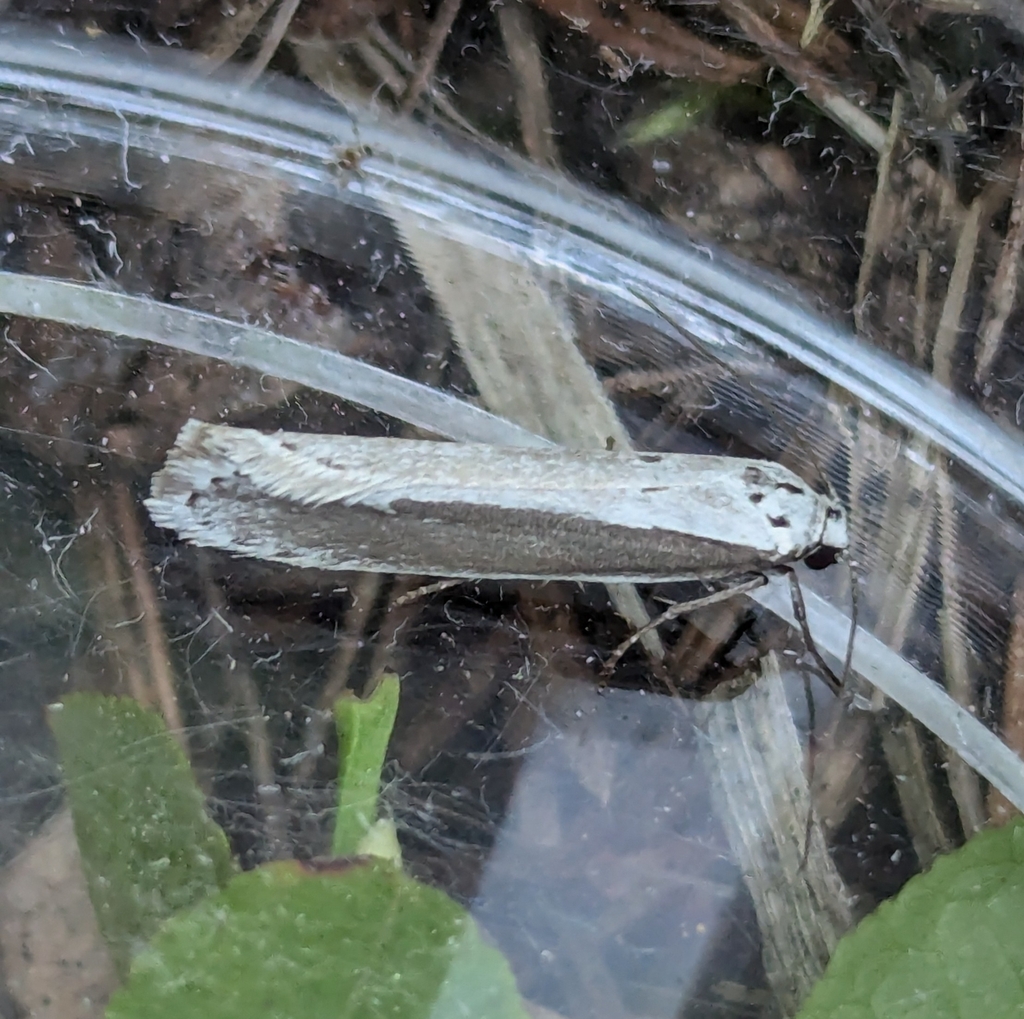
no rights reserved · CC0
Family: Depressariidae · Class: Insecta · Order: Lepidoptera
Ethmia brevistriga is a California animal in the Depressariidae family.
Ethmia brevistriga is a small moth species in the family Depressariidae, subfamily Ethmiidae. This microlepidopteran exhibits the characteristic features of the Ethmia genus, with forewings typically measuring 8-12 mm in length. The forewings display a distinctive pattern of dark markings on a lighter background, though specific coloration details for this species require further documentation. Like other Ethmia species, adults possess narrow forewings with rounded apices and well-developed hindwings with fringed margins. The range and distribution of Ethmia brevistriga remain poorly documented in the scientific literature. Limited collection records suggest the species occurs in California, though the specific counties and elevational range require verification through additional field surveys and museum specimen examinations. The historical distribution may have been more extensive than current records indicate. Habitat requirements for Ethmia brevistriga are not well-established, though other Ethmia species typically inhabit areas where their specific host plants occur. Many members of this genus are associated with shrubland, woodland edges, and areas with diverse forb communities. The species likely requires suitable microhabitats for both larval development on host plants and adult nectar sources. The life history and ecological requirements of Ethmia brevistriga remain largely unstudied. Like other Ethmia species, larvae are presumably leaf miners or external feeders on specific host plants, though the host plant associations for this species have not been documented. Adults are likely active during specific seasons, with flight periods varying by elevation and local climate conditions. The species presumably undergoes complete metamorphosis with egg, larval, pupal, and adult stages, though the number of annual generations is unknown. Conservation status information for Ethmia brevistriga is limited due to insufficient data on population size, trends, and distribution. The species lacks federal or state listing status, and global conservation assessments have not been completed. Primary threats are difficult to assess without better understanding of habitat requirements and distribution. Potential threats may include habitat loss from development, altered fire regimes, invasive plant species competition with native host plants, and climate change effects on suitable habitat zones. The species may be more vulnerable than currently recognized due to potential narrow habitat requirements or limited distribution. Conservation efforts for Ethmia brevistriga would benefit from basic research to establish host plant relationships, distribution mapping, life history studies, and population monitoring protocols. Taxonomic verification and genetic analysis may be necessary to confirm species boundaries and relationships within the Ethmia genus. Habitat protection and management recommendations cannot be developed without better understanding of ecological requirements.
Classification
Class: Insecta · Order: Lepidoptera · Family: Depressariidae
Frequently asked questions
How is Ethmia brevistriga classified?
Ethmia brevistriga belongs to class Insecta, order Lepidoptera, family Depressariidae.
What family does Ethmia brevistriga belong to?
Ethmia brevistriga is in the Depressariidae family.
What is Ethmia brevistriga?
Ethmia brevistriga is a small moth species in the family Depressariidae, subfamily Ethmiidae.
Is Ethmia brevistriga found in California?
Yes. Ethmia brevistriga is recorded in California in The California Species Project's catalogue.
Related species
Other California species in the same genus, family, or bioregion.
Data from The California Species Project — 14,000+ California species with verified data from CNPS, CDFW, USFWS, and more.