Ethmia charybdis
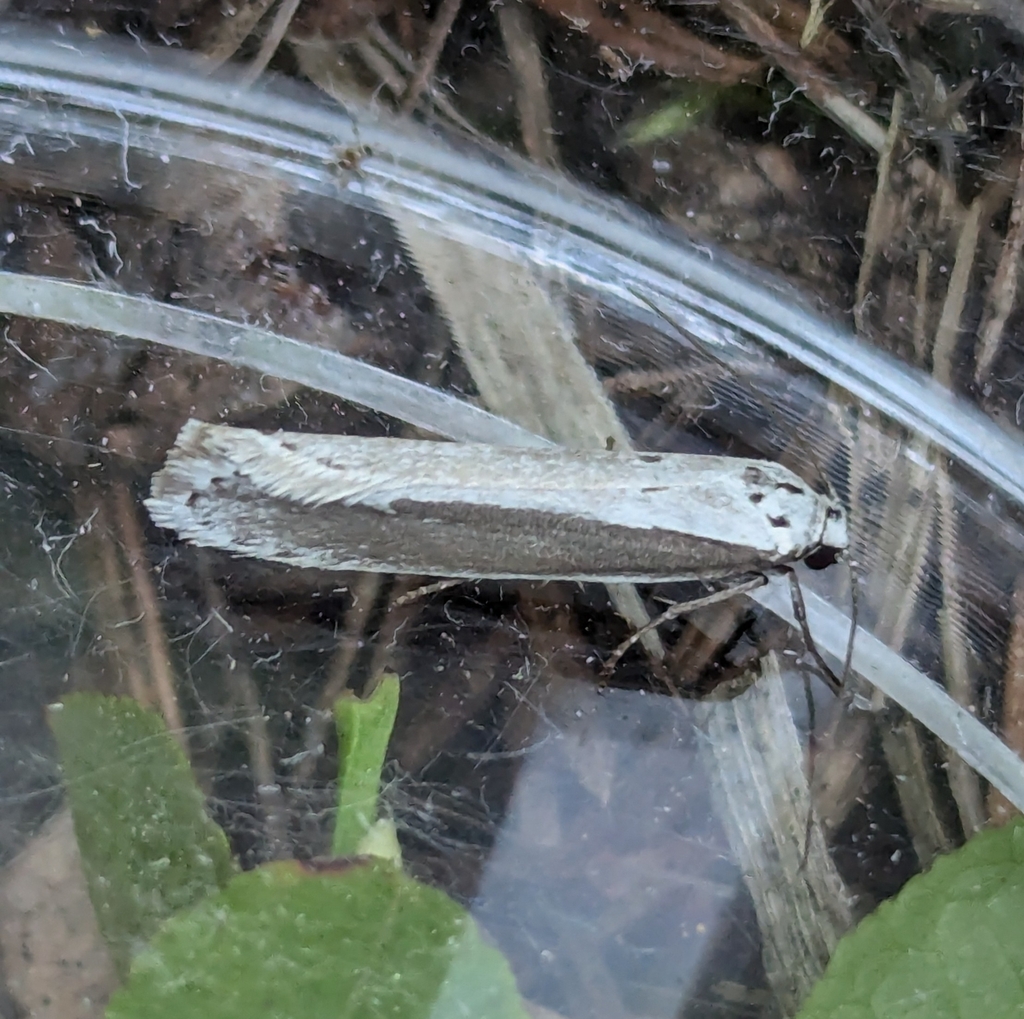
no rights reserved · CC0
Family: Depressariidae · Class: Insecta · Order: Lepidoptera
Ethmia charybdis is a California animal in the Depressariidae family.
Ethmia charybdis is a moth species in the family Depressariidae, a diverse group of small moths commonly known as grass moths. This species belongs to the genus Ethmia, which contains numerous species distributed across North and Central America. The taxonomic classification places E. charybdis within the order Lepidoptera, representing one of many specialized moths adapted to specific ecological niches. Detailed morphological descriptions of E. charybdis are limited in accessible literature. Like other members of the genus Ethmia, this species likely exhibits the characteristic features of the group, including relatively small size with forewings typically measuring 8-15 mm in length. Ethmia moths generally display cryptic coloration patterns that provide camouflage against natural substrates. Wing patterns in the genus often include various combinations of brown, gray, and white markings, though specific coloration details for E. charybdis require further documentation. The geographic distribution of E. charybdis appears to be restricted, though comprehensive range data are not readily available in current taxonomic databases. The species name suggests it may be endemic to a particular region, as many Ethmia species exhibit limited distributions tied to specific host plant availability and climatic conditions. Further survey work is needed to establish the complete range and habitat associations of this species. Habitat preferences for E. charybdis remain poorly documented. Members of the genus Ethmia typically inhabit areas where their specific host plants occur, often showing strong fidelity to particular plant families. Many Ethmia species are associated with dry or semi-arid environments, though some occur in more mesic conditions. Elevation ranges and specific microhabitat requirements for E. charybdis have not been well characterized in available literature. The life history and ecological relationships of E. charybdis are not well documented in current scientific literature. Like other Ethmia species, this moth likely undergoes complete metamorphosis with egg, larval, pupal, and adult stages. Larvae of Ethmia moths are typically leaf feeders, often exhibiting high specificity to particular host plant species or families. Adult flight periods vary among species but commonly occur during warmer months. Specific information regarding host plants, breeding behavior, and seasonal activity patterns for E. charybdis requires additional research. The conservation status of E. charybdis has not been formally assessed by state or federal agencies. The species does not appear on current listings of threatened or endangered species in California or at the federal level. However, the apparent lack of recent documentation and limited available ecological data suggest that population status and trends are unknown. Many small moth species face conservation challenges due to habitat loss, pesticide use, and climate change impacts, though specific threats to E. charybdis cannot be evaluated without better baseline information. Additional taxonomic research and field surveys are needed to establish the current status and conservation needs of this species.
Classification
Class: Insecta · Order: Lepidoptera · Family: Depressariidae
Frequently asked questions
How is Ethmia charybdis classified?
Ethmia charybdis belongs to class Insecta, order Lepidoptera, family Depressariidae.
What family does Ethmia charybdis belong to?
Ethmia charybdis is in the Depressariidae family.
What is Ethmia charybdis?
Ethmia charybdis is a moth species in the family Depressariidae, a diverse group of small moths commonly known as grass moths.
Is Ethmia charybdis found in California?
Yes. Ethmia charybdis is recorded in California in The California Species Project's catalogue.
Related species
Other California species in the same genus, family, or bioregion.
Data from The California Species Project — 14,000+ California species with verified data from CNPS, CDFW, USFWS, and more.