Ethmia discostrigella
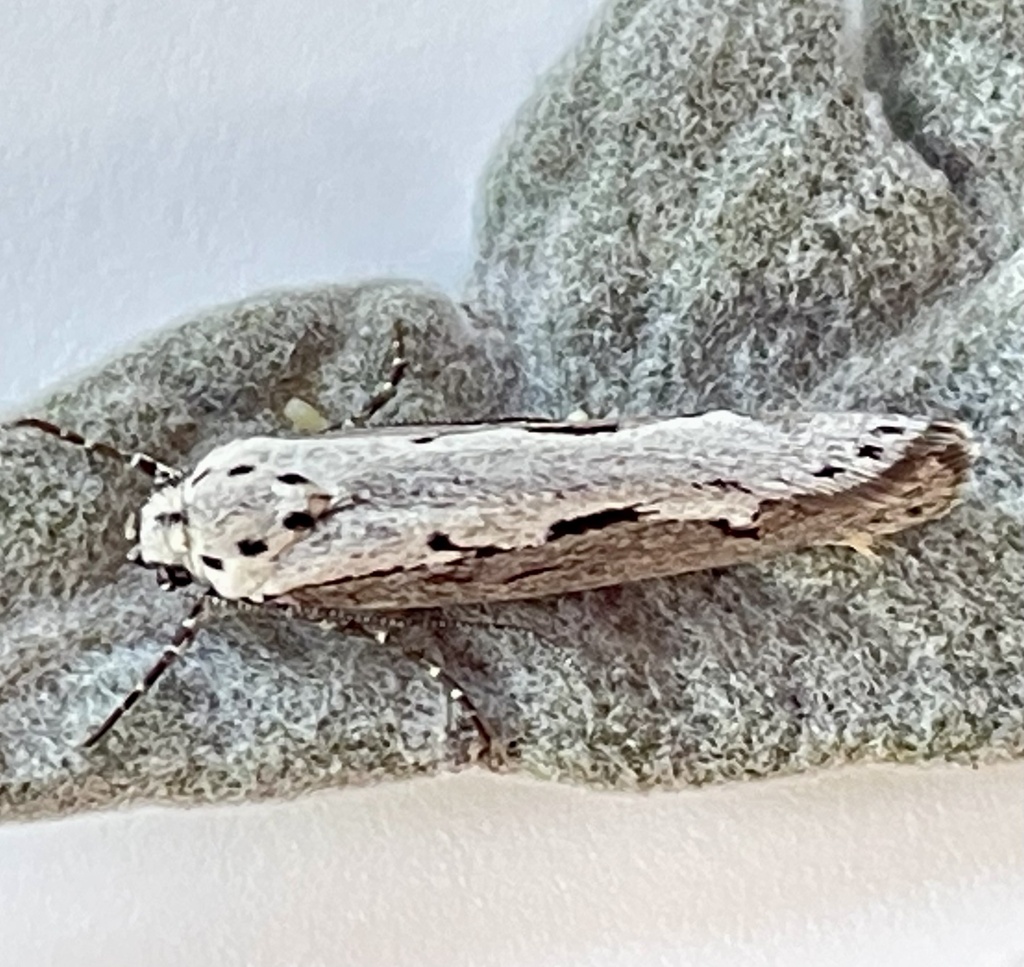
no rights reserved · CC0
Family: Depressariidae · Class: Insecta · Order: Lepidoptera
Ethmia discostrigella is a California animal in the Depressariidae family.
Ethmia discostrigella is a small moth in the family Depressariidae, representing one of the lesser-known lepidopteran species found in California. This species belongs to the genus Ethmia, which comprises numerous small moths distributed across North and South America. Adults are characterized by narrow forewings and relatively broad hindwings typical of the Depressariidae family. The forewings typically measure 8 to 12 mm in length, giving the moth a total wingspan of approximately 16 to 24 mm. Specific coloration patterns and markings for E. discostrigella remain inadequately documented in the scientific literature, though members of the genus Ethmia generally display combinations of white, gray, and brown coloration with distinctive spotting or striping patterns on the forewings. The range and distribution of Ethmia discostrigella in California remains poorly documented. The species appears to have a limited distribution within the state, though specific localities and county records are not well established in current taxonomic databases. This limited documentation reflects the broader challenge of studying small, cryptic moth species that are often overlooked in biodiversity surveys. The species' presence in California may represent either a peripheral population of a more widespread species or an endemic form with restricted distribution. Habitat requirements for E. discostrigella are not well characterized, though members of the genus Ethmia typically inhabit areas with their specific host plants. These moths are generally found in areas ranging from coastal scrublands to montane forests, depending on the distribution of suitable larval food sources. The elevation range and specific vegetation associations for this species remain undetermined due to limited field observations and ecological studies. Like other members of the genus Ethmia, E. discostrigella likely follows a holometabolous life cycle with egg, larval, pupal, and adult stages. Larvae of Ethmia species are typically leaf miners or external feeders on specific host plants, often in the family Boraginaceae. The larval host plants for E. discostrigella have not been definitively identified, though related species often utilize plants in genera such as Cordia, Ehretia, or other borage family members. Adult flight periods, mating behaviors, and reproductive cycles remain undocumented for this species. Overwintering strategies and voltinism patterns are similarly unknown. The conservation status of Ethmia discostrigella is not formally assessed at federal or state levels. The species lacks specific protection under the Endangered Species Act or California Endangered Species Act. Population trends, abundance estimates, and potential threats remain uncharacterized due to insufficient survey data and taxonomic uncertainty. Primary challenges for conservation assessment include the difficulty of detecting and identifying small moths, potential confusion with closely related species, and limited baseline ecological data. Climate change, habitat loss, and pesticide use may pose threats to this and other small lepidopteran species, though specific impacts on E. discostrigella populations cannot be evaluated without additional research. Comprehensive surveys and taxonomic studies would be necessary to assess the species' conservation needs and distribution patterns within California.
Classification
Class: Insecta · Order: Lepidoptera · Family: Depressariidae
Frequently asked questions
How is Ethmia discostrigella classified?
Ethmia discostrigella belongs to class Insecta, order Lepidoptera, family Depressariidae.
What family does Ethmia discostrigella belong to?
Ethmia discostrigella is in the Depressariidae family.
What is Ethmia discostrigella?
Ethmia discostrigella is a small moth in the family Depressariidae, representing one of the lesser-known lepidopteran species found in California.
Is Ethmia discostrigella found in California?
Yes. Ethmia discostrigella is recorded in California in The California Species Project's catalogue.
Related species
Other California species in the same genus, family, or bioregion.
Data from The California Species Project — 14,000+ California species with verified data from CNPS, CDFW, USFWS, and more.