Ethmia hodgesella
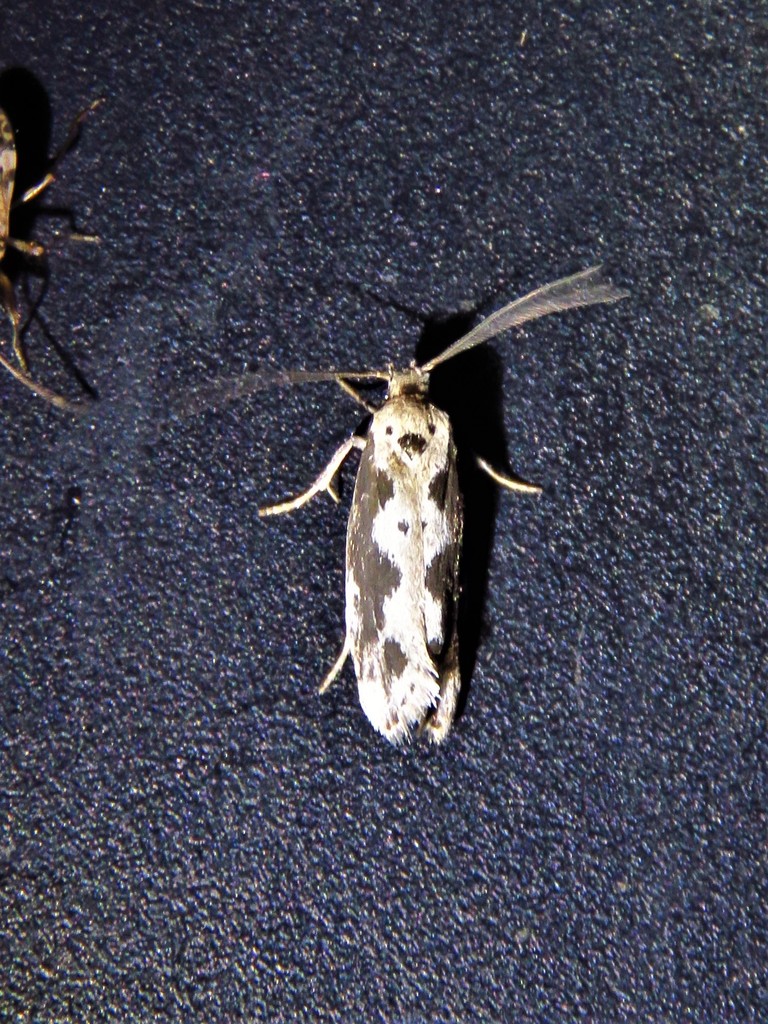
(c) Annika Lindqvist, some rights reserved (CC BY) · licence
Family: Depressariidae · Class: Insecta · Order: Lepidoptera
Ethmia hodgesella is a California animal in the Depressariidae family.
Ethmia hodgesella is a small moth in the family Depressariidae, representing one of the lesser-known members of the diverse California Lepidoptera fauna. This species belongs to the genus Ethmia, a group of moths characterized by their distinctive wing patterns and specialized ecological relationships. Adults typically measure 8 to 12 mm in forewing length, displaying the characteristic narrow forewings and relatively broad hindwings typical of the Depressariidae family. The forewings are generally pale with darker markings, though detailed morphological descriptions remain limited in the scientific literature. The species' distribution within California appears restricted based on available collection records, though comprehensive range data remains incomplete. Like many microlepidoptera, E. hodgesella likely has a limited geographic range within specific habitat types that support its host plant requirements. The species' occurrence patterns suggest adaptation to particular microclimatic conditions and vegetation communities. Habitat preferences for E. hodgesella are closely tied to the presence of suitable host plants, as is typical for specialized Lepidoptera. Members of the genus Ethmia are generally associated with specific plant families, often showing high fidelity to particular host species. The species likely inhabits areas where these host plants occur naturally, which may include chaparral, oak woodland, or other California vegetation communities. Elevation range and specific microhabitat requirements remain poorly documented. The life cycle of E. hodgesella follows the typical lepidopteran pattern of complete metamorphosis. Larvae are likely leaf miners or external feeders on specific host plants, as observed in related Ethmia species. Adults probably emerge during specific seasonal windows that correspond with optimal conditions for mating and oviposition. Flight periods, mating behaviors, and reproductive strategies require further study to fully understand the species' ecological requirements. Like most moths in this family, adults are likely nocturnal or crepuscular, with males potentially attracted to pheromones released by females. The conservation status of E. hodgesella remains largely unknown due to limited survey effort and taxonomic uncertainty within the microlepidoptera. The species lacks formal state or federal protection status, reflecting the general knowledge gap surrounding small moth species in California. Population trends are undocumented, and the species may face threats common to specialized insects, including habitat loss, fragmentation, and climate change. Urban development, agricultural conversion, and altered fire regimes could potentially impact populations if the species has narrow habitat requirements. The lack of comprehensive surveys for microlepidoptera means that E. hodgesella, like many similar species, may be declining without detection. Further research is needed to assess population status, habitat requirements, and potential conservation needs. Systematic surveys targeting the Depressariidae family would help clarify the distribution and abundance of this and related species, providing essential data for future conservation planning.
Classification
Class: Insecta · Order: Lepidoptera · Family: Depressariidae
Frequently asked questions
How is Ethmia hodgesella classified?
Ethmia hodgesella belongs to class Insecta, order Lepidoptera, family Depressariidae.
What family does Ethmia hodgesella belong to?
Ethmia hodgesella is in the Depressariidae family.
What is Ethmia hodgesella?
Ethmia hodgesella is a small moth in the family Depressariidae, representing one of the lesser-known members of the diverse California Lepidoptera fauna.
Is Ethmia hodgesella found in California?
Yes. Ethmia hodgesella is recorded in California in The California Species Project's catalogue.
Related species
Other California species in the same genus, family, or bioregion.
Data from The California Species Project — 14,000+ California species with verified data from CNPS, CDFW, USFWS, and more.