Ethmia minuta
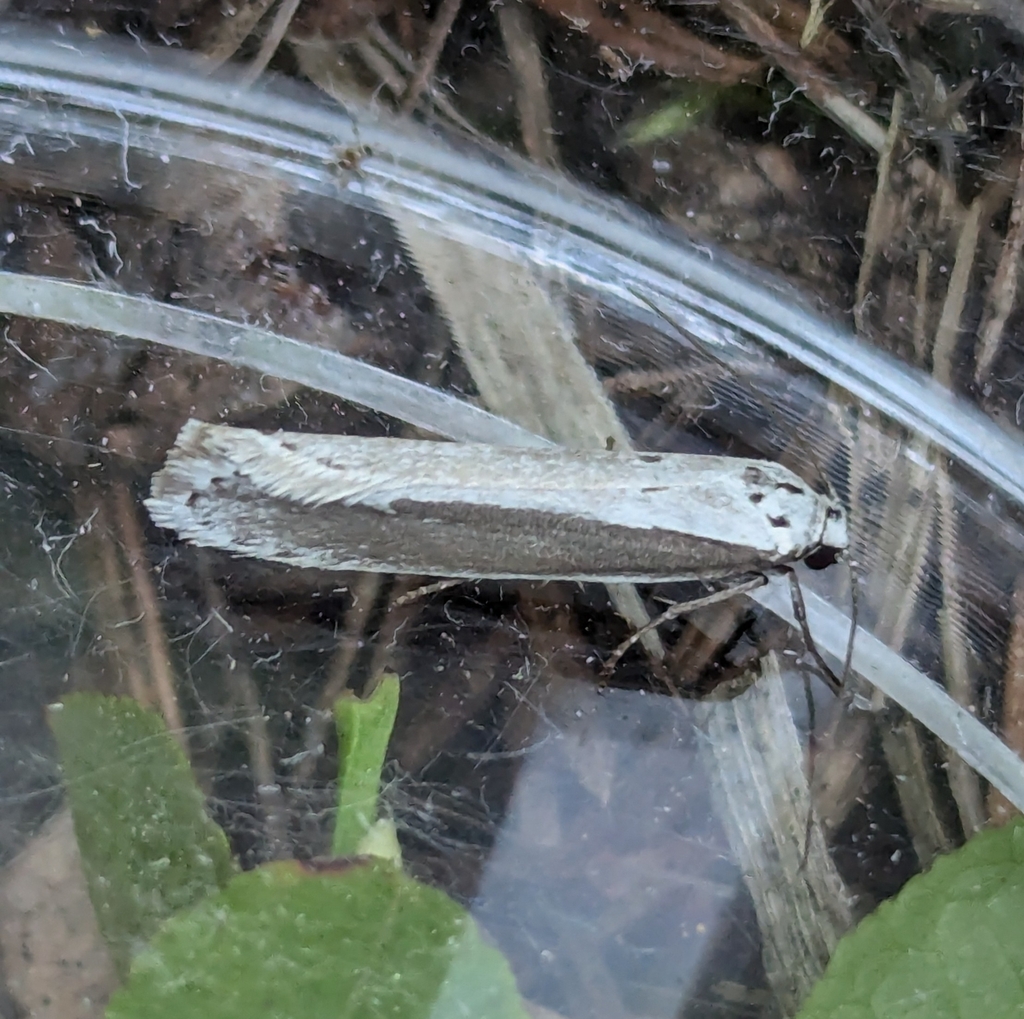
no rights reserved · CC0
Family: Depressariidae · Class: Insecta · Order: Lepidoptera
Ethmia minuta is a California animal in the Depressariidae family.
Ethmia minuta is a small moth in the family Depressariidae, representing one of the lesser-studied members of California's lepidopteran fauna. This species belongs to the genus Ethmia, which comprises numerous small to medium-sized moths characterized by their often intricate wing patterns and specialized larval host relationships. Physical characteristics of E. minuta include forewings that typically measure 8 to 12 millimeters in length, consistent with other members of the Ethmia genus. The wing coloration and patterning of this species require further documentation, though members of this genus commonly display combinations of white, gray, and dark markings that form distinctive patterns useful for species identification. The hindwings are generally paler than the forewings, and the antennae are filiform in both sexes. The distribution and range of E. minuta within California remains poorly documented in available literature. Members of the genus Ethmia are found throughout various regions of North America, with several species endemic to specific geographic areas or elevation zones. California hosts multiple Ethmia species, suggesting the state's diverse habitats provide suitable conditions for this genus. Habitat requirements for E. minuta are not well-established in current taxonomic literature. Other Ethmia species typically inhabit areas where their specific host plants occur, often in chaparral, oak woodland, desert scrub, or montane environments. The elevation range and specific vegetation associations for E. minuta require additional field study and documentation. Larval ecology of Ethmia species centers on their specialized feeding relationships with plants in the family Boraginaceae, particularly species of Cordia, Bourreria, and related genera. Adult moths are typically nocturnal and may be attracted to artificial lights. Flight periods vary among Ethmia species but often correspond with host plant phenology and favorable weather conditions. Females deposit eggs singly or in small clusters on host plant foliage, and larvae typically feed within webbed shelters or folded leaves. The conservation status of E. minuta has not been formally assessed by state or federal agencies. Limited information exists regarding population trends, distribution extent, or specific threats to this species. The lack of comprehensive data reflects the broader challenge of documenting and conserving California's diverse moth fauna, many species of which remain understudied despite their ecological importance as pollinators and components of food webs. Taxonomic work on California Ethmia species continues to evolve, with some species boundaries and distributions requiring clarification through molecular and morphological studies. The identification of E. minuta and related species typically requires examination of genitalic structures and detailed wing pattern analysis by specialists familiar with this challenging group.
Classification
Class: Insecta · Order: Lepidoptera · Family: Depressariidae
Frequently asked questions
How is Ethmia minuta classified?
Ethmia minuta belongs to class Insecta, order Lepidoptera, family Depressariidae.
What family does Ethmia minuta belong to?
Ethmia minuta is in the Depressariidae family.
What is Ethmia minuta?
Ethmia minuta is a small moth in the family Depressariidae, representing one of the lesser-studied members of California's lepidopteran fauna.
Is Ethmia minuta found in California?
Yes. Ethmia minuta is recorded in California in The California Species Project's catalogue.
Related species
Other California species in the same genus, family, or bioregion.
Data from The California Species Project — 14,000+ California species with verified data from CNPS, CDFW, USFWS, and more.