Ethmia monticola
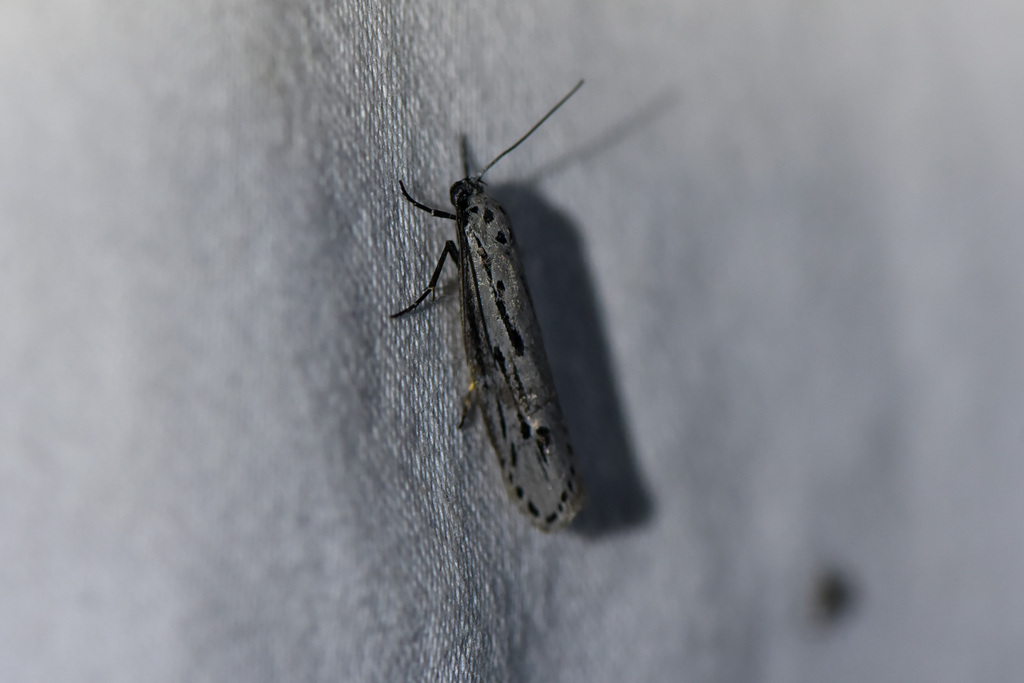
no rights reserved · CC0
Family: Depressariidae · Class: Insecta · Order: Lepidoptera
Ethmia monticola is a California animal in the Depressariidae family.
Ethmia monticola is a small moth species in the family Depressariidae, subfamily Ethmiinae. This species represents one of the lesser-documented members of the genus Ethmia, which comprises approximately 200 described species worldwide. Adults typically measure 8 to 12 mm in forewing length, characteristic of the Depressariidae family. The forewings display a pattern of white ground color with black or dark brown markings, though specific pattern details for this species require further documentation. Like other Ethmia species, the hindwings are typically pale gray to white with reduced venation. The range and distribution of Ethmia monticola remain poorly documented in the scientific literature. The species name 'monticola' suggests a montane or mountainous habitat association, which is consistent with several other Ethmia species that occupy higher elevation environments. Based on available taxonomic records, the species appears to have a limited distribution, though specific locality data are not well established in current databases. Habitat preferences for Ethmia monticola are not well characterized, though the specific epithet suggests an association with montane environments. Other Ethmia species typically inhabit areas with their larval host plants, which are predominantly in the family Boraginaceae. Elevation range, vegetation associations, and microhabitat requirements for this species have not been thoroughly documented in the available literature. The life history and ecology of Ethmia monticola follow the general pattern observed in the genus Ethmia. Adults are likely crepuscular or nocturnal, with flight periods that correspond to host plant phenology and favorable environmental conditions. Larvae of Ethmia species are typically external feeders on leaves of Boraginaceae plants, though the specific host plant relationships for E. monticola have not been definitively established. Development likely includes four larval instars before pupation, following the standard lepidopteran life cycle. Adults probably have one or two generations per year, depending on elevation and climate conditions. The conservation status of Ethmia monticola is not formally assessed by state or federal agencies. The species lacks federal listing status under the Endangered Species Act and is not designated as a Species of Special Concern by the California Department of Fish and Wildlife. This absence of formal conservation status likely reflects the limited available data on population size, distribution, and trends rather than confirmed population stability. The species may face threats common to other montane lepidopteran species, including habitat fragmentation, climate change impacts on elevation-specific habitats, and potential host plant availability changes. However, without comprehensive surveys and population monitoring, the actual conservation needs and threat levels remain unknown. Further research is needed to establish basic ecological requirements, distribution patterns, and population status to inform any future conservation assessments.
Classification
Class: Insecta · Order: Lepidoptera · Family: Depressariidae
Frequently asked questions
How is Ethmia monticola classified?
Ethmia monticola belongs to class Insecta, order Lepidoptera, family Depressariidae.
What family does Ethmia monticola belong to?
Ethmia monticola is in the Depressariidae family.
What is Ethmia monticola?
Ethmia monticola is a small moth species in the family Depressariidae, subfamily Ethmiinae.
Is Ethmia monticola found in California?
Yes. Ethmia monticola is recorded in California in The California Species Project's catalogue.
Related species
Other California species in the same genus, family, or bioregion.
Data from The California Species Project — 14,000+ California species with verified data from CNPS, CDFW, USFWS, and more.