Ethmia semilugens
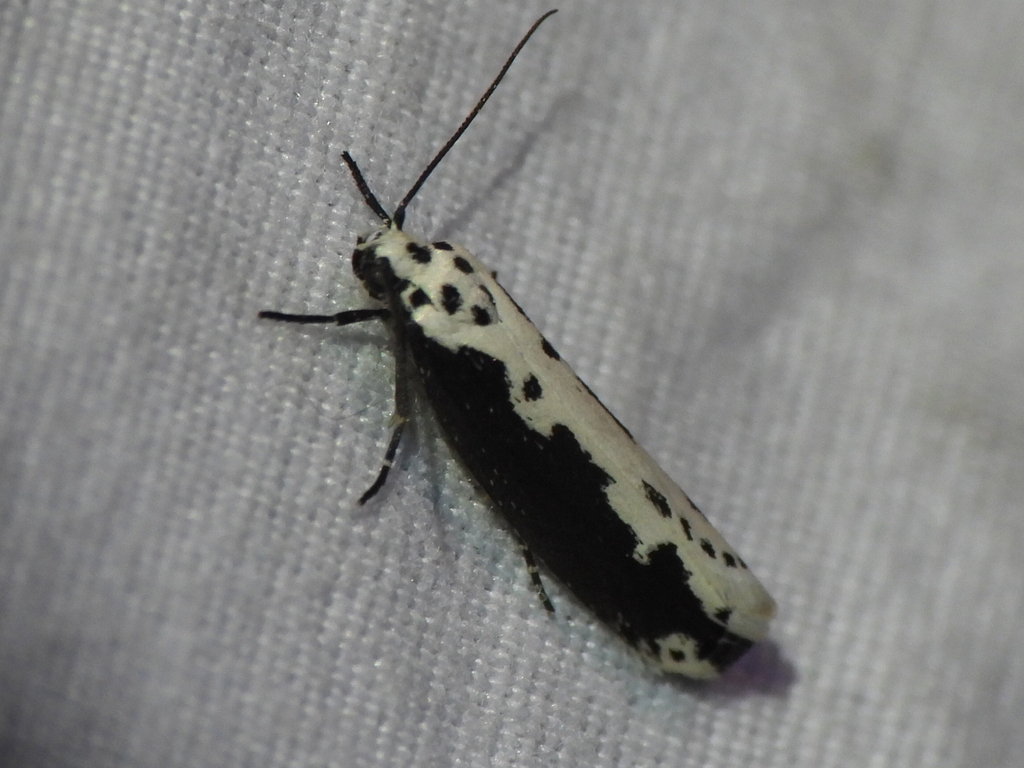
(c) Sam Kieschnick, some rights reserved (CC BY) · licence
Family: Depressariidae · Class: Insecta · Order: Lepidoptera
Ethmia semilugens is a California animal in the Depressariidae family.
Ethmia semilugens is a small moth species in the family Depressariidae, subfamily Ethmiinae. This lepidopteran exhibits the typical characteristics of the Ethmia genus, with a wingspan likely ranging from 15 to 25 millimeters based on comparative morphology with related species. The forewings display patterns of light and dark markings, though specific coloration details for this species remain poorly documented in accessible literature. Like other Ethmia species, adults likely possess narrow forewings with distinctive spotting or banding patterns, and the hindwings are typically lighter in coloration with reduced markings. The current distribution of Ethmia semilugens appears to be restricted to California, though historical range information is limited. The species' presence in the state suggests it may be endemic to specific biogeographic regions, possibly associated with particular elevation zones or plant communities. Without comprehensive survey data, the full extent of its California range remains uncertain, and it is unclear whether populations persist in multiple counties or are concentrated in specific localities. Habitat requirements for Ethmia semilugens are poorly understood due to limited ecological research on this species. Members of the Ethmia genus typically inhabit areas where their larval host plants occur, often in chaparral, woodland, or desert scrub communities. The species likely requires specific microhabitat conditions including appropriate host plant density and suitable microclimatic conditions for larval development. Adult moths may be found in proximity to host plants during flight periods, typically at dusk or during nighttime hours when most Ethmia species are active. The life cycle of Ethmia semilugens follows the standard lepidopteran pattern of complete metamorphosis. Larvae likely feed internally within host plant tissues, a feeding behavior common among Ethmia species, where they may bore into stems, roots, or seed pods. The number of generations per year is unknown but may be synchronized with host plant phenology. Adult flight periods and mating behaviors have not been documented for this species. Reproductive success likely depends on the availability and condition of host plants during the larval feeding period. The conservation status of Ethmia semilugens remains largely unassessed. The species lacks federal or state listing status, and population trends are unknown due to insufficient survey effort and taxonomic uncertainty. Without baseline population data or regular monitoring, it is impossible to determine whether this species faces conservation threats. Potential impacts may include habitat modification, invasive species, climate change effects on host plants, and urban development in areas where the species occurs. The lack of comprehensive distributional and ecological data represents a significant knowledge gap that hampers effective conservation planning. Research priorities should include systematic surveys to determine current distribution, identification of host plants, assessment of population status, and evaluation of potential threats to remaining habitat.
Classification
Class: Insecta · Order: Lepidoptera · Family: Depressariidae
Frequently asked questions
How is Ethmia semilugens classified?
Ethmia semilugens belongs to class Insecta, order Lepidoptera, family Depressariidae.
What family does Ethmia semilugens belong to?
Ethmia semilugens is in the Depressariidae family.
What is Ethmia semilugens?
Ethmia semilugens is a small moth species in the family Depressariidae, subfamily Ethmiinae.
Is Ethmia semilugens found in California?
Yes. Ethmia semilugens is recorded in California in The California Species Project's catalogue.
Related species
Other California species in the same genus, family, or bioregion.
Data from The California Species Project — 14,000+ California species with verified data from CNPS, CDFW, USFWS, and more.