Etorofus obliteratus
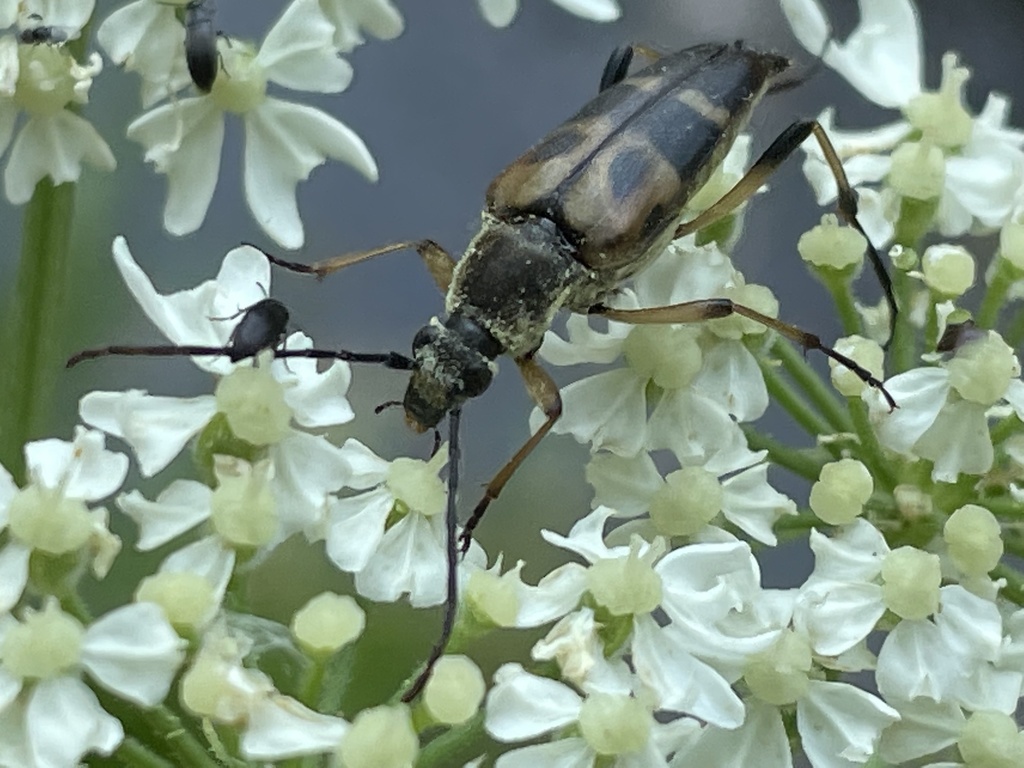
(c) Henrik Kibak, some rights reserved (CC BY) · licence
Family: Cerambycidae · Class: Insecta · Order: Coleoptera
Etorofus obliteratus is a California animal in the Cerambycidae family.
Etorofus obliteratus is a longhorn beetle in the subfamily Lepturinae, commonly known as flower longhorn beetles. This species was first described by Haldeman in 1847 and belongs to the tribe Lepturini within the family Cerambycidae (BugGuide.Net). The beetle displays typical cerambycid characteristics, including elongated antennae and an elongated body form, though specific morphological details for this species remain poorly documented in the available literature. The species occurs across western North America, with its range extending from British Columbia south to California (BugGuide.Net). Within this broad distribution, E. obliteratus represents one of the many cerambycid species that inhabit the diverse ecosystems of the western United States and southwestern Canada. The taxonomic history of this species includes some complexity, as taxa formerly treated as subspecies of E. obliteratus are now considered separate species, and it was previously associated with Pedostrangalia plagifera (BugGuide.Net). Habitat preferences for E. obliteratus have not been extensively documented in the scientific literature. As a member of the flower longhorn beetle subfamily Lepturinae, this species likely inhabits forested environments where adults visit flowers for nectar and pollen. Many lepturine beetles are associated with coniferous or mixed forests, particularly in mountainous regions of western North America. The specific elevation ranges, vegetation types, and microhabitat requirements for this species remain poorly characterized. The life history and ecological requirements of E. obliteratus are not well documented in available sources. Like other longhorn beetles, this species likely undergoes complete metamorphosis with egg, larval, pupal, and adult stages. Larval development probably occurs within dead or dying wood, as is typical for cerambycids, though the specific host plants or wood types utilized by E. obliteratus larvae have not been identified. Adult activity periods, feeding behaviors, and reproductive ecology remain undocumented for this species. No specific conservation status has been assigned to E. obliteratus at federal or state levels. The species does not appear on current U.S. Fish and Wildlife Service endangered or threatened species lists, nor does it have a designated conservation rank from NatureServe or the International Union for Conservation of Nature. Population trends, primary threats, and conservation needs for this species are unknown due to limited research and monitoring efforts. The broad geographic distribution across western North America suggests the species may be relatively stable, though local population dynamics and habitat requirements warrant further investigation. Scientific documentation for this longhorn beetle species remains extremely limited despite its formal taxonomic recognition. The information presented here synthesizes available data from taxonomic databases and entomological resources. Detailed ecological studies, population assessments, and habitat characterizations are needed to better understand the biology and conservation status of E. obliteratus. We welcome contributions of verified scientific data, photographs, or field observations to enhance this species account.
Classification
Class: Insecta · Order: Coleoptera · Family: Cerambycidae
Frequently asked questions
How is Etorofus obliteratus classified?
Etorofus obliteratus belongs to class Insecta, order Coleoptera, family Cerambycidae.
What family does Etorofus obliteratus belong to?
Etorofus obliteratus is in the Cerambycidae family.
What is Etorofus obliteratus?
Etorofus obliteratus is a longhorn beetle in the subfamily Lepturinae, commonly known as flower longhorn beetles.
Is Etorofus obliteratus found in California?
Yes. Etorofus obliteratus is recorded in California in The California Species Project's catalogue.
Related species
Other California species in the same genus, family, or bioregion.
Data from The California Species Project — 14,000+ California species with verified data from CNPS, CDFW, USFWS, and more.