Eubrianax edwardsii
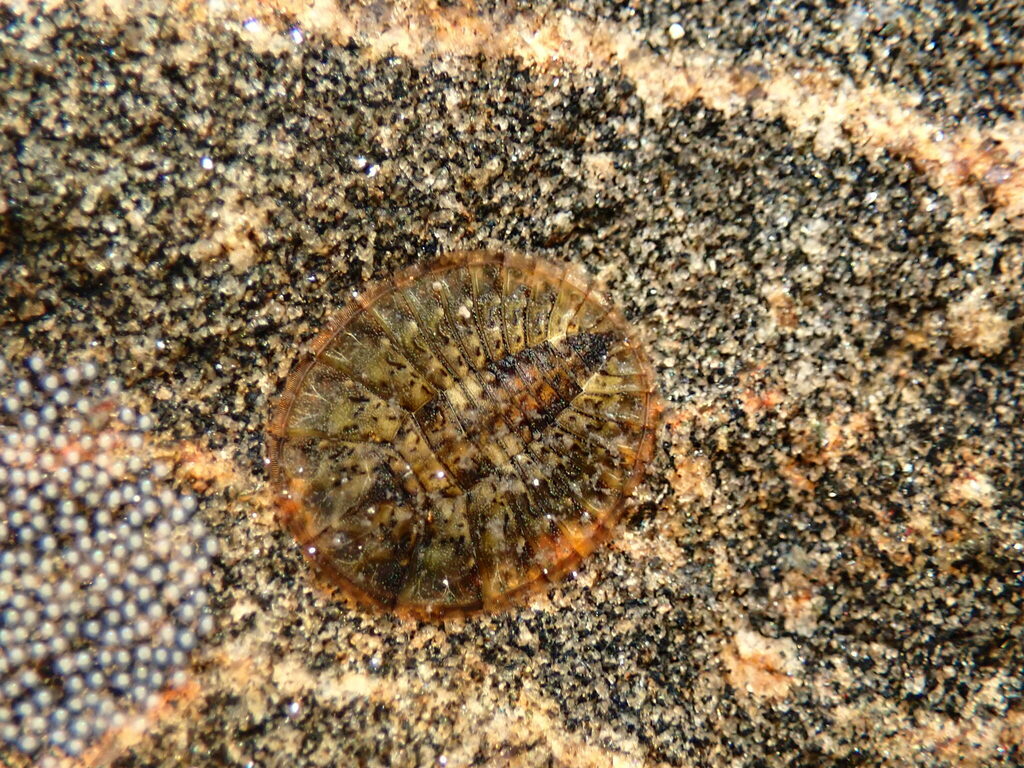
(c) Cricket Raspet, some rights reserved (CC BY) · licence
Family: Psephenidae · Class: Insecta · Order: Coleoptera
Eubrianax edwardsii is a California animal in the Psephenidae family.
Eubrianax edwardsii is a water penny beetle in the family Psephenidae, subfamily Eubrianacinae. This aquatic beetle species belongs to a specialized group of insects adapted to fast-flowing streams and rocky substrates. Adult water penny beetles are typically small, measuring 2-4 mm in length, with streamlined bodies adapted for life in swift currents. The larvae, known as water pennies, are distinctively flattened and disc-shaped, measuring 4-8 mm in diameter, with their dorsal surface forming a protective shield that allows them to cling to rocks in turbulent water. Historically, E. edwardsii was documented from western North America, with records from Oregon and possibly California. According to NatureServe Explorer, the species has a global conservation status of GNR (Global Not Ranked), though some sources suggest it may be presumed extinct (NatureServe 2025). The species appears in the U.S. Fish and Wildlife Service taxonomic database, indicating federal agency recognition of its taxonomic validity. Records from the Hart Mountain National Wildlife Refuge Complex in Oregon list the species as potentially occurring in aquatic invertebrate communities, though with uncertainty noted in the documentation. Water penny beetles of the genus Eubrianax inhabit fast-flowing, well-oxygenated streams with rocky substrates. The larvae require clean, cold water with moderate to high current velocities, typically found in mountain streams and spring-fed waterways. Adults are generally found near their larval habitat, often clinging to emergent rocks or riparian vegetation. The species requires stable substrate conditions, as the flattened larvae depend on consistent rock surfaces for attachment and feeding. Larval water pennies are grazers, scraping algae and organic matter from rock surfaces using specialized mouthparts. Their flattened morphology creates a boundary layer effect that reduces water resistance while feeding. Adults are short-lived and primarily focused on reproduction, with females depositing eggs in crevices of submerged rocks. The species likely has an annual life cycle, with larvae developing through several instars over 8-12 months before pupating and emerging as adults during warmer months. The conservation status of E. edwardsii remains uncertain, with conflicting information regarding its current existence. The species may face threats common to other aquatic insects, including water quality degradation, habitat modification from dam construction and water diversions, sedimentation from logging and development, and climate change impacts on stream flow patterns. Many psephenid beetles are sensitive indicators of aquatic ecosystem health, requiring pristine water conditions to complete their life cycles. Given the specialized habitat requirements and potential rarity of this species, targeted surveys in historical range areas would be valuable for determining current population status and conservation needs.
Classification
Class: Insecta · Order: Coleoptera · Family: Psephenidae
Frequently asked questions
How is Eubrianax edwardsii classified?
Eubrianax edwardsii belongs to class Insecta, order Coleoptera, family Psephenidae.
What family does Eubrianax edwardsii belong to?
Eubrianax edwardsii is in the Psephenidae family.
What is Eubrianax edwardsii?
Eubrianax edwardsii is a water penny beetle in the family Psephenidae, subfamily Eubrianacinae.
Is Eubrianax edwardsii found in California?
Yes. Eubrianax edwardsii is recorded in California in The California Species Project's catalogue.
More California species
This species has no close relatives in our California data — here are other species to explore.
Data from The California Species Project — 14,000+ California species with verified data from CNPS, CDFW, USFWS, and more.