Eucalantica polita
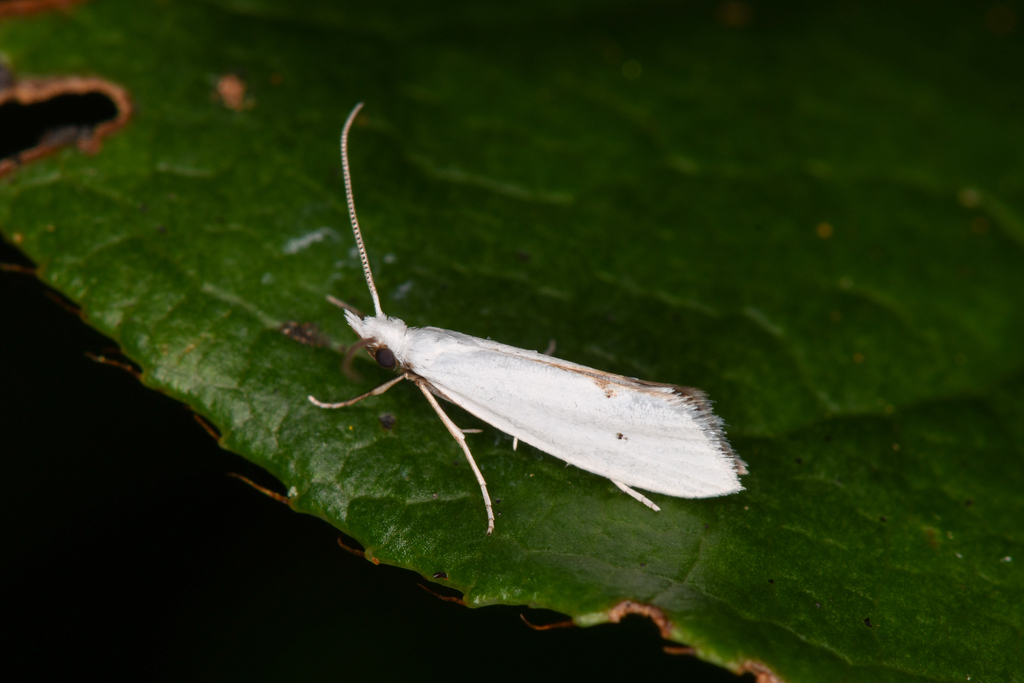
(c) Trevor Van Loon, some rights reserved (CC BY) · licence
Family: Yponomeutidae · Class: Insecta · Order: Lepidoptera
Eucalantica polita is a California animal in the Yponomeutidae family.
Eucalantica polita is a moth in the family Yponomeutidae found along the Pacific coast of North America. This species represents one of several Eucalantica moths that occur in western coastal regions, distinguished by specific taxonomic characteristics within the ermine moth family. Adult moths of E. polita exhibit the typical features of the Yponomeutidae family, though detailed morphological descriptions are not well documented in current literature. Like other members of this family, adults likely have narrow forewings and relatively small size compared to other moth families. The species was originally described by Walsingham in 1881, establishing its taxonomic position within the genus Eucalantica. Eucalantica polita occurs along the Pacific coastal regions of Canada and the United States, with confirmed populations in British Columbia, Washington, Oregon, and California (iNaturalist). The species appears to be restricted to the coastal zone rather than extending significantly inland, suggesting adaptation to maritime climatic conditions. Within California, specific county-level distribution data remains limited in current documentation. Habitat preferences for E. polita are closely tied to the distribution of its larval host plants. According to the Moth Photographers Group, larvae feed on plants in the family Ericaceae, specifically documented on Vaccinium species (blueberries and related plants). A record from Rhododendron requires confirmation according to recent taxonomic work (Sohn & Nishida 2011). This host plant association suggests the species occurs in habitats where Ericaceae shrubs are present, which along the Pacific coast would include coastal scrub, forest understories, and bog margins where Vaccinium species naturally occur. Larval behavior includes the construction of webbing, a common feeding strategy among Yponomeutidae moths where caterpillars create silk shelters on their host plants (Moth Photographers Group). This webbing behavior provides protection while larvae feed on foliage. Adult flight periods and reproductive timing have not been well documented for this species, representing a significant knowledge gap in understanding the species' life cycle. Conservation status information for Eucalantica polita is not available from standard wildlife databases, and the species does not appear on federal or state listing compilations. The lack of conservation assessment likely reflects limited research attention rather than actual conservation security. As a coastal specialist with apparent host plant specificity, the species could potentially be vulnerable to habitat modification in coastal areas, but population trends and specific threats have not been evaluated. Scientific documentation for this species remains limited despite its broad Pacific coastal range. The information presented here is based on available sources including taxonomic databases and citizen science observations. If you have additional verified information about this species' biology, distribution, or ecology, please contact us to help improve this species account.
Classification
Class: Insecta · Order: Lepidoptera · Family: Yponomeutidae
Frequently asked questions
How is Eucalantica polita classified?
Eucalantica polita belongs to class Insecta, order Lepidoptera, family Yponomeutidae.
What family does Eucalantica polita belong to?
Eucalantica polita is in the Yponomeutidae family.
What is Eucalantica polita?
Eucalantica polita is a moth in the family Yponomeutidae found along the Pacific coast of North America.
Is Eucalantica polita found in California?
Yes. Eucalantica polita is recorded in California in The California Species Project's catalogue.
More California species
This species has no close relatives in our California data — here are other species to explore.
Data from The California Species Project — 14,000+ California species with verified data from CNPS, CDFW, USFWS, and more.