Eucera frater lata
Long-horned bees
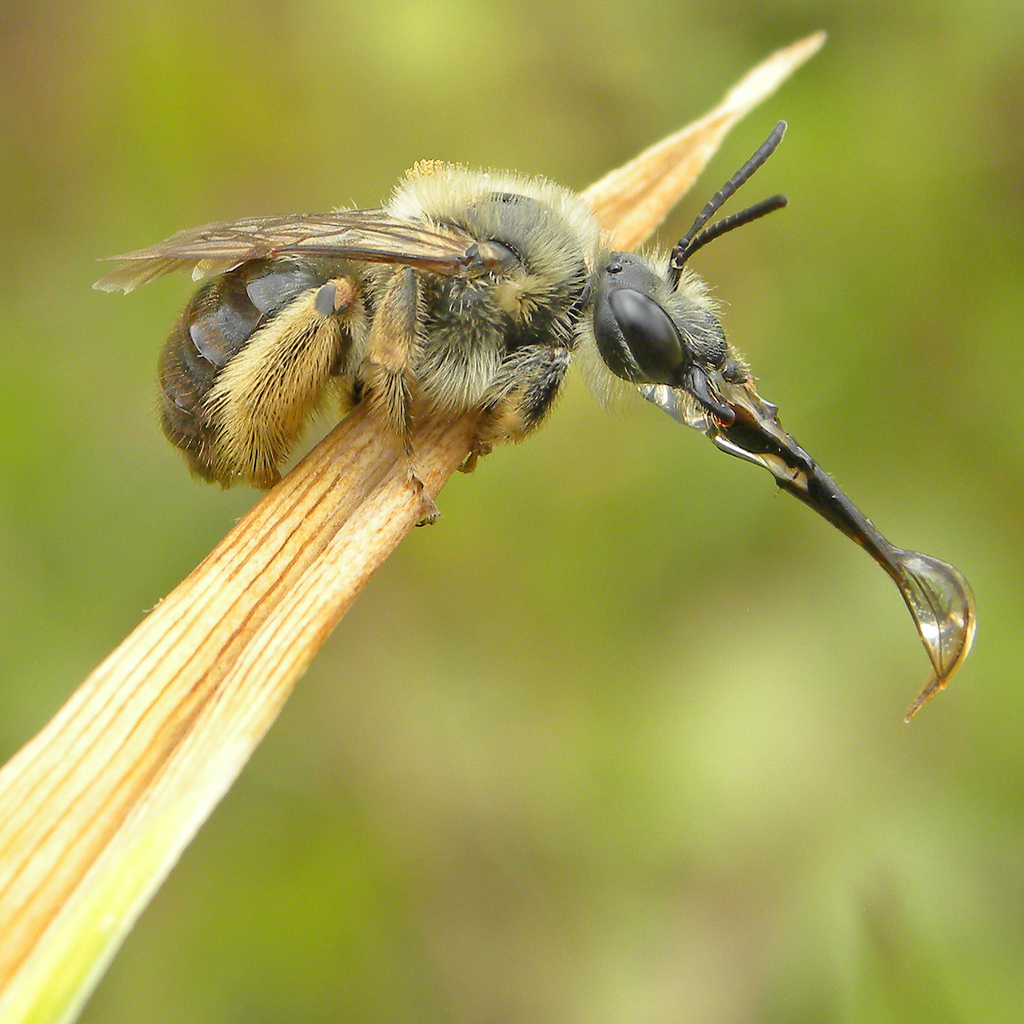
(c) M. Whitson, some rights reserved (CC BY) · licence
Family: Apidae · Class: Insecta · Order: Hymenoptera
Eucera frater lata (Long-horned bees) is a California animal in the Apidae family.
The monk longhorn bee (Eucera frater lata) is a subspecies of solitary bee in the family Apidae, characterized by the distinctively long antennae of males that give the group its common name. Like other members of the genus Eucera, males possess notably elongated antennae, while both sexes display a clypeus that protrudes noticeably when viewed in profile. The abdomen typically features continuous stripes that encircle the body, distinguishing them from similar bee species. Eucera frater lata is endemic to but widespread within the Columbia Basin, a biogeographic region encompassing parts of Washington, Oregon, Idaho, and adjacent areas. This subspecies represents one of the geographically restricted populations within the broader Eucera frater species complex. The subspecies maintains a relatively stable distribution throughout its native range, occurring across various elevations and habitat types within the basin. This bee has been documented in multiple habitat types within the Columbia Basin, including Interior Ponderosa Pine forests, Idaho fescue and slender wheatgrass grasslands, Engelmann spruce-subalpine fir forests, agricultural areas, and mixed grass-agricultural-shrub communities (Xerces Society). The species demonstrates considerable habitat flexibility, utilizing both natural and semi-natural environments. This adaptability to diverse habitat types may contribute to its relatively secure status within the Columbia Basin. Eucera frater lata exhibits a notably long flight period, remaining active from April through August. This extended activity period suggests the subspecies likely produces more than one generation per year, though definitive phenological studies are needed to confirm whether it is univoltine or multivoltine (Xerces Society). The bee shows a strong preference for visiting flowers of milkvetch (genus Astragalus), indicating specialized foraging behavior typical of many solitary bee species. As a solitary bee, females construct individual nests and provision them with pollen and nectar for developing larvae. The taxonomic placement of this subspecies has evolved over time. Initially assigned to the genus Synhalonia, it was later reclassified when Synhalonia was recognized as a subgenus of Eucera following taxonomic revisions. This reflects ongoing research into the relationships within the longhorn bee group. Regarding conservation status, Eucera frater lata appears relatively secure within its range. The Xerces Society has assigned it a Red List Status of Vulnerable, though it is not listed under the U.S. Endangered Species Act and lacks state-level protection status. The subspecies is described as apparently widespread within the Columbia Basin and fairly common where it occurs (Xerces Society). Its future is considered relatively secure, though like many native bees, it may face pressure from habitat modification and agricultural intensification. The species' ability to persist across multiple habitat types, including agricultural areas, suggests some resilience to landscape changes. Continued monitoring and phenological studies would help clarify population trends and seasonal patterns for this Columbia Basin endemic.
Classification
Class: Insecta · Order: Hymenoptera · Family: Apidae
Frequently asked questions
How is Eucera frater lata classified?
Eucera frater lata belongs to class Insecta, order Hymenoptera, family Apidae.
What family does Eucera frater lata belong to?
Eucera frater lata is in the Apidae family.
What is Eucera frater lata?
The monk longhorn bee (Eucera frater lata) is a subspecies of solitary bee in the family Apidae, characterized by the distinctively long antennae of males that give the group its common name.
Is Eucera frater lata found in California?
Yes. Eucera frater lata is recorded in California in The California Species Project's catalogue.
Related species
Other California species in the same genus, family, or bioregion.
Data from The California Species Project — 14,000+ California species with verified data from CNPS, CDFW, USFWS, and more.