Euceratia castella
Castella Euceratia
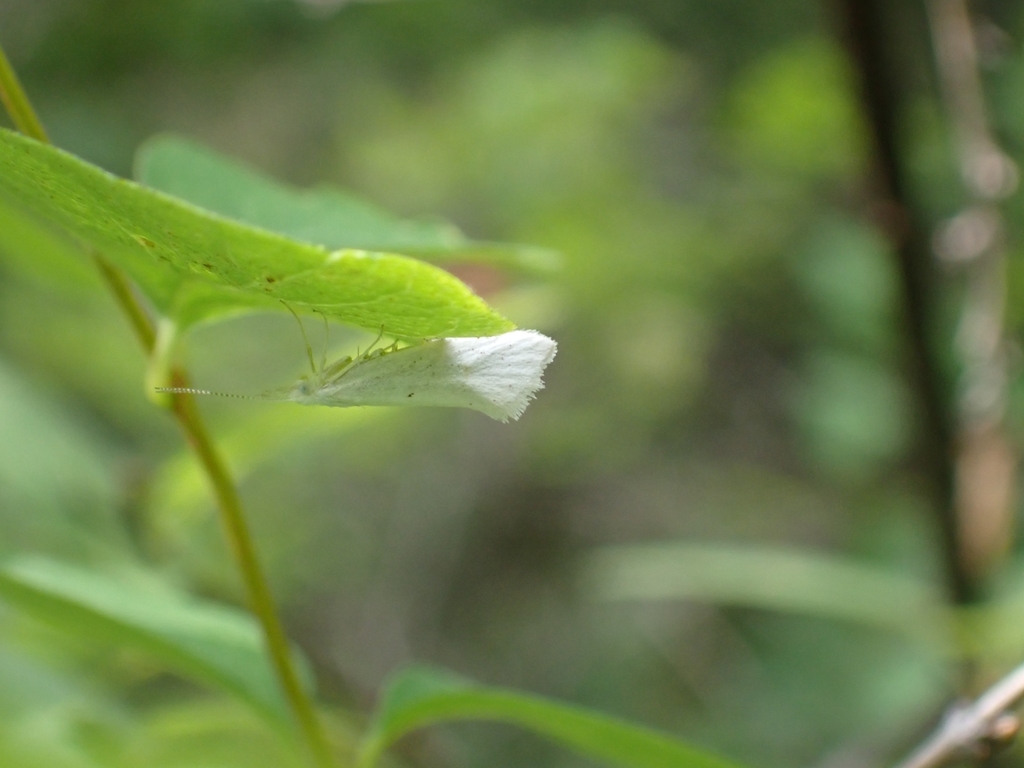
no rights reserved · CC0
Family: Ypsolophidae · Class: Insecta · Order: Lepidoptera
Euceratia castella (Castella Euceratia) is a California animal in the Ypsolophidae family.
Euceratia castella is a small moth in the family Ypsolophidae with forewings measuring 7.5 to 10.5 mm in length. The species can be distinguished from the similar Eucalantica polita by the absence of a dorsal patch on the forewing and the presence of white annulations on the antennae (Sohn & Nishida 2011). Detailed morphological characteristics and genitalia descriptions are provided in Sohn & Powell (2015). This species occurs from Washington south to California, representing a relatively wide Pacific Coast distribution. Within California, E. castella has been documented from multiple counties including Fresno County, where specimens have been collected at Walt's Valley Road and Mineral Springs Road near Coalinga. The species appears to have a broad elevational range within its geographic distribution. Euceratia castella larvae are associated with plants in the family Caprifoliaceae, specifically utilizing host genera Lonicera and Symphoricarpos (Moth Photographers Group). The larvae create characteristic leaf ties on their host plants, a feeding behavior typical of many Ypsolophidae species (Eiseman 2020). This host plant association suggests the species inhabits areas where honeysuckle family plants are present, including both natural woodlands and disturbed habitats where these shrubs commonly occur. As with most Ypsolophidae, E. castella likely exhibits a typical moth life cycle with egg, larval, pupal, and adult stages. The larval stage involves feeding within tied leaves of Caprifoliaceae hosts, while adults presumably emerge to mate and deposit eggs on suitable host plants. Specific details regarding seasonal timing, number of generations per year, overwintering stage, and adult flight periods have not been well documented in the literature. Euceratia castella does not appear on federal or state endangered species lists and lacks formal conservation status designations. The species' distribution across multiple states suggests it maintains stable populations across its range. However, like many native moth species, E. castella may face localized threats from habitat modification, pesticide use, and invasive plant species that could displace native Caprifoliaceae hosts. The moth's dependence on specific host plant families makes it potentially vulnerable to landscape changes that reduce the availability of Lonicera and Symphoricarpos species. Collection records from California indicate the species occurs in diverse habitats, from foothill areas like Walt's Valley Road to more arid regions near Coalinga. This ecological flexibility may contribute to the species' apparent stability across its range. Continued monitoring of both the moth populations and their Caprifoliaceae host plants would help assess any future conservation needs. The species serves as an example of the many specialized plant-insect relationships that characterize California's native ecosystems, highlighting the importance of maintaining diverse plant communities to support associated arthropod fauna.
Classification
Class: Insecta · Order: Lepidoptera · Family: Ypsolophidae
Frequently asked questions
How is Euceratia castella classified?
Euceratia castella belongs to class Insecta, order Lepidoptera, family Ypsolophidae.
What family does Euceratia castella belong to?
Euceratia castella is in the Ypsolophidae family.
What is Euceratia castella?
Euceratia castella is a small moth in the family Ypsolophidae with forewings measuring 7.5 to 10.5 mm in length.
Is Euceratia castella found in California?
Yes. Euceratia castella is recorded in California in The California Species Project's catalogue.
Related species
Other California species in the same genus, family, or bioregion.
Data from The California Species Project — 14,000+ California species with verified data from CNPS, CDFW, USFWS, and more.