Eucerceris ruficeps
Redheaded Sphecid Wasp
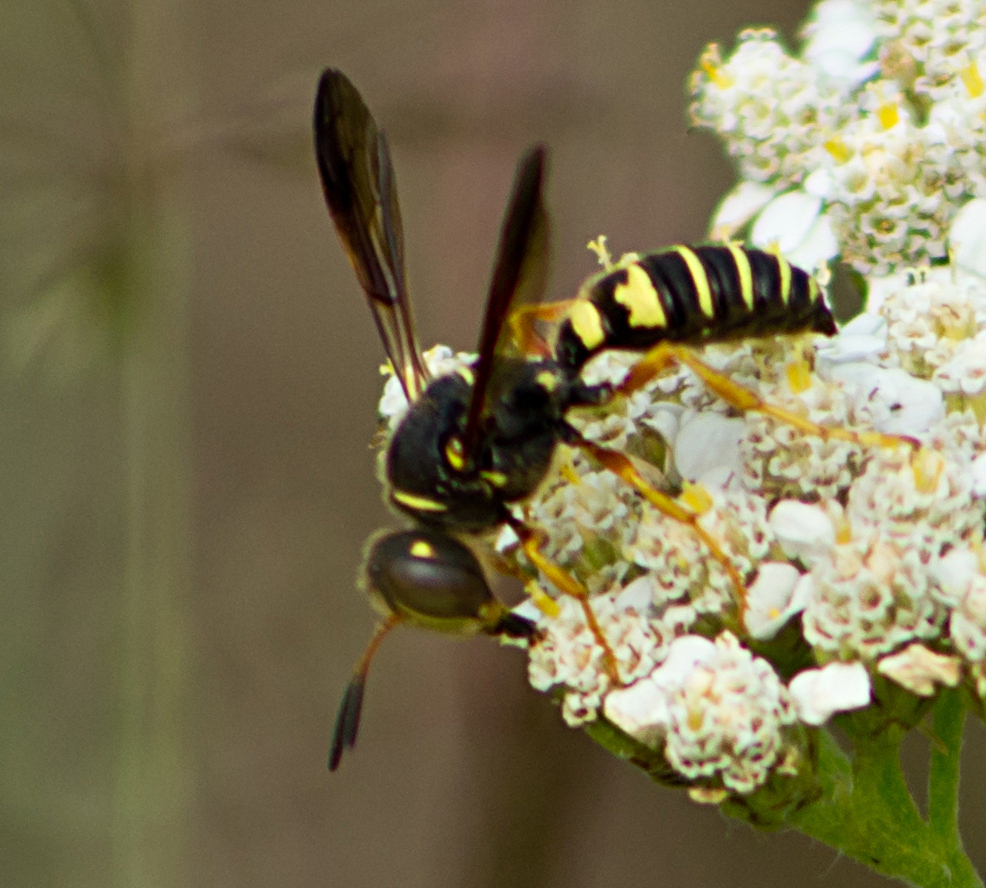
(c) psweet, some rights reserved (CC BY-SA) · licence
Family: Crabronidae · Class: Insecta · Order: Hymenoptera
Conservation status: G1G3 S2
Eucerceris ruficeps (Redheaded Sphecid Wasp) is a California animal in the Crabronidae family.
The redheaded sphecid wasp (Eucerceris ruficeps) is a solitary hunting wasp in the family Crabronidae. This species is distinguished by its reddish-colored head, which contrasts with its darker thorax and abdomen. Like other members of the genus Eucerceris, this wasp exhibits the characteristic narrow waist typical of sphecid wasps, with females measuring approximately 8-12 mm in length. Eucerceris ruficeps has an extremely limited distribution, endemic to a small area of California. The species' range is restricted to specific localities within the state, contributing to its conservation concern. Historical records indicate the wasp was once found in additional areas, but current populations are confined to a much reduced geographic range. The redheaded sphecid wasp inhabits specialized habitat requirements that remain poorly documented in the scientific literature. Like other Eucerceris species, it likely prefers areas with suitable nesting substrates and abundant prey resources. The species appears to require specific soil types for nest construction, as solitary wasps in this genus typically excavate burrows in sandy or well-drained soils. The exact elevation range and vegetation associations for E. ruficeps have not been comprehensively studied. As a predatory wasp, E. ruficeps likely provisions its nests with paralyzed prey, following the typical behavior pattern of sphecid wasps. Females hunt specific arthropod prey, which they sting and paralyze before transporting to underground nest cells as food for developing larvae. The species is presumed to be univoltine, with adults active during specific months of the year, though detailed phenology data are lacking. Males likely emerge before females and engage in mate-seeking behavior around nesting areas. The redheaded sphecid wasp holds significant conservation concern, with NatureServe ranking it G1G3 globally and S2 in California, indicating it is imperiled to critically imperiled. The species appears on the U.S. Fish and Wildlife Service species list, reflecting federal recognition of its conservation status as of December 2025. Primary threats likely include habitat loss and fragmentation, though specific threat assessments have not been published. The species' extremely limited range makes it particularly vulnerable to localized disturbances such as development, agricultural conversion, or changes in land management practices. Limited scientific documentation exists for this species' detailed biology, distribution, and ecological requirements. The narrow range and apparent rarity of E. ruficeps highlight the need for targeted surveys to locate additional populations and comprehensive studies to understand its habitat needs and life history. Conservation efforts would benefit from habitat protection and management recommendations based on the ecological requirements of related Eucerceris species. Current population estimates and trends remain undocumented, emphasizing the urgent need for systematic monitoring to assess the species' conservation status and inform protection strategies.
Classification
Class: Insecta · Order: Hymenoptera · Family: Crabronidae
Conservation status
G1G3 S2
Frequently asked questions
How is Eucerceris ruficeps classified?
Eucerceris ruficeps belongs to class Insecta, order Hymenoptera, family Crabronidae.
What family does Eucerceris ruficeps belong to?
Eucerceris ruficeps is in the Crabronidae family.
Is Eucerceris ruficeps protected or of conservation concern?
Eucerceris ruficeps carries the following status: G1G3 S2.
What is Eucerceris ruficeps?
The redheaded sphecid wasp (Eucerceris ruficeps) is a solitary hunting wasp in the family Crabronidae.
Is Eucerceris ruficeps found in California?
Yes. Eucerceris ruficeps is recorded in California in The California Species Project's catalogue.
Related species
Other California species in the same genus, family, or bioregion.
Data from The California Species Project — 14,000+ California species with verified data from CNPS, CDFW, USFWS, and more.